
Understanding the Needs of a Community Gathering
Planning a family reunion or church picnic in Auburn starts with recognizing the unique dynamics of a multi‑generational crowd. You may have grandparents who prefer shaded seating, teenagers eager for active games, and young children who need safe play zones. Defining the guest count early helps you decide how many tables and chairs are necessary, as well as the amount of open space required for activities. A clear picture of attendance also guides choices for food service areas, ensuring that lines move smoothly and everyone can enjoy the meal without congestion.
In Auburn, Barrow County, many homes sit along family yards off Atlanta Highway or near the Mill Creek school area, providing generous lawns that can accommodate large groups. When you map out the property, consider existing trees for natural shade, the slope of the ground for proper drainage, and proximity to parking or street access for delivery trucks. Taking a quick walk of the site with a measuring tape or pacing steps helps you visualize where a 20×20 tent might fit, where a buffet table could be placed, and where a bounce house can be set up safely away from foot traffic.
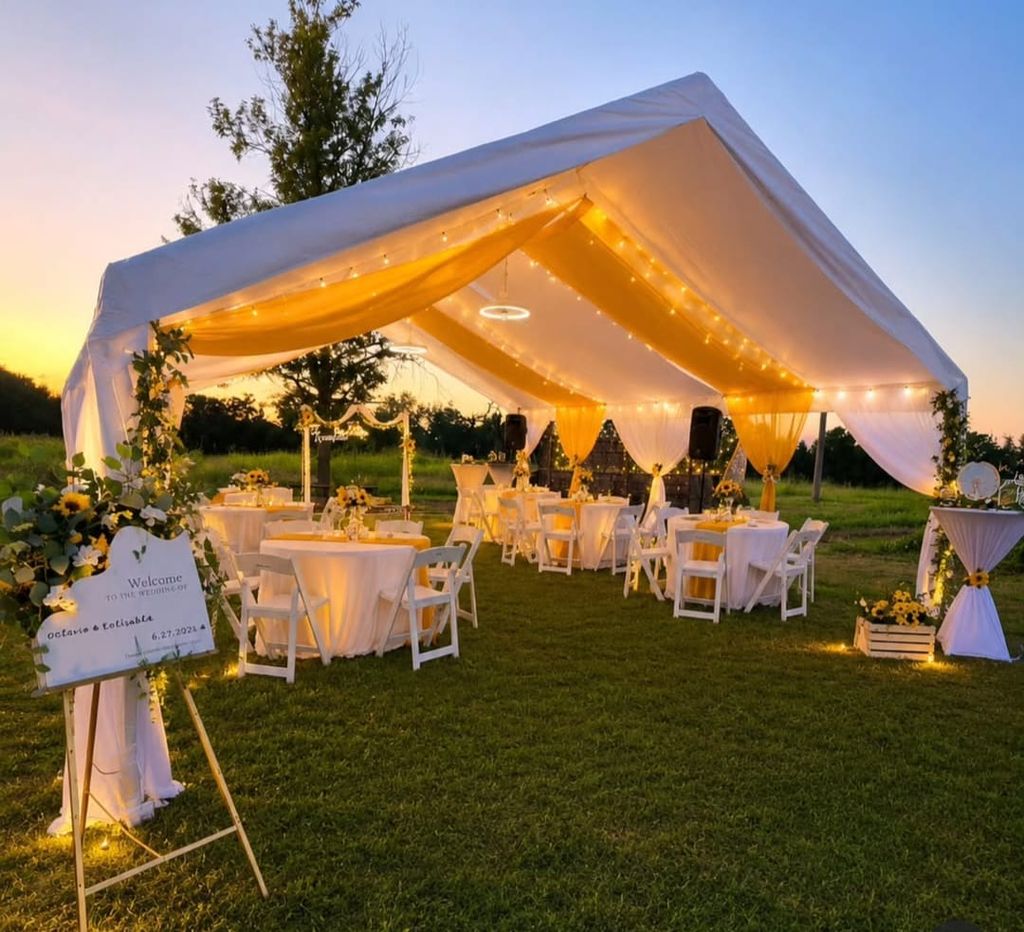
Selecting the Right Tent Size and Layout
The tent serves as the central shelter for dining, speeches, or informal gatherings, so choosing dimensions that match your headcount is essential. For a modest reunion of 40 to 50 guests, a 20×20 tent offers comfortable seated dining with room for a small dance floor or activity corner. If you expect closer to 80 attendees, stepping up to a 20×40 tent provides ample space for banquet‑style tables, a serving line, and still leaves area for a modest entertainment zone. Remember that round tables seat six to eight people each, while rectangular tables accommodate six to ten depending on length, so match your table mix to the tent’s square footage.
Beyond size, think about the layout flow. Position the tent entrance facing the main path from the parking area to reduce congestion. Place the food service table near one side, allowing guests to serve themselves without crossing through the seating zone. Leave a clear aisle of at least three feet between rows of chairs for easy movement, especially for elderly guests or those with mobility aids. If you plan to include a dance floor or a small stage for announcements, allocate that space in the center or at one end, ensuring the tent walls or sidewalls do not obstruct the view.
Arranging Tables, Chairs, and Linens for Comfort
Choosing the right combination of tables and chairs influences both aesthetics and functionality. Resin folding chairs are lightweight, durable, and suitable for grass or concrete surfaces, making them ideal for Auburn’s residential lawns. Pair them with banquet‑style tables that can be dressed in neutral linens to create a clean look, or opt for colored runners that match your event theme. For a more formal touch, consider chiavari chairs with padded seats, though they require a firmer ground base.
When calculating seating, remember that a 6‑foot round table comfortably seats ten guests, while an 8‑foot rectangular table holds eight to ten. Sketch a simple diagram of your tent interior, marking where each table will go, and verify that there is enough clearance for guests to pull out chairs without hitting neighboring tables or the tent walls. Linens should be sized to drape over the table edges with a modest overhang; this adds a polished appearance and helps keep the surface clean during the meal.
Incorporating Entertainment Options Like Bounce Houses
Adding a bounce house or interactive game can keep younger attendees engaged while adults enjoy conversation. In Auburn’s suburban settings, a dry bounce house works well on level grass, provided the area is free of sharp objects and has adequate overhead clearance. Verify that the chosen model’s dimensions fit within your yard, leaving a safety buffer of at least three feet on all sides. If you anticipate wet weather later in the day, having a tarp or easy‑to‑remove cover ready can protect the unit.
For events that include a mix of ages, consider supplementing the bounce house with a low‑impact game such as a ring toss or a mini‑sports set. These activities require minimal setup and can be stored compactly when not in use. Ensure that any electrical equipment, like blowers for inflatables, is connected to a grounded outlet and that cords are routed away from walkways to prevent tripping hazards. Adult supervision remains essential whenever children are using inflatable equipment.
Creating a Realistic Timeline for Setup and Takedown
A well‑structured timeline reduces stress on the day of the event. Begin by confirming the delivery window with your provider; most deliveries occur in the morning to allow ample time for arrangement. Aim to have the tent erected and anchored at least two hours before guests arrive, giving you a buffer to adjust table placement, add sidewalls if needed, and conduct a quick safety walk‑through. While the tent is being set up, simultaneously arrange chairs and tables along the perimeter so that the interior is ready for linens and décor once the structure is secure.
After the celebration concludes, start takedown by clearing food items, storing linens, and folding chairs. Deflate any bounce houses and pack them according to the provider’s guidelines, then disassemble the tent beginning with the sidewalls, followed by the frame and cover. Having a handful of volunteers or a dedicated crew speeds up this process and ensures the yard is returned to its original condition. Scheduling a final walk‑through to check for any stray items or damage helps close the event on a positive note.
Preparing for Weather Contingencies
Outdoor events in North Georgia can be subject to sudden showers, so having a rain plan is wise. Sidewalls that attach to the tent frame provide a barrier against light rain while maintaining ventilation. If the forecast calls for heavier precipitation, consider reserving a larger tent or arranging for an indoor backup space such as a community center or church hall, noting that our services are limited to outdoor, at‑home setups only. Communicate the contingency plan to attendees in advance so they know what to expect.
In addition to sidewall protection, keep a supply of absorbent towels or a wet‑vac on hand to manage any water that may enter the tent. If winds are expected to increase, verify that the tent is properly anchored with stakes or weights suited to the ground type—soil stakes work well for grass, while sandbags or concrete anchors are better for harder surfaces. Monitoring local weather updates on the morning of the event allows you to make timely decisions about whether to proceed, delay, or activate the rain plan.
Managing Delivery Logistics from Our Warehouse
Our base in Pendergrass, Georgia, is roughly twenty‑two minutes from Auburn under normal traffic conditions, making same‑day delivery feasible for most weekend bookings. When you provide the exact street address, we calculate the mileage to determine any applicable delivery charge based on distance brackets. Supplying the city and five‑digit ZIP code ensures we can confirm that Auburn falls within our service radius and avoids any ambiguity about coverage.
On the day of delivery, our team arrives with the tent, tables, chairs, and any additional equipment you have selected. We coordinate with you or a designated point of contact to identify the optimal drop‑off point, preferably a flat, accessible area near the event site. After unloading, we perform a quick site check to ensure the ground is suitable for anchoring and that there are no low‑hanging branches or obstacles that could interfere with installation. Clear communication about the expected arrival window helps you align other vendors, such as caterers or entertainers, for a smooth overall schedule.
Final Tips for a Successful Community Celebration
To wrap up, focus on three core elements: clear communication, thorough preparation, and flexibility. Share a detailed schedule with all involved parties—family organizers, church volunteers, and any hired helpers—so everyone knows when to arrive, where to park, and what tasks they are responsible for. Create a simple checklist that covers items such as tent anchoring, linen placement, food station setup, and cleanup assignments, checking each off as you go.
Stay adaptable; even the best‑laid plans may need minor tweaks on the day of the event. If a table needs to be shifted for better shade or a bounce house requires a bit more space, address it promptly without disrupting the flow. Remember that the goal is to create a welcoming environment where relatives and congregation members can connect, celebrate shared traditions, and enjoy the outdoors together. With thoughtful planning and attention to local details, your family reunion and church picnic in Auburn can become a cherished memory for years to come.