
Winter Outdoor Party Johns Creek GA: The First Steps in Planning
When the temperature dips below 50°F in North Georgia, a well‑thought‑out plan can turn a chilly backyard into a memorable celebration. Start by confirming the exact address of the venue—whether it’s the spacious St. Ives residence or the charming Medlock Bridge back‑yard—so our delivery crew can map the most efficient route from our Pendergrass warehouse. Knowing the street, city, and ZIP (30097 for Johns Creek) also lets us verify the county (Fulton County) and ensure we stay within our service radius. From there, you can decide on the size of the event, the number of guests, and the overall vibe you want to create, keeping in mind that every additional element, from lighting to sound, must function reliably in winter conditions.
Next, set a firm date and start a timeline that accounts for daylight hours, early morning frost, and possible wind gusts. For a typical winter celebration held after sunset, plan to have the tent erected and heated at least two hours before guests arrive, allowing the structure to reach a comfortable temperature and the floor to warm up if you’re using portable heaters. This lead time also gives you space to arrange decor, test sound equipment, and address any safety concerns such as icy pathways or uneven ground. By building these buffers into your schedule, you minimize last‑minute stress and guarantee a seamless experience for all attendees.
Choosing the Right Heating Solutions for Your Backyard Event
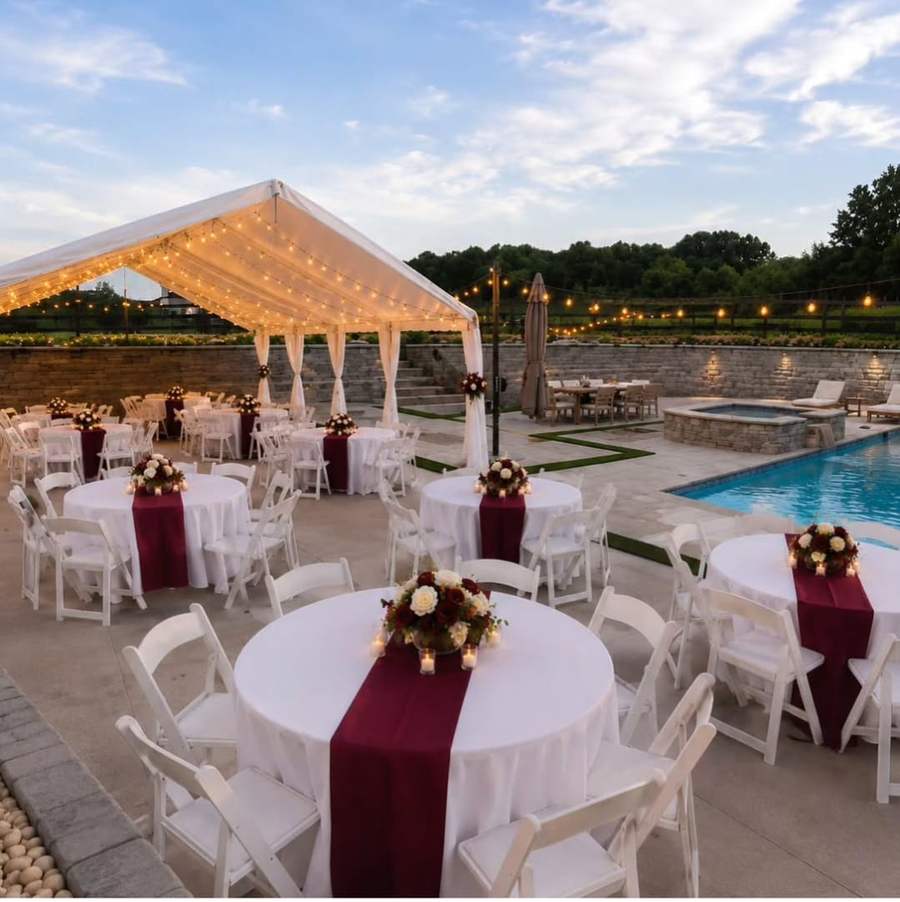
DecoEvent ATL offers a range of industrial fans and patio heaters that are specifically designed for outdoor winter gatherings. For a backyard in Johns Creek, we recommend pairing a commercial‑grade propane or electric patio heater with our high‑output industrial fans, which circulate warm air evenly throughout the tent interior. The heaters provide steady heat output without creating drafts, while the fans help prevent pockets of cold air and keep the temperature consistent for guests seated at round tables or standing around cocktail stations.
In addition to heaters, consider adding a heated cocktail table or a small fire pit (if allowed by local fire codes) to create focal points where guests can gather and stay warm. When sizing your heating equipment, use our verified capacity guidelines: a 20×30 foot tent comfortably seats 48–60 guests, so a single 48,000‑BTU heater can maintain a pleasant 65°F inside when ambient temperatures hover around 40°F. For larger tents, such as a 30×60 foot structure holding up to 150 seated guests, a combination of two heaters plus a couple of fans is ideal. Always position heaters away from draped fabric and décor to avoid fire hazards.
Calculating Guest Capacity and Seating Arrangements for Comfort
Understanding how many guests can comfortably fit under your chosen tent is essential for both safety and warmth. Our technical capacities are precise: a 4‑foot round table seats 4–6 guests, a 5‑foot round table comfortably serves 8 guests (up to 10 with a tighter layout), and a 6‑foot round table fits 10 guests comfortably, expanding to 12 only with a specially approved arrangement. For a typical winter party of 80 guests, you might opt for a 20×40 foot tent, which seats 64–80 guests seated, or arrange cocktail‑style standing tables to increase capacity up to 100 people.
Combine round tables with a few cocktail tables (30‑inch Flash Furniture) placed near the bar or food stations; plan roughly one cocktail table per 8–12 guests. For example, with 80 guests you could use ten 5‑foot round tables (8 guests each) and four cocktail tables, providing both seated dining and casual mingling spots. This layout ensures that heat circulates efficiently, as the warmth from the heaters can reach all seating zones without obstruction from overly dense furniture arrangements.
Preparing the Yard: Layout, Flooring, and Safety
Before any tent arrives, clear the backyard of debris, trim low branches, and level the ground as best as possible. In the St. Ives and Medlock Bridge neighborhoods, many properties feature gently sloping lawns that may collect water; placing a temporary polyethylene floor or interlocking rubber tiles helps prevent moisture from seeping into the tent and provides a non‑slip surface for guests. This flooring also adds an insulating layer, keeping the interior warmer and protecting furniture from dampness.
Next, map out the exact placement of the tent, ensuring there is at least a three‑foot clearance on all sides for safe entry and exit. Mark the locations of heaters, industrial fans, and any electrical outlets needed for sound and lighting, keeping a minimum of three feet between heat sources and draped fabric, decorative arches, or balloon installations. If you’re installing a dance floor, position it centrally under the tent’s brightest LED lighting and away from direct heater airflow to avoid uneven heat distribution. Finally, set up perimeter lighting (bistro strings) to guide guests safely from the parking area to the event space as dusk settles.
Timeline: From Setup to Takedown on a Cold Day
A well‑structured timeline is the backbone of a successful winter outdoor party. Begin the day of the event with a morning delivery of the tent, tables, chairs, and heating equipment; our team typically arrives at the venue by 9:00 AM, which allows enough time for a 20×30 or 20×40 foot tent to be fully erected, anchored, and inspected before guests arrive. By 11:00 AM, the structure should be up, and the heating units can be turned on to begin warming the interior.
- 12:00 PM – Lay down floor covering, set up tables and chairs, and position cocktail stations.
- 1:00 PM – Install lighting (LED tent lighting for overall illumination and bistro strings for ambience).
- 2:00 PM – Conduct a final safety walk, checking heater placement, fan operation, and electrical connections.
- 3:00 PM – Guests begin to arrive; open the welcome area with a heated beverage station.
- 6:00 PM – Main dinner or catering service starts; keep heaters running at a steady output.
- 10:00 PM – Begin takedown of lighting and decorative elements while keeping the tent heated for late‑night mingling.
- 11:30 PM – Full breakdown of tables, chairs, and heating equipment; removal of the tent and final site clean‑up.
By following this schedule, you ensure that the tent is fully heated before guests step inside, that all decor is in place, and that the event wraps up smoothly without compromising safety or comfort.
Rain and Weather Contingency Plans
Winter weather in North Georgia can be unpredictable, with sudden rain showers or even light snow. Our tents come equipped with waterproof covers and optional sidewalls that can be added quickly if rain is forecasted. Should a wet front arrive, sidewalls can be deployed in under 30 minutes, sealing the perimeter and keeping the interior dry while still allowing for ample airflow. In the event of a severe storm, we recommend moving the party to an indoor location, but we can also relocate the entire setup to a nearby cleared area, provided it meets our safety standards.
To minimize disruption, include a “rain plan” clause in your event itinerary: keep a backup indoor venue on standby, and communicate the plan to guests ahead of time via email or a group chat. Our team will also monitor weather updates on the day of the event and notify you immediately if conditions warrant a change. This proactive approach ensures that even if the temperature drops further or rain falls, your guests stay comfortable and the celebration proceeds without a hitch.
Logistics: Getting Our Equipment to Johns Creek Efficiently
Driving from our warehouse in Pendergrass to Johns Creek typically takes about 45 minutes, covering roughly 38–42 miles depending on traffic. While this distance sits near the outer edge of our 40‑mile service radius, we always verify the exact mileage once you provide the full street address. Our delivery trucks are equipped with lift gates and tie‑down systems to secure tents, chairs, and heating units during transport, ensuring they arrive in pristine condition.
Upon arrival, our crew will unload the equipment at the designated staging area—usually the driveway or a cleared section of the lawn—then proceed with the setup as outlined in the timeline. If the venue has limited parking or narrow access, we can coordinate a short walk from the truck to the tent site using hand carts, which helps protect delicate lighting fixtures and prevents damage to the tent fabric. Finally, once the event concludes, the same crew will efficiently break down the equipment, load it back onto the truck, and return to the warehouse for storage and preparation for the next booking.
Frequently asked questions
What size tent is best for 80 guests in Johns Creek?
A 20×40 foot tent comfortably seats 64‑80 guests seated, or up to 100 standing, making it ideal for an 80‑person winter celebration.
How many heaters do I need for a 30×60 tent?
For a 30×60 foot tent, two high‑output patio heaters plus a couple of industrial fans will maintain a pleasant temperature for up to 150 seated guests.
Can I have a dance floor inside the winter tent?
Yes, place the dance floor centrally under LED tent lighting, away from direct heater airflow, and ensure the floor is covered with a non‑slip surface.
What is the rain plan if it starts pouring?
Add sidewalls to the waterproof tent cover; they can be installed quickly to keep the interior dry while still allowing ventilation.
Do you provide lighting for a winter evening event?
We offer full‑size LED tent lighting for overall illumination and bistro strings for ambience, both of which work well in low‑light winter conditions.
How far is your service area from Johns Creek?
Johns Creek is near the outer edge of our 40‑mile radius; please provide your exact address so we can confirm delivery logistics.