
Understanding Your Wedding Vision and Tent Options
When planning a celebration in Pendergrass GA, the first step is to picture the atmosphere you want for your ceremony and reception. A clear vision helps you decide whether you prefer an open‑air feel with elegant draping or a more enclosed space that offers shelter from sun or breeze. Local couples often describe the charm of a backyard wedding as intimate yet spacious enough to accommodate family traditions, music, and a dance area. Thinking about the flow—from the entrance to the ceremony site, cocktail hour, and dinner—guides the layout of tables, chairs, and any additional features like a sweetheart table or a lounge zone. By outlining these details early, you create a roadmap that informs every rental decision, from tent style to accessory choices.
DecoEvent ATL offers a range of commercial‑grade tents that are built for durability and visual appeal. The structures feature galvanized steel frames, waterproof covers, and UV protection, ensuring they remain stable on grass or concrete surfaces after a quick site check. Because each tent is installed and removed by a professional crew, you can focus on enjoying the day rather than worrying about setup logistics. The inventory includes several footprints, allowing you to match the shelter size to your guest count and desired activities. Understanding the differences between a simple canopy and a fully draped structure helps you communicate your preferences clearly when you request a custom quote.
Choosing the Right Tent Size for Your Guest List
Determining the appropriate tent dimensions starts with an accurate headcount. Consider not only the number of seated guests but also those who may be standing during cocktail hour or dancing later. A 10×10 footprint comfortably accommodates six to eight people for a meal, while a 10×20 expands that range to sixteen to twenty seated guests. Moving up, a 20×20 tent provides space for thirty‑two to forty seated attendees, and a 20×30 extends capacity to forty‑eight to sixty. For larger gatherings, a 20×40 holds sixty‑four to eighty seated guests, and the expansive 30×60 can host one hundred twenty to one hundred fifty seated guests, with flexibility for cocktail‑style arrangements. Matching the footprint to your guest list ensures everyone has room to move, eat, and celebrate comfortably.
Beyond seating, think about auxiliary zones such as a buffet table, a bar, a cake display, or a dance floor. Allocating extra square footage for these elements prevents crowding and maintains a smooth flow. For example, if you plan a live band or DJ, consider a dedicated area that does not interfere with dining tables. Sketching a simple layout on paper or using an online planner can visualize how each component fits within the chosen tent. This foresight reduces last‑minute adjustments and helps the installation team place anchors, sidewalls, and accessories precisely where they are needed.
Essential Add‑Ons: Flooring, Lighting, and Draping
While the tent provides shelter, additional elements enhance comfort and aesthetics. Flooring options such as interlocking panels or portable dance floors create a stable surface for high‑heeled shoes and protect the grass underneath. These systems are quick to lay down and remove, leaving the yard in its original condition after the event. Choosing a neutral tone lets your décor shine, while a subtle pattern can add texture without overwhelming the space. Discussing flooring needs early ensures the crew brings the right materials and allocates sufficient time for installation.
Lighting sets the mood as daylight fades. LED tent lighting delivers even illumination across the entire canopy, while bistro strings add a warm, romantic glow above tables and pathways. Uplighting can highlight architectural features or floral arrangements, creating depth and visual interest. Draping transforms the interior with soft fabrics that frame the space, conceal structural elements, and introduce color or texture that matches your palette. Because pillar‑only draping requires a custom quote based on the number of pillars, fabric choice, and tent size, a conversation with a sales representative clarifies the exact look and cost. Combining these accessories results that feels polished.
wedding tent rental Pendergrass GA style you envision. Together, flooring, lighting, and draping craft a cohesive environment that feels both welcoming and refined.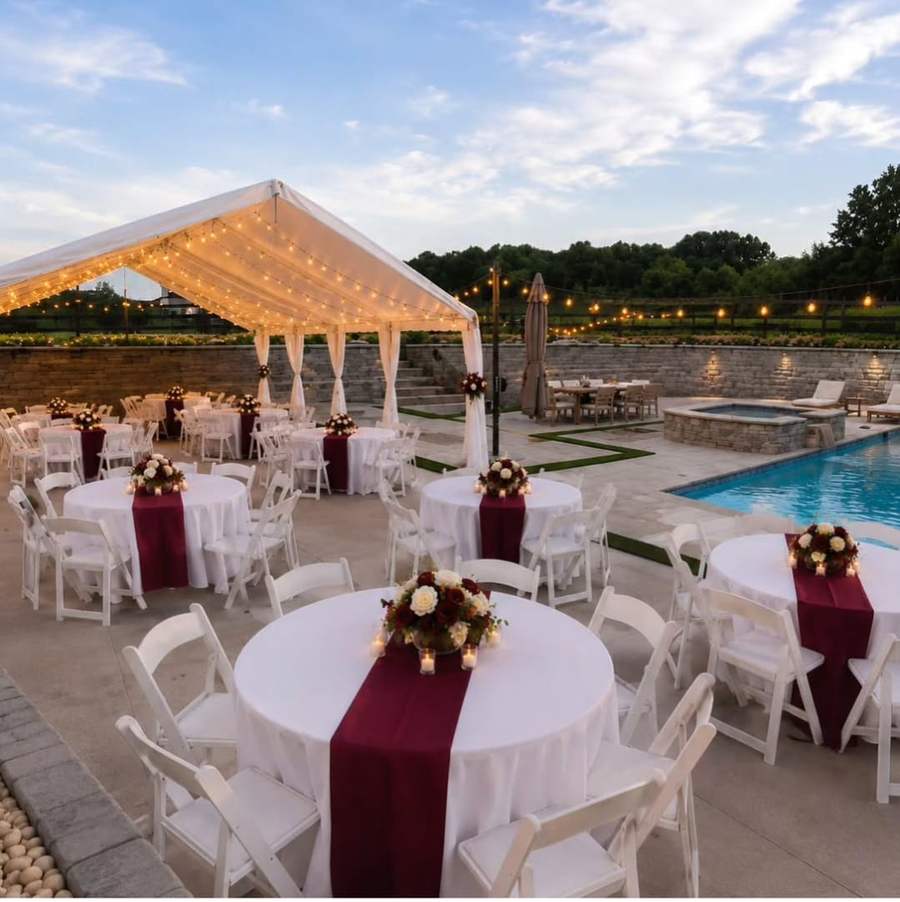
Coordinating Delivery, Setup, and Timeline
Logistics begin with confirming the exact event address, including street, city, state, and ZIP code. This information allows the team to calculate the travel distance from the Pendergrass warehouse and determine the appropriate departure time. Knowing whether the location is within zero‑to‑fifteen miles, sixteen‑to‑thirty miles, or thirty‑one‑to‑fifty miles helps the crew plan for any applicable travel considerations. Providing the full address avoids delays and ensures the delivery vehicle can navigate driveways, gates, or any narrow access points safely.
The installation crew arrives ahead of the scheduled start time to unload, position the tent, and secure it with stakes or weights depending on the surface. While the tent is being erected, other teams can begin laying flooring, hanging lighting, and arranging draping. A clear timeline—typically a few hours before guests arrive—allows for a final walkthrough to verify that tables, chairs, and any rental items are placed according to the agreed layout. After the celebration, the crew efficiently breaks down the equipment, loads it onto the truck, and restores the site to its original condition, leaving you free to enjoy the memories without post‑event cleanup concerns.
Weather Contingency and Rain Plan
Outdoor celebrations in North Georgia can experience sudden showers, so preparing for adverse conditions is wise. The tents offered by DecoEvent ATL come with optional sidewalls that can be attached quickly if rain begins, providing a barrier while preserving the interior ambiance. Having sidewalls on hand means you do not need to pause the festivities; guests remain sheltered, and the event continues smoothly. Discussing the availability of sidewall panels during the planning stage ensures they are ready to deploy at a moment’s notice.
In cases where weather makes setup unsafe—such as sustained high winds or lightning—the contract allows for rescheduling to a later date. This flexibility protects both your investment and the safety of the crew and attendees. Keeping an eye on the forecast in the days leading up to the event and maintaining open communication with the rental provider helps you make informed decisions. By planning for both sunshine and rain, you create a resilient celebration that proceeds regardless of atmospheric surprises.
Local Logistics: Drive‑In Access and Yard Preparation
Pendergrass sits just a short drive from the company’s headquarters, making delivery efficient and reducing travel time for the crew. The warehouse is located within five minutes of most residential streets in the area, which means the team can arrive promptly and begin work without lengthy transit delays. Knowing that the equipment originates locally also simplifies coordination, as any last‑minute adjustments or additional items can be sourced quickly from nearby inventory.
Preparing your yard before the crew arrives contributes to a smooth installation. Clear the designated area of loose debris, toys, or garden equipment that could interfere with anchoring. If the ground is soft from recent rain, consider laying down temporary ground protection to prevent the tent stakes from sinking. Marking the corners of the intended footprint with spray paint or flags helps the crew align the structure accurately. Informing the team about any underground utilities, sprinkler heads, or hidden obstacles ensures they can place weights or stakes safely, avoiding damage to property or utility lines.
Final Checklist and Next Steps
As the event date approaches, run through a concise checklist to confirm every detail has been addressed. Verify that the guest count is finalized, the tent size matches the planned layout, and all desired accessories—flooring, lighting, draping, sidewalls, and any additional items like a dance floor or cocktail tables—are noted in the order. Confirm the exact start and end times, and ensure the crew has a point of contact on site for any questions that may arise during setup or takedown. Having this information ready minimizes surprises and keeps the timeline flowing as intended.
When you feel ready to move forward, reach out via the preferred contact method to discuss your vision and receive a custom quote. The conversation will cover the specific tent footprint, accessory selections, delivery logistics, and any site‑specific considerations unique to your property in Pendergrass GA. By collaborating closely with the rental team, you secure a solution that reflects your style, accommodates your guests, and celebrates your special day without compromise. The result is a beautifully sheltered gathering that feels both personal and professionally executed, leaving you free to focus on enjoying the moments with loved ones.
Frequently asked questions
How far in advance should I book a wedding tent in Pendergrass GA?
It is advisable to reserve your tent several months ahead, especially for popular weekend dates during spring and fall, as inventory fills quickly due to high demand for local celebrations.
What information do I need to provide for a delivery estimate?
You must share the full event address, including street, city, state, and ZIP code, so the team can calculate the mileage from the Pendergrass warehouse and determine any travel considerations.
Can the tent be set up on uneven ground?
The installation crew evaluates the surface during a site check and uses appropriate anchoring methods, such as stakes for grass or weights for concrete, to ensure stability on varied terrain.
Are sidewalls available for all tent sizes?
Sidewall panels can be added to most tent models; confirming the exact number and size needed during planning ensures they are ready to deploy if weather changes.
Is there a limit to how many guests can dance inside the tent?
The dance floor area should be planned separately from dining tables; a typical layout allows ample space for guests to move freely while maintaining comfortable seating elsewhere.
What happens if the weather becomes unsafe on the day of my event?
If conditions such as strong winds or lightning make setup hazardous, the contract allows for rescheduling to a later date to protect everyone involved.