
Understanding the Challenges of a Tent on Sloped Yard Norcross GA
Setting up a tent on sloped or uneven terrain introduces several factors that must be addressed before guests arrive. In Norcross, many residential yards feature gentle grades, especially in the historic districts near Jimmy Carter Boulevard, where the landscape can shift a few feet over a short distance. This slope affects how weight is distributed across the tent frame, potentially causing stress on poles and fabric if not properly compensated. Recognizing these challenges early helps you select the right equipment and preparation techniques to keep the structure stable throughout the event.
Beyond the physical tilt, uneven ground can create pockets where water collects after rain, leading to soggy flooring and slippery surfaces. In Norcross, the clay‑rich soil common to Gwinnett County retains moisture longer than sandy soils, which means drainage planning becomes essential. Additionally, the slope may affect guest flow, making certain areas feel cramped or causing guests to step unevenly when moving between tables and the dance floor. By evaluating the grade, soil type, and expected weather, you can develop a plan that mitigates these issues while still delivering a comfortable outdoor experience.

Site Preparation Steps for a Tent on Sloped Yard Norcross GA
The first step in preparing a sloped yard is to conduct a simple on‑site assessment using a long level or a smartphone inclinometer app. Measure the slope at several points along the intended footprint; a grade under 5 percent is generally manageable with standard anchoring, while steeper inclines may require additional shoring or leveling platforms. In Norcross, many yards off Jimmy Carter Boulevard show a gradual rise toward the rear, so positioning the tent with the higher end facing uphill can help balance loads.
Next, clear the area of debris, rocks, and loose vegetation that could shift under weight. If the soil is soft, consider laying a ground protection layer such as interlocking plywood sheets or heavy‑duty turf protection mats; these distribute the tent’s weight and prevent the frame from sinking into uneven spots. For areas where the slope creates a noticeable dip, you can build a shallow berm using compacted soil or sandbags on the lower side to create a more level base. Always verify that the final surface feels firm underfoot before proceeding to the tent erection.
Choosing the Right Tent Type for Uneven Ground
Not all tent designs handle slope equally well. Frame‑tents with adjustable pole bases allow you to fine‑tune each leg’s height, making them suitable for modest grades common in Norcross residential lots. Pole‑tents, while quicker to set up, rely on uniform ground contact and may need extra shims on the lower side to maintain tension. For events expecting higher wind loads, a tension‑tent system with ratchet straps offers additional adjustability, letting you compensate for differential settling across the footprint.
When selecting a size, consider how the slope impacts usable interior space. A 20×20 frame‑tent, which seats roughly 32‑40 guests comfortably, may lose a few square feet of standing area on the lower side if the grade is steep. In such cases, opting for a slightly larger footprint—such as a 20×30—provides a buffer that preserves seating capacity while accommodating the tilt. Always discuss the specific yard conditions with the delivery crew so they can bring the appropriate base plates, adjustable brackets, and leveling tools needed for a secure installation.
Anchoring and Stabilization Strategies
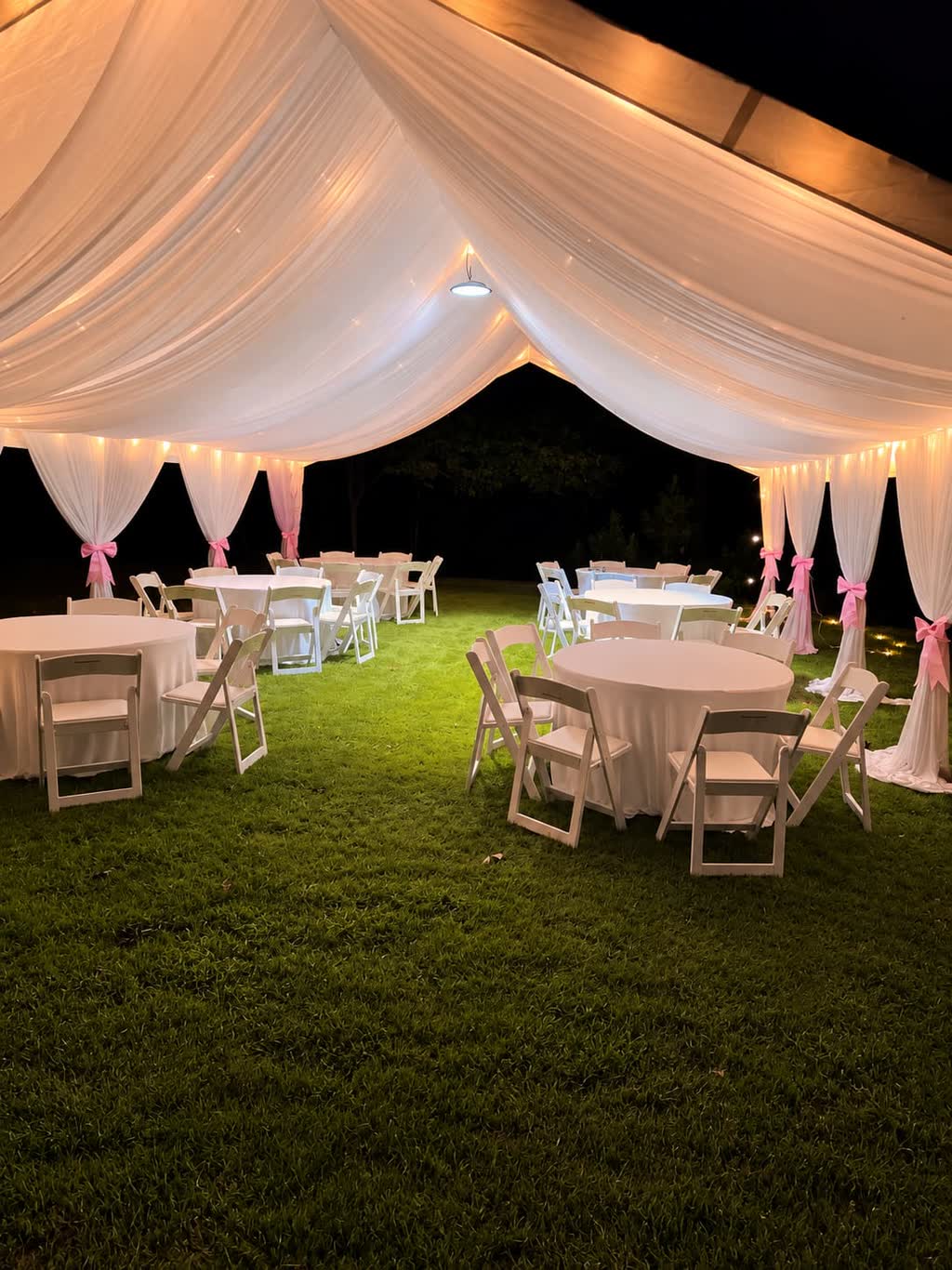
Proper anchoring is critical when the ground is not level. For grass surfaces, heavy‑duty steel stakes driven at least 24 inches deep provide reliable hold, especially when placed at an angle opposite the slope’s direction. On harder surfaces like compacted soil or concrete pads, weighted sandbags or water barrels act as effective counterweights; these can be stacked on the higher side of the tent to offset the downward pull on the lower side. In Norcross, where many yards transition from grass to driveway edging, a combination of stakes and sandbags often yields the best result.
Additionally, sidewalls equipped with tension straps help resist lateral forces that can arise when wind pushes against the taller side of a sloped setup. Installing the sidewall so that the tension runs parallel to the slope reduces the chance of the fabric billowing unevenly. Regularly check all anchor points throughout the event, especially after any rain shower, to ensure that stakes have not loosened and that sandbags remain securely positioned. This ongoing vigilance keeps the tent safe and comfortable for all attendees.
Guest Flow and Layout Planning on a Slope
Designing the event layout begins with mapping the high and low points of the yard. Place the main dining or seating area on the flatter section, typically near the center of the tent footprint, to avoid guests having to navigate a noticeable incline while eating or conversing. In Norcross homes with a gentle rise toward the backyard, aligning the long axis of a 20×30 tent perpendicular to the slope creates two relatively level zones—one for tables and another for a dance floor or lounge area.
Consider the placement of walkways and service zones. A clear, wide pathway of at least four feet should run from the entrance to the rest of the yard, following the contour of the slope to minimize tripping hazards. Position the catering station or beverage table on the higher side so that servers can move trays downhill with less effort, reducing strain and the chance of spills. Finally, ensure that any elevated features like a small stage or DJ booth sit on a level platform built with adjustable risers, preserving both safety and visual appeal across the sloped terrain.
Timeline from Delivery to Takedown in Norcross
Because DecoEvent ATL’s warehouse is located in Pendergrass, GA, the drive to Norcross takes approximately 45 minutes under normal traffic conditions, following I‑85 south and exiting onto Jimmy Carter Boulevard. Delivery crews aim to arrive at least two hours before the scheduled start time to accommodate site checks, unloading, and the leveling process described above. This window allows for any unexpected adjustments, such as adding extra shims or repositioning sandbags, without rushing the setup.
The actual erection of a mid‑size frame‑tent typically takes between 60 and 90 minutes, depending on the crew size and the complexity of the slope adjustments. Once the tent is secured, the team proceeds with installing flooring, draping, lighting, and any rented furniture such as tables, chairs, or cocktail tables. After the event concludes, the takedown process mirrors the setup in reverse: dismantling decor, collapsing the frame, loading equipment, and performing a final site sweep to leave the yard as it was found. The entire operation usually wraps up within 90 minutes after the last guest departs, ensuring the driveway is clear for the return trip to Pendergrass.
Rain Plan and Weather Contingencies for Sloped Yards
Even with careful preparation, sudden showers can affect a tent on uneven ground. The primary defense is to equip the tent with sidewalls that zip or Velcro shut, creating a sealed enclosure that keeps rain out while maintaining ventilation through mesh panels. In Norcross, where afternoon thunderstorms are common in spring and summer, having sidewalls ready to deploy within minutes can prevent water from pooling on the lower side of the tent and reduce the risk of slippery surfaces inside.
If the forecast calls for prolonged rain or strong winds, consider postponing the event to a later date or moving it to a fully covered area such as a carport or garage, provided the space meets local safety regulations. DecoEvent ATL’s policy allows date changes when weather makes setup unsafe, and the team will work with you to reschedule without penalty. Always keep a copy of the rental agreement and a contact number handy—(678) 815‑8774—so you can reach the crew quickly for any last‑minute adjustments or emergency support.