
Planning the Perfect Winter Outdoor Party in Sugar Hill GA
Winter outdoor gatherings in Sugar Hill, located in beautiful Gwinnett County, can feel magical when the right preparations are in place. The first step is to visualize the space: whether you’re setting up in a yard near The Bowl area or a lake‑adjacent property off Peachtree Industrial, you’ll need to evaluate ground conditions, slope, and any existing structures that could affect tent placement. Because the average temperature in January and February often dips into the 30s°F, a solid heating strategy is essential for guest comfort. Start by mapping the perimeter of your chosen yard, marking out where the tent will sit, where tables will be arranged, and where heating units can be positioned without blocking traffic flow. Remember that the distance from our Pendergrass warehouse is roughly 33 minutes, which impacts delivery timing and allows us to coordinate a smooth setup on the day of the event.
Next, confirm your guest list early. Accurate headcounts drive every other decision, from the size of the tent to the number of heaters, lighting fixtures, and chairs required. If you expect 80 guests, for example, a 20 × 30 tent provides comfortable seating for roughly 48‑60 guests seated, but you’ll need to consider cocktail‑style arrangements that free up floor space for a dance area or a buffet. By calculating the exact number of attendees, you can determine how many 4‑foot round tables (each seating 4‑6 guests) or 5‑foot round tables (comfortably seating eight) are needed. This math also informs the amount of heat output required, ensuring you’re neither under‑ nor over‑heating the space. The following sections break down each component in detail, giving you a clear roadmap to a warm, inviting winter celebration.
Choosing the Right Tent for Warmth and Comfort
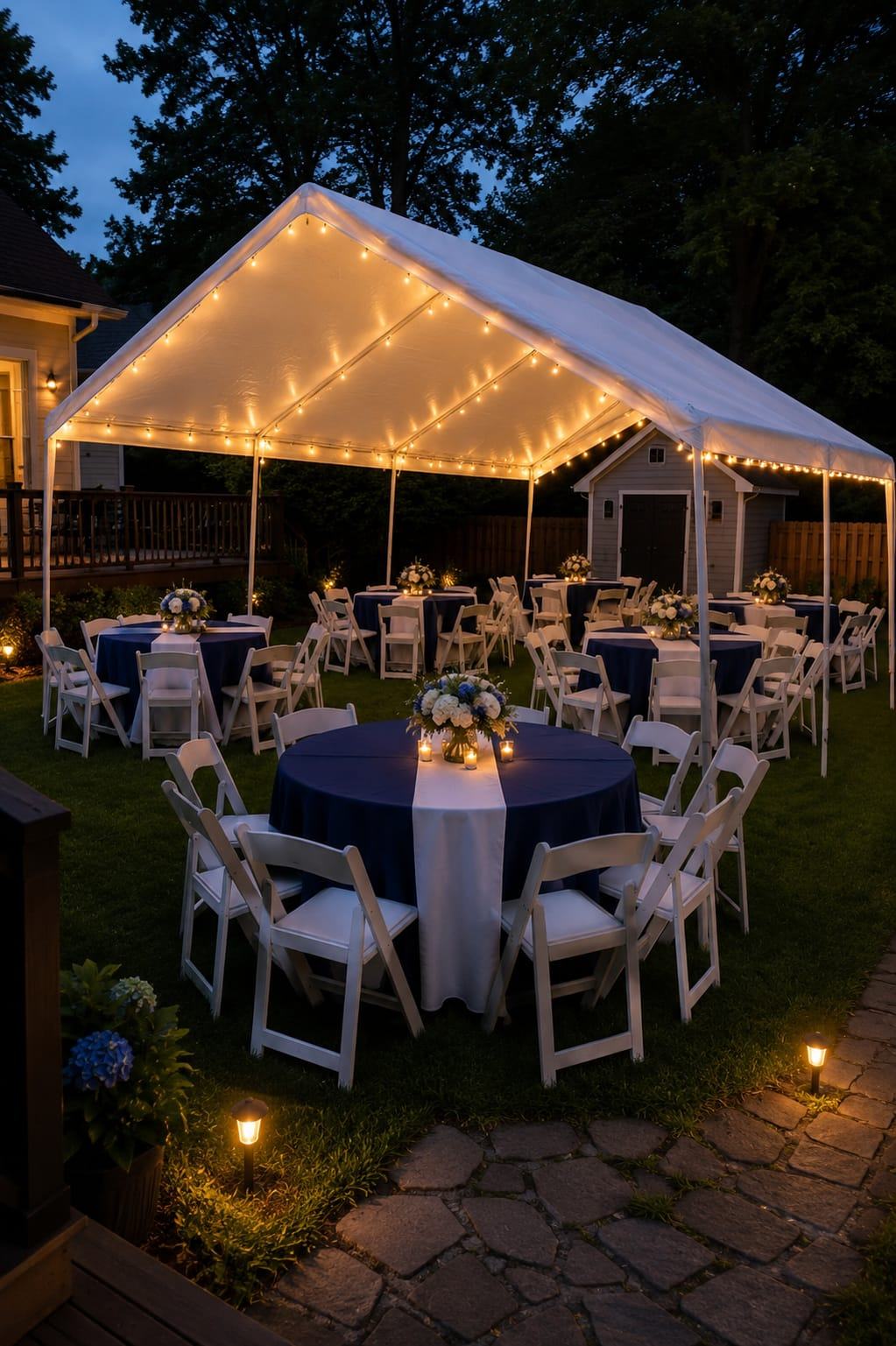
Selecting the appropriate tent size and style is the cornerstone of a winter outdoor party Sugar Hill ga experience. Our COBIZI commercial tents are built with galvanized steel frames, waterproof covers, and UV protection—ideal for holding heat and resisting wind gusts common in northern Georgia winters. For a moderate gathering of 80‑100 guests, the 20 × 30 tent strikes a balance between interior volume and heating efficiency; its footprint of 600 square feet allows for a central dance floor while still providing ample wall space for heating units and lighting rigs. If your guest count rises to 120 or more, the 30 × 60 tent becomes the logical upgrade, offering space for up to 150 seated guests and more room to distribute heat evenly.
Installation logistics also matter. Our professional team will deliver, install, and style the tent, ensuring that sidewalls are properly secured to block cold drafts. Ground preparation includes leveling the lawn, laying protective ground‑cover, and, if needed, placing sandbags or stakes for additional stability on uneven terrain. Because the tent’s interior can be sealed relatively well, you can supplement natural heat with portable propane heaters without losing too much warmth to the outside. Remember to verify that the chosen site allows for safe placement of fuel ‑ keep heaters away from the tent’s interior fabric and ensure proper ventilation, especially if using gas‑powered units.
Winter Outdoor Party Sugar Hill GA: Heating Solutions for Guest Comfort
With the tent secured, the next focus is heating. In a winter outdoor setting, a combination of radiant heat and forced‑air heaters works best. Propane patio heaters placed strategically around the perimeter provide localized warmth that guests can move toward as they mingle. For larger spaces like a 20 × 30 tent, you may need two to three heaters, each delivering 45,000‑50,000 BTUs, spaced evenly to avoid hot spots and cold corners. If you prefer electric options, high‑wattage industrial fans equipped with built‑in heaters can circulate warm air while also moving humidity away from the dance floor.
When positioning heaters, prioritize safety zones: keep a minimum of three feet between any heater and the tent fabric, tables, or decorative elements such as balloon arches or floral arrangements. Use fire‑resistant mats beneath each unit and ensure that any fuel source is stored in a well‑ventilated area away from guest traffic. For an added layer of comfort, consider a portable indoor‑style space heater in a corner of the tent designated for the older guests or those who may be more sensitive to the chill. Finally, coordinate with your sound and lighting crew so that heating units do not block speaker placement or lighting rigs, preserving the flow of both warmth and ambiance.
Seating, Tables, and Guest‑Count Math for a Cozy Layout
Accurate seating calculations prevent overcrowding and ensure that each guest enjoys sufficient warmth. Begin with your confirmed guest count; for instance, an event with 90 attendees can be comfortably accommodated using eight 5‑foot round tables (seating eight each) for a total of 64 seats, and two 6‑foot rectangular tables (seating eight each) for an additional 16, leaving room for a cocktail‑style standing area for the remaining guests. This configuration not only respects the tent’s capacity limits but also creates space for heaters to circulate air between tables without obstruction.
Don’t forget to add a few spare chairs for late arrivals or families with children. Our premium white resin folding chairs are lightweight yet sturdy, offering a seat height of 17.5 inches—comfortable for both indoor and outdoor surfaces. Pair these chairs with festive linens that match your party’s color palette; darker fabrics absorb more heat, subtly contributing to a warmer atmosphere. In addition, allocate at least one clear walkway of three feet width between rows of tables to allow airflow from heaters and to accommodate guests moving to the dance floor or buffet stations. By laying out the seating plan on paper first, you’ll be able to visualize the heat distribution and make adjustments before the tent is erected.
Lighting, Décor, and Crafting a Cozy Atmosphere
Winter evenings in Sugar Hill can be beautiful, especially when you enhance the night sky with thoughtful lighting. LED tent lighting provides full‑tent illumination and can be set to a warm white hue, creating an inviting glow that complements the heat provided by your heaters. In addition to the main lighting system, drape bistro strings above the cocktail area for a romantic, twinkling effect. Remember that bistro lighting is a separate product from tent lighting and should be installed after the tent structure is fully up.
Decor elements such as artificial florals, balloon arches, and draped fabric backdrops can double as windbreakers, reducing drafts that pull heat out of the tent. Choose thick, floor‑to‑ceiling draping for the sidewalls of the tent; this not only adds elegance but also creates an additional barrier against cold air. Place a few strategic fire pits on the outer perimeter of the tent (outside the fabric) to generate supplementary radiant heat that guests can gather around before entering the main space. Ensure all decorative items are positioned away from heaters to avoid fire hazards, and use flame‑retardant materials wherever possible.
Rain Plan and Weather Contingency for Winter Events
Winter weather in Gwinnett County can be unpredictable, with occasional rain, sleet, or even light snow. Our tents come equipped with sidewalls that can be added quickly if rain threatens to dampen the celebration. When a forecast calls for precipitation, schedule a brief pre‑event call with our logistics team to confirm that sidewalls will be installed on the day of the event. If the rain intensity exceeds safe levels for a tented setup, we will work with you to reschedule or relocate the event to a cleared, flat area where additional ground protection can be laid down.
In addition to sidewalls, have a backup power source ready for your heaters and lighting. Portable generators can keep the party running smoothly if the local grid experiences an outage due to a winter storm. Keep walk‑ways clear of snow or ice by having sand or non‑slip mats on hand; this not only protects guests from slips but also prevents heat loss from the tent’s base. Finally, communicate the rain plan to all vendors and guests ahead of time, so everyone knows what to expect and can dress appropriately for cooler, potentially damp conditions.
Logistics: Delivery, Setup Timeline, and Drive from Pendergrass
Effective logistics start the moment you confirm your event date. Our team will schedule a delivery window based on the 33‑minute drive from the Pendergrass warehouse to Sugar Hill, ensuring that all tent components, heaters, tables, and chairs arrive together. We recommend a two‑hour setup window: the first hour for tent erection, sidewall installation (if needed), and ground preparation; the second hour for arranging tables, chairs, lighting, and heating units. This timeline allows for a quick safety inspection before guests arrive.
Because our inventory of weekend tents and heating units is limited, we operate on a first‑confirmed‑booking basis. To avoid any surprises, provide your exact event address—including street, city, and ZIP code—so our logistics software can calculate the precise delivery fee based on distance. Once the address is confirmed, the delivery cost will be added to your quote alongside tax. Our drivers are familiar with the Sugar Hill area, including the popular Bowl and lake‑adjacent neighborhoods, and will follow the most efficient route to reach your yard promptly. Coordination with your on‑site contact will ensure that any last‑minute adjustments—such as moving a heater to a different corner—can be made quickly, leaving you free to enjoy the warm, festive celebration you’ve planned.
Frequently asked questions
What size tent is best for 80 guests in a winter outdoor party?
A 20 × 30 tent comfortably seats 80 guests with tables and space for heaters, while providing room for a dance floor and buffet.
How many heaters are needed for a 20 × 30 tent?
Typically two to three 45,000‑50,000 BTU propane heaters placed evenly around the perimeter keep the space warm without creating hot spots.
Can I use electric fans with built‑in heaters inside the tent?
Yes, high‑wattage industrial fans with heaters work well to circulate warm air, but ensure they are positioned away from flammable décor.
What is the recommended layout for tables to maximize heat distribution?
Arrange round tables in a circular pattern around the center, leaving three‑foot walkways between rows so warm air can flow freely.
How do I protect the tent from rain during a winter event?
Sidewalls can be added to the tent on the day of the event; they create a barrier against wind and rain while still allowing heat to stay inside.
What is the delivery distance from Pendergrass to Sugar Hill, GA?
The drive is about 33 minutes, roughly 30‑35 miles, and delivery fees are based on that distance once the exact address is provided.