
Why a Precise Timeline Matters for Atlanta Home Events
When you are hosting an outdoor celebration in an Atlanta backyard, rooftop patio, or a family yard between Buckhead and East Atlanta, every minute counts. A well‑structured event setup timeline ensures that the delivery crew, décor specialists, sound technicians, and bounce‑house operators all arrive and work in harmony, avoiding bottlenecks that could delay the ceremony or the first cocktail hour. By breaking the day into clearly defined blocks, you also give yourself room to address unexpected factors such as traffic, last‑minute guest changes, or a sudden rain shower. This guide walks you through each block, so you know exactly when the tents are upright, when the tables are arranged, and when the final walk‑through occurs before your guests step onto the grass.
DecoEvent ATL’s service radius covers Atlanta’s Fulton and DeKalb counties, which are roughly a 60‑minute drive from our Pendergrass warehouse. The distance influences delivery windows, fuel calculations, and crew fatigue, all of which we incorporate into the timeline. Knowing the exact travel time helps you schedule a buffer for the crew to arrive, unload the 20 × 30 COBIZI tent, set up lighting, and position the sound system for up to 300 guests. The following sections break the timeline into realistic phases, each supported by concrete local details that keep you confident from sunrise to sunset.
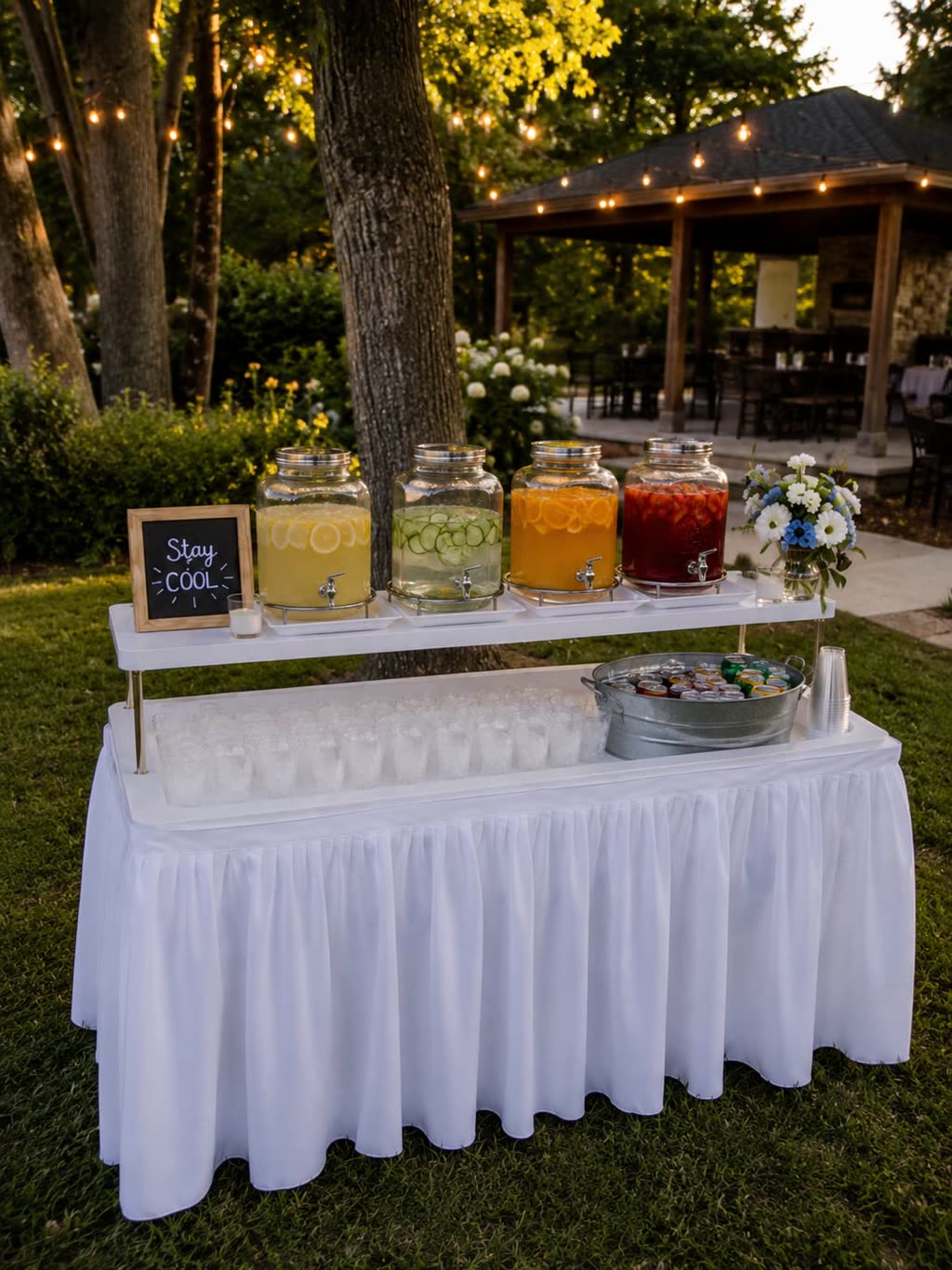
Day‑Before Preparations: Site Confirmation and Guest‑Count Math
To illustrate the math, let’s say you are expecting 150 guests. Using our 6’ round tables, each comfortably seats 10 guests, you would need 15 tables. Adding 2 × 4‑foot cocktail tables (each serving 2–4 standing guests) gives additional space for a welcome drink area. For a backyard with limited square footage, we can optimize the layout by placing two 10 × 20 tents side by side, creating a combined footprint of 20 × 20 that comfortably seats 32–40 guests, then supplement with a larger 30 × 60 tent for the main dining area. This arithmetic guides our crew in loading the correct number of tables, chairs, and linens the night before arrival.
Morning Arrival and Site Inspection (event setup timeline Atlanta ga)
On the day of the event, our delivery team departs the warehouse at least two hours before the scheduled “setup start” time to account for morning rush hour on I‑285 and GA‑400. Upon arrival at the Atlanta address, the crew performs a quick site inspection: they verify that the ground is level, confirm there is adequate clearance for the selected tent size, and check for any obstacles such as parked cars, garden beds, or temporary structures. If the property sits on a concrete patio, we lay down protective mats for the chairs; if it’s a grassy yard, we use steel‑reinforced stakes to secure the tent corners.
During this inspection we also evaluate the rain‑plan options. For Atlanta’s unpredictable spring showers, we recommend sidewalls for the 20 × 30 or larger tents, which can be attached in under 30 minutes. The crew will measure the distance from the nearest power source to ensure the sound system and LED tent lighting have sufficient 110‑120 V outlets, and they will mark where the industrial fans will be placed if the forecast calls for high humidity. All of these checks are logged in a checklist, and any necessary adjustments are communicated to the host within 15 minutes, keeping the overall timeline on track.
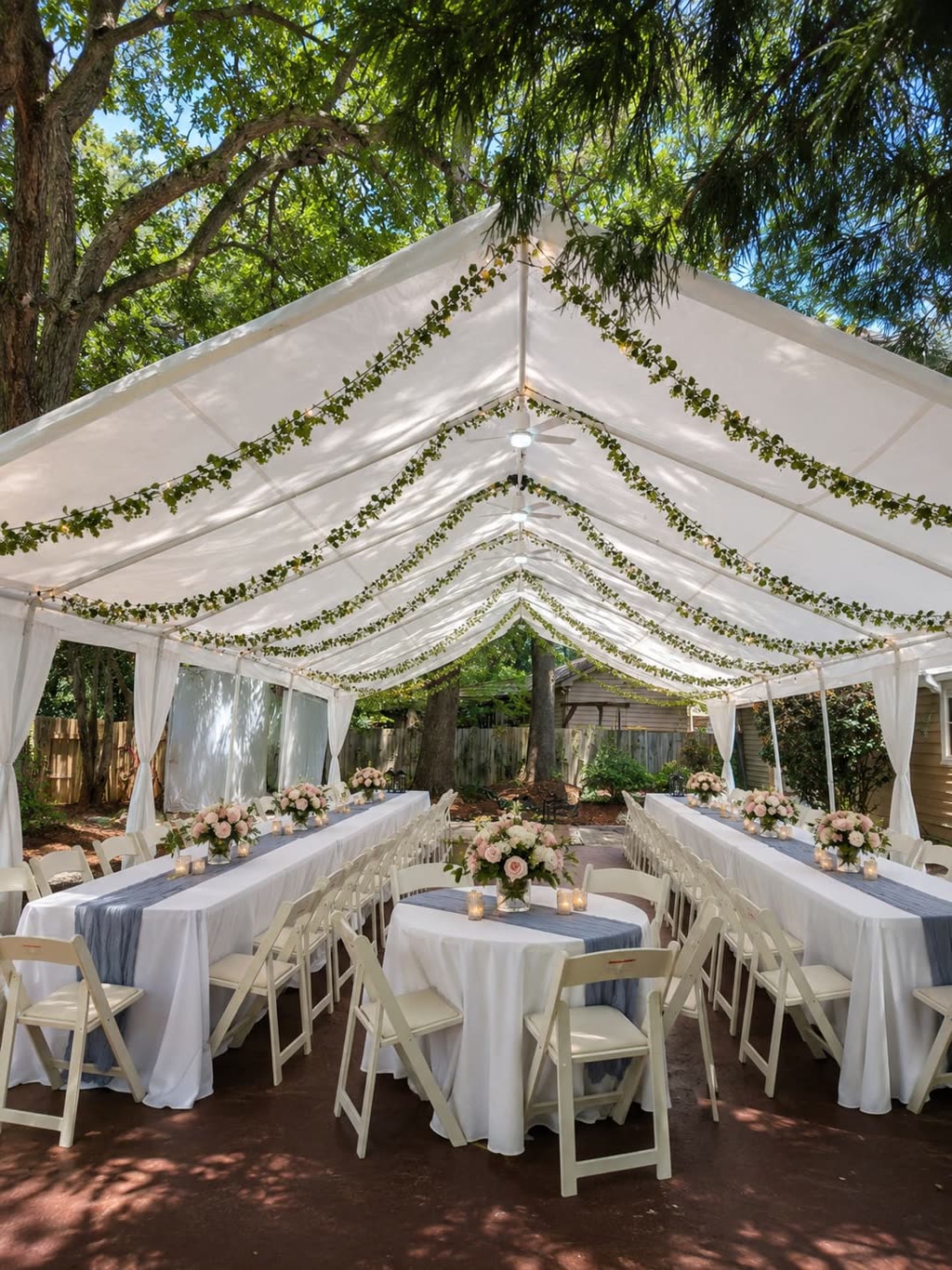
Tent and Structure Installation: From Foundations to Ceiling
The first hands‑on task after the inspection is erecting the commercial COBIZI tent. For a 20 × 30 tent, two crew members unpack the galvanized steel frame, position the four corner poles, and insert the cross‑beams. The assembly takes roughly 45 minutes with two professionals, but we allocate a full hour to allow for any minor site variations. Once the frame is standing, the waterproof canvas is draped over the top, and the UV‑protected covering is tensioned. If sidewalls are required, they are zip‑tied to the frame and secured with earth anchors, creating a sealed enclosure that can withstand moderate winds up to 30 mph.
After the main structure is up, we attach LED tent lighting. Our lighting package is sized to the tent’s dimensions; for the 20 × 30 tent we install 12 LED strips evenly spaced along the interior perimeter, providing uniform illumination without glare. The lighting rig is powered from the house’s main circuit using a dedicated 20‑amp extension cord, and all connections are covered with weather‑proof connectors. Once the lighting is tested, the crew proceeds to install the internal trusses that will hold the bistro strings if the host desires an additional decorative glow over the dining tables. This entire tent phase, from foundation to lighting, is scheduled for 1 hour and 15 minutes, providing a reliable buffer before furniture arrives.
Furniture Layout, Guest‑Count Planning, and Comfort Details
With the tent interior ready, the next step is arranging tables, chairs, and linens according to the guest‑count calculations performed the previous day. Our team pulls the 6‑foot round tables from the truck, each pre‑loaded with the appropriate number of premium white resin folding chairs (9 lb each, static capacity 650 lb). For a 150‑guest wedding, we would set up 15 round tables, each with 10 chairs, leaving 30‑minute window for precise spacing. We maintain a minimum of 6 feet between tables to allow for movement and for the dance floor, which for an Atlanta backyard is typically a 12 × 12 rubber mat placed at the center of the main tent.
After tables are positioned, we lay down the linens, runners, and napkins. The chosen color palette can be matched to the host’s decor theme, and the crew will ensure that each table has a centerpiece—artificial florals or balloon arches—secured to the table’s center without obstructing guests’ view. In addition, we place industrial fans at strategic points to circulate air, especially important for July events when Atlanta temperatures exceed 90 °F. Finally, we conduct a quick headcount verification: the crew walks the rows, confirms that the number of seated guests matches the original count, and makes any last‑minute adjustments to table placement.
Decorating, Lighting, Sound, and Rain‑Plan Finalization
With the structural and furniture elements in place, our décor specialists begin the aesthetic work. Full‑tent draping is installed only after the main lighting is tested, to avoid damage to fabric. For a 20 × 30 tent, draping runs from the ceiling beams down to the floor in a soft cascade, creating an elegant backdrop for the ceremony area. Pillar‑only draping can be quoted separately if the host desires column accents without full coverage. After draping, bistro strings are hung above the tables, providing a warm, twinkling effect that complements the LED tent lighting.
Sound technicians then set up the PA system, positioning speakers on either side of the dance floor to ensure even coverage for up to 300 guests. Microphones are placed at the ceremony podium and the DJ booth, which is typically located on a raised platform near the back of the tent. We test the system with a short music track, checking for any echo or feedback. Simultaneously, the rain‑plan is re‑checked: sidewalls are sealed, and any water‑runoff channels are cleared. If a forecasted thunderstorm arrives, the crew is ready to close the sidewalls within 10 minutes, keeping guests dry while the party continues inside the protected area.
Final Walk‑Through, Guest Arrival, and Teardown Procedure
The final walk‑through occurs 30 minutes before the scheduled guest arrival time. The host walks the perimeter with the event manager, confirming that all décor pieces are in place, the lighting is at the desired intensity, and the sound levels are appropriate for background music. Any final tweaks—adjusting a balloon arch, tightening a drape, or repositioning a fan—are completed during this window. Once the guests begin to arrive, the crew stays on standby to address any immediate concerns, such as a wobbling table or a loose lighting strap, ensuring the celebration proceeds without interruption.
When the event concludes, the teardown timeline mirrors the setup but moves in reverse order. The sound system is powered down and packed first, followed by the removal of bistro strings and draping. Tables are cleared, chairs are stacked, and linens folded for return to the warehouse. The tent is disassembled, sidewalls folded, and the frame loaded onto the truck. Our crew aims to complete teardown within 2 hours, allowing for a prompt departure back to Pendergrass while leaving the host’s property clean and undamaged. A post‑event checklist is emailed to the host, summarizing what was provided, any notes on wear, and the next steps for future events.
Frequently asked questions
What is the typical start time for the setup crew in Atlanta?
The crew usually arrives two hours before the scheduled “setup start” to accommodate morning traffic and perform a quick site inspection.
How long does it take to erect a 20 × 30 COBIZI tent?
Erecting the frame, covering it, and securing sidewalls generally takes about one hour, plus an additional 15 minutes for lighting installation.
Can I change the number of tables after the initial guest‑count is confirmed?
Yes, you can adjust the table count up to 48 hours before the event; the crew will re‑calculate spacing to keep the layout comfortable.
What rain‑plan options are available for an outdoor Atlanta event?
We offer sidewall attachments for all tent sizes, plus quick‑seal closures that can be installed in under 10 minutes if a storm approaches.
Do you provide sound and lighting for rooftops as well as yards?
Yes, our technicians assess power availability and structural limits on rooftops, then set up the PA system and LED lighting accordingly.
How is the teardown schedule coordinated with my neighbors?
We schedule teardown to begin after the event end time, typically finishing within two hours, and we clean the area to minimize any impact on neighboring properties.