
Understanding the Role of Audio in Outdoor Events
Outdoor celebrations rely on clear audio to convey speeches, music, and announcements to every guest, regardless of where they are standing or sitting. When sound travels through open air, it can dissipate quickly, especially in larger yards or near natural background noise such as traffic or wind. A well‑designed sound system ensures that the couple’s vows, a birthday toast, or a DJ’s set are heard with the same clarity as if the event were held indoors. This consistency helps maintain the mood and keeps guests engaged throughout the program. In Monroe, where many properties feature spacious lawns and historic‑district settings, proper audio placement becomes a key factor in creating a memorable experience that feels both intimate and expansive.
Several environmental factors can affect audio quality outdoors, making preparation essential. Wind can carry sound away from the intended audience, while temperature gradients can cause refraction that shifts where the audio is heard. Ambient noise from nearby roads, lawn equipment, or even cicadas can mask lower frequencies, requiring a system with sufficient headroom to overcome these obstacles. Proper speaker placement—elevating mains, angling them toward the crowd, and using delay speakers for larger areas—helps mitigate these challenges. Additionally, selecting the right microphone type, such as a directional handheld for speeches or a lapel for presenters, reduces feedback and captures voice clearly without picking up excessive wind noise.
Party Sound Rental Monroe ga: Choosing the Right Equipment
When planning a party in Monroe, the first step is to match the audio equipment to the specific nature of the celebration. A lively quinceañera with live band performances demands powerful main speakers, stage monitors, and a multichannel mixer to balance instruments and vocals. A more relaxed gathering focused on background music and speeches may only need a compact PA system, a couple of wireless microphones, and a simple mixer for level adjustments. Understanding the program flow—whether there will be live performances, a DJ set, or recorded playlists—guides the selection of gear that delivers the right volume and tonal quality for each segment.
Power availability is another critical consideration. Most professional speakers and mixers require standard 120‑volt outlets, so verifying the number and location of accessible receptacles at the venue helps determine if extension cords or a quiet generator are needed. Cable management is equally important; using rugged, outdoor‑rated cables and securing them with tape or covers prevents tripping hazards and protects connections from moisture. Choosing weather‑resistant equipment, such as speakers with sealed cones and mixers with protective covers, ensures reliable performance even if the evening brings unexpected humidity or a light drizzle.
Guest Count Math: Matching Speakers and Microphones to Your Crowd
Estimating the appropriate speaker coverage begins with the guest count as a practical starting point for system sizing. A general guideline suggests that each full‑range speaker can effectively serve an area of roughly 500 to 800 square feet when aimed at the audience. For a typical Monroe backyard that accommodates 80 guests standing in a 20‑by‑30‑foot space, two main speakers placed at opposite ends often provide even coverage without overwhelming any single zone. If the event includes a seated dinner arrangement, adding a pair of fill speakers near the tables helps maintain consistent sound levels for conversations and announcements.
Microphone quantity depends on the number of presenters and the timing of their appearances. For a ceremony with a single officiant and a couple of readers, two handheld wireless mics plus a backup ensure smooth transitions. When the program includes multiple speakers—such as toast masters, family members, or a DJ who also announces—considering a wireless lavalier system for each presenter reduces handling noise and frees up hands. Keeping at least one spare mic on hand guarantees that a dead battery or unexpected failure does not interrupt the flow of the event.
Yard Preparation Steps for Monroe Properties
Before any equipment arrives, evaluating the ground conditions helps prevent instability and protects the lawn. Walking the area to identify soft spots, uneven terrain, or areas prone to water pooling allows you to place speaker stands on stable ground or on protective platforms such as plywood sheets or interlocking mats. Marking the intended speaker zones with spray paint or flags gives the delivery team a clear visual guide, reducing the time spent positioning gear on site. Additionally, checking for underground utilities—such as irrigation lines or electrical conduits—avoids accidental damage during setup.
Power source planning is equally vital for a smooth operation. Locate the nearest outdoor‑rated outlet and verify that it is protected by a ground‑fault circuit interrupter (GFCI) for safety. If the distance from the outlet to the speaker positions exceeds the length of standard cords, use heavy‑gauge, outdoor‑rated extension cords that are rated for the amperage of your equipment. Route cords along walkways or under protective covers to keep them away from high‑traffic zones, and secure them with tape or cord clips to prevent tripping. Finally, position amplifiers and mixers on elevated surfaces, such as sturdy tables or pallets, to keep them dry and improve airflow.
Timeline: From Delivery to Soundcheck and Event Flow
A typical delivery window begins early in the morning, allowing ample time to unload and position equipment before guests arrive. The crew starts by placing the main speaker cabinets on their pre‑marked spots, securing stands, and running speaker cables to the mixer location. Next, they connect the mixer to power, attach any necessary signal processors, and link the wireless microphone receivers. Once the physical layout is complete, a quick visual inspection confirms that all cables are secure, connectors are seated, and equipment is level.
After the hardware is set, the soundcheck phase begins with the playback of a familiar track to verify speaker polarity and balance. The mixer’s equalization is adjusted to compensate for the yard’s acoustics, ensuring that low frequencies are not boomy and high frequencies remain crisp. Wireless microphones are tested for signal strength and battery life, with any weak units swapped for fresh ones. As the event progresses, the audio engineer manages background music during guest arrival, raises the volume for announcements, and adapts levels for live performances or DJ sets, maintaining a consistent listening experience throughout.
Rain Plan and Weather Contingencies for Outdoor Sound
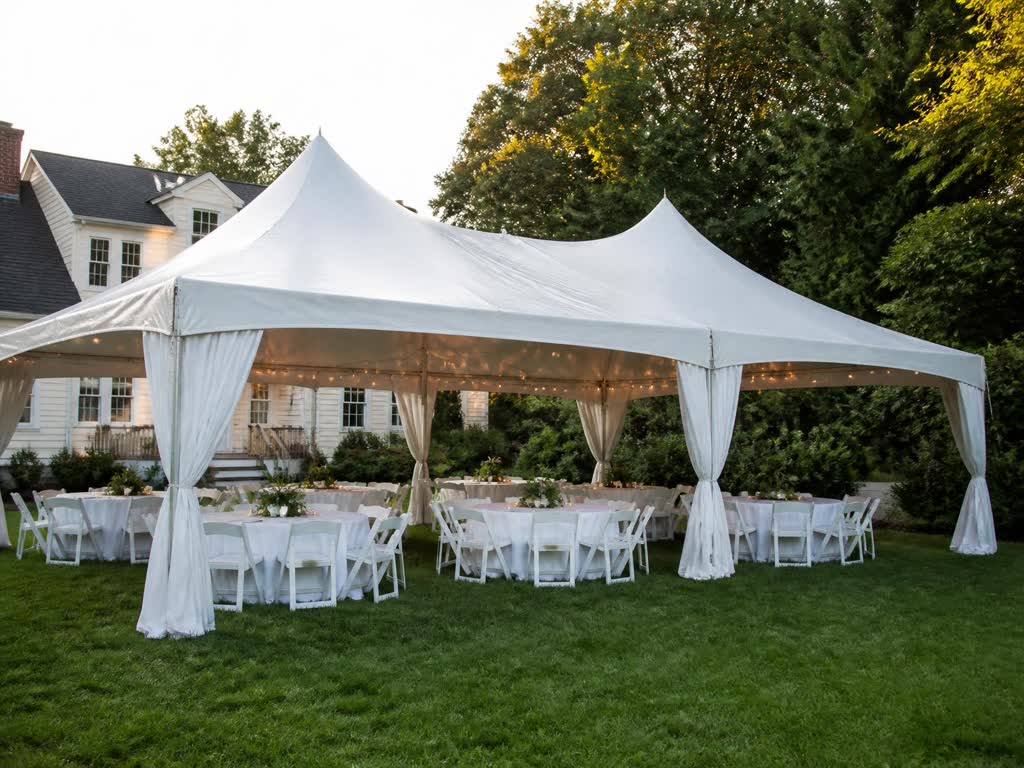
Protecting audio equipment from moisture is a top priority when the forecast shows a chance of rain. Tents equipped with sidewalls provide a sheltered space where speakers, mixers, and wireless receivers can remain dry while still projecting sound into the open area. Elevating gear on pallets or sturdy tables prevents water from pooling underneath, and using waterproof covers or rain flaps over each speaker cone adds an extra layer of defense. Having a supply of tarps and bungee cords on hand allows the crew to quickly secure any exposed components if conditions change unexpectedly.
Monitoring the weather in the hours leading up to the event enables the team to make informed decisions about equipment placement and timing. If rain becomes likely, the crew can shift the setup to a more sheltered portion of the yard, such as under an existing pergola or a portable canopy, while still maintaining adequate coverage for the audience. Although DecoEvent ATL only services outdoor and at‑home events, the crew can advise on adjusting speaker angles to compensate for damp air, which can slightly attenuate high frequencies. Throughout the event, regular checks of cable connections and power sources ensure that moisture does not create safety hazards or cause sudden dropouts.
Drive Logistics: Getting Equipment from Pendergrass to Monroe
The distance from DecoEvent ATL’s warehouse in Pendergrass to Monroe, Walton County is roughly 40 miles, which typically translates to a drive of about 40 minutes under normal conditions. The most direct route follows Highway 78 westward, then connects to Interstate 85 north before exiting onto local roads that lead into Monroe’s historic district. During peak travel times—such as weekday mornings or late‑afternoon commutes—traffic can add extra minutes, so scheduling the delivery outside of rush hour helps ensure the crew arrives on schedule.
Vehicle selection matters because speaker cabinets, stands, mixers, and accessory cases can be bulky and heavy. A cargo van or a small box truck provides enough interior space to load the equipment securely while keeping it protected from road vibrations. Inside the vehicle, items are stacked with heavier pieces on the bottom and lighter accessories on top, all secured with straps or cargo bars to prevent shifting. Upon arrival, the crew coordinates with the client to confirm the exact drop‑off point, verifies that the driveway or gate is wide enough for the vehicle, and uses protective mats or boards to shield the lawn from tire marks during unloading.
Final Checklist and Tips for a Seamless Party Sound Experience
Running through a final checklist helps catch any overlooked details before the first guest arrives. Verify that every cable is firmly connected, that each microphone has a fresh battery or a full charge, and that the mixer’s input levels are set to unity gain. Confirm that the main speakers are angled toward the primary listening area and that any fill speakers are positioned to avoid dead spots. Keep a small spare parts kit on hand—including extra XLR cables, microphone windscreens, and fuses—so that minor issues can be resolved quickly without delaying the program.
Communication with neighbors and awareness of local noise ordinances contribute to a pleasant experience for everyone involved. A quick notice to nearby residents about the event’s start and end times can prevent misunderstandings, and keeping the overall volume within the limits set by Walton County helps avoid potential complaints. After the celebration concludes, the crew systematically powers down equipment, coils cables, and loads everything back into the vehicle, leaving the yard clean and free of debris. This attention to detail ensures that the equipment remains in good condition for the next booking and that the hosts can relax knowing the sound side of their party was handled professionally.