
Understanding the challenges of sloped terrain in Statham GA
Setting up a tent on sloped yard Statham ga presents unique considerations that differ from flat ground installations. The natural incline can affect weight distribution, causing uneven pressure on tent poles and fabric if not properly addressed. In Statham, the rolling hills between Winder and Athens often create gentle slopes that still require careful evaluation before any equipment arrives. Ignoring the grade can lead to shifting structures, water pooling, or discomfort for guests walking across the surface.
Local soil composition in Barrow County adds another layer of complexity. The area features a mix of clay‑loam and sandy patches, which influences how well stakes or anchors hold. After a rain event, clay sections can become slick, while sandy zones may shift under load. A thorough visual inspection of the proposed site helps identify spots where the ground is firmer or where natural drainage patterns exist, allowing you to position the tent where it will be most stable.
Weather patterns in North Georgia also play a role. Statham experiences sudden afternoon showers, especially in spring and summer, which can exacerbate slope‑related runoff. Understanding how water moves across your yard helps you plan for proper drainage and avoid creating a slippery hazard. By acknowledging these environmental factors early, you set the stage for a safe and comfortable event that respects the natural landscape of your Statham property.
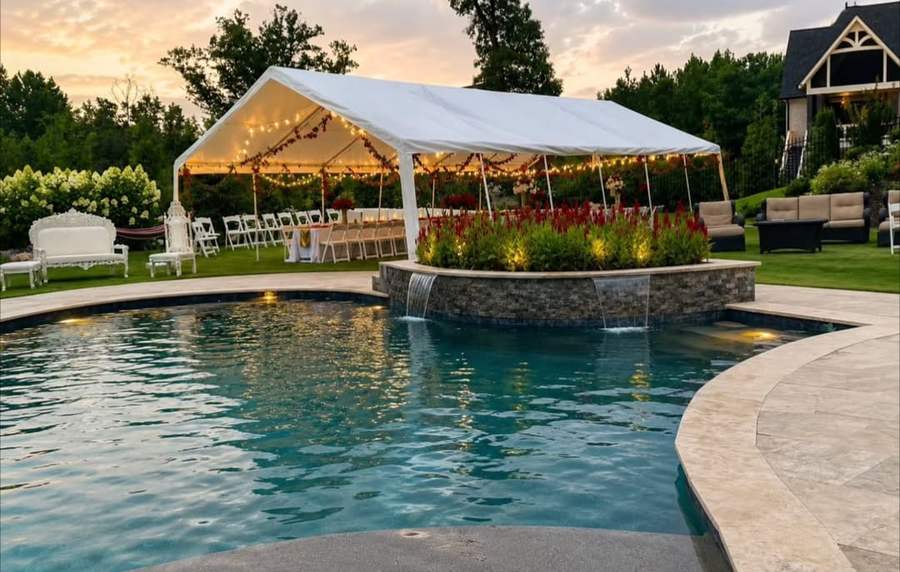
Why a tent on sloped yard Statham ga requires special preparation
The primary concern with a tent on sloped yard Statham ga is maintaining structural integrity while providing a level walking surface for guests. Tents rely on uniform tension across the fabric; when one side sits higher than the other, the poles can experience bending moments that increase the risk of failure. Proper preparation counteracts these forces by creating a consistent foundation that distributes loads evenly across the frame.
Another factor is guest safety and comfort. An uneven floor can cause tripping hazards, make tables wobble, and affect the placement of items like catering equipment or a dance floor. Guests may also feel discomfort if they have to constantly adjust their stance on an incline. By leveling the area underneath the tent, you ensure that everyone can move freely, enjoy the festivities, and focus on the celebration rather than navigating a tilted surface.
Finally, local regulations and venue expectations often require that temporary structures be securely anchored. In Barrow County, event organizers are encouraged to follow best practices for anchoring on inclines to prevent accidental displacement. Taking the time to prepare the slope not only protects your investment in the rental equipment but also demonstrates responsibility to neighbors and any overseeing authorities, fostering goodwill for future events.
Site assessment and yard preparation steps
Begin by walking the intended location with a long tape measure and a simple level tool. Mark the highest and lowest points of the slope to determine the total grade. In Statham, many residential yards show a change of a few feet over a 20‑foot span, which is manageable with proper shimming. Record these measurements because they will guide how much material you need to bring in for leveling, such as gravel, sand, or interlocking pads.
Clear the area of debris, rocks, and loose vegetation that could shift under weight. Use a shovel or a small skid‑steer if available to create a rough base that follows the contour of the slope. Then, add a layer of crushed stone or compactable gravel to create a stable sub‑surface. This layer should be tamp‑ed down thoroughly to prevent settling after the tent is erected. A well‑compacted base reduces the chance of poles sinking into softer spots.
Finally, lay down a ground protection layer such as interlocking foam tiles or heavy‑duty polyethylene sheeting. This not only provides a uniform surface for the tent floor but also protects the underlying grass from compaction. Ensure the seams of the protective layer overlap and are secured with tape or weights so they do not shift during the event. Once the base is firm and level, you have a reliable platform onto which the tent can be safely anchored.

Choosing the right tent size and anchoring methods
Selecting a tent that matches both your guest count and the slope’s characteristics is essential. For a typical backyard gathering in Statham, a 20×20 foot frame accommodates up to 40 seated guests comfortably while leaving room for a small buffet table. If you anticipate a cocktail‑style layout, the same footprint can support up to 60 standing guests. Always verify the tent’s rated wind resistance and ensure the model you choose includes reinforced corner fittings, which are critical when the base is not perfectly flat.
Anchoring on an incline requires a combination of ground stakes and supplemental weights. Use long, heavy‑duty steel stakes driven at an angle opposite the direction of the slope to maximize holding power. In areas where the soil is too soft for stakes alone, place sandbags or water‑filled weights on the higher‑side legs to counteract the tendency of the tent to slide downward. Double‑check that all anchor points are tensioned evenly; a loose side can cause the fabric to flap and increase stress on the frame.
If the slope exceeds a modest grade, consider using adjustable base plates or leveling legs that come with certain tent systems. These components allow you to fine‑tune each pole’s height independently, creating a perfectly horizontal roof even when the ground underneath varies. Consult the rental provider’s specifications to confirm that such accessories are available for the tent size you select, and verify that the setup crew is familiar with their proper installation.
Layout planning: guest count math, furniture placement, flow
Accurate guest‑count math helps you determine how much space you need inside the tent and how many tables and chairs will fit without crowding. For a seated dinner, allow roughly 10 square feet per person, which includes chair space and a small elbow room. A 20×20 foot tent offers 400 square feet, supporting up to 40 seated guests. If you plan a buffet line, subtract the footprint of the serving tables—typically 6×2 feet each—from the total area before calculating seating capacity.
Arrange furniture to follow the natural flow of the slope. Place the heavier items, such as the main dining tables, on the lower‑side of the tent where the ground is more stable. Lighter pieces like cocktail tables or chairs can be positioned toward the higher side, where any minor settling is less likely to affect stability. Keep aisles at least three feet wide to allow easy movement, especially if guests will be carrying plates or drinks.
Consider the orientation of the tent relative to the yard’s features. Aligning the longer side of the tent with the contour of the slope can reduce the amount of leveling work needed. Position the entrance opposite the direction of prevailing wind, if known, to minimize drafts inside. By thoughtfully placing each element, you create a comfortable environment that feels intentional rather than forced by the terrain.
Weather considerations and rain plan for sloped yards
Rain can quickly transform a mild slope into a slippery surface, making traction a safety concern. Before the event, check the forecast for Statham and have a plan for rapid water drainage. If the yard lacks natural runoff channels, consider digging a shallow swale on the higher side to direct water away from the tent footprint. This simple trench, lined with gravel, can prevent water from pooling under the floor and reduce the risk of hydrostatic pressure lifting the tent.
Sidewall accessories are valuable when precipitation is expected. Adding solid sidewalls to the tent creates a barrier that keeps rain out while still allowing ventilation through mesh panels or vents. Ensure that the sidewalls are securely fastened to the frame and that the ground straps are tightened to prevent wind from getting underneath. In Statham’s occasional thunderstorms, sidewalls combined with proper anchoring greatly improve the tent’s resilience.
Have a contingency plan for moving the event if conditions become unsafe. Identify a nearby indoor space or a covered patio that could host the gathering temporarily. Communicate this backup option to vendors and guests ahead of time so everyone knows the procedure. Keeping an eye on real‑time weather updates and being ready to act quickly protects both your guests and the rented equipment.
Timeline, logistics and day‑of coordination
Start the day early to allow sufficient time for site preparation, especially when working with a slope. Aim to have the ground protection layer laid and leveled at least two hours before the scheduled tent arrival. This buffer accommodates any unexpected delays, such as needing to tamp down additional gravel or adjust the leveling legs. A calm, unhurried setup reduces stress and helps the crew focus on safety checks.
Coordinate delivery logistics by providing the exact address, including street, city, state, and ZIP code, to the rental company. Confirm that the location falls within the 40‑mile service radius from Pendergrass, GA, and note any specific access restrictions, such as narrow driveways or low‑hanging branches. Clear communication ensures the truck can arrive positioned for efficient unloading, minimizing the time equipment spends on the slope.
Once the tent is erected, perform a final walk‑through to verify that all anchor points are secure, the fabric is taut, and the interior layout matches the plan. Invite a point of contact from the client to do a quick inspection together, confirming that guest pathways are clear and that any temporary structures like a dance floor or catering station are level. After the event, follow the same procedure in reverse for breakdown, making sure the site is left clean and the turf is undisturbed.
Frequently asked questions
How do I know if my yard in Statham is suitable for a tent on a slope?
Assess the grade with a level tool and measure the height difference across the intended footprint. If the slope is gentle and the soil feels firm after a quick tamp, the site is usually workable. For steeper grades or very soft spots, additional leveling material or adjustable base plates may be needed.
What materials work best for leveling a sloped yard before setting up a tent?
Crushed stone or compactable gravel creates a strong sub‑base that resists shifting. Interlocking foam tiles or heavy‑duty polyethylene sheeting placed on top give a uniform surface for the tent floor and protect the grass underneath.
Can I use regular stakes on a sloped yard in Statham, or do I need special anchors?
Long steel stakes driven at an angle opposite the slope provide solid hold. In softer soil, supplement with sandbags or water‑filled weights on the higher‑side legs to counteract downward slide and maintain even tension.
How many guests can fit comfortably under a 20×20 tent on a sloped yard in Statham?
A 20×20 foot tent offers about 400 square feet of interior space. For seated dining, allow roughly 10 square feet per person, which supports up to 40 guests. Cocktail‑style layouts can accommodate more standing guests, depending on furniture arrangement.
What should I do if rain starts during my event on a sloped Statham yard?
Ensure sidewalls are securely attached and that the tent’s anchoring is tight. Have a drainage swale or gravel trench ready to redirect water away from the footprint. If conditions worsen, move guests to a pre‑identified covered backup area.
Who should I contact to confirm that my Statham address is within the service radius?
Provide the full street address, city, state, and ZIP code to the rental team via phone or WhatsApp. They will verify the distance from the Pendergrass, GA warehouse and confirm eligibility before proceeding with the quote.