
Tent Rental Decatur ga: How to Pick the Ideal Size for Your Backyard Party
When you start planning a backyard celebration in Decatur, the first question that often arises is how much space you need to accommodate your guests comfortably. A clear picture of your guest list helps you translate numbers into square footage, and that is where a professional tent rental Decatur ga becomes essential. By matching the tent dimensions to your expected attendance, you create an environment where people can mingle, dine, and enjoy activities without feeling cramped. This initial step also informs decisions about flooring, furniture layout, and any additional structures such as a dance floor or buffet area.
Begin by writing down the exact number of people you expect, then consider the type of event. A seated dinner requires more room per person than a cocktail‑style reception where guests stand and move around. For a seated arrangement, the file provides precise capacities: a 10×10 tent holds 6–8 seated guests, a 10×20 holds 16–20 seated, a 20×20 holds 32–40 seated, a 20×30 holds 48–60 seated, a 20×40 holds 64–80 seated, and a 30×60 holds 120–150 seated depending on layout. If you plan a cocktail‑style event, the same tents accommodate more standing guests—for example, a 20×40 can hold up to 100 people standing. Using these verified numbers eliminates guesswork and ensures you select a size that fits both your guest count and your desired atmosphere.
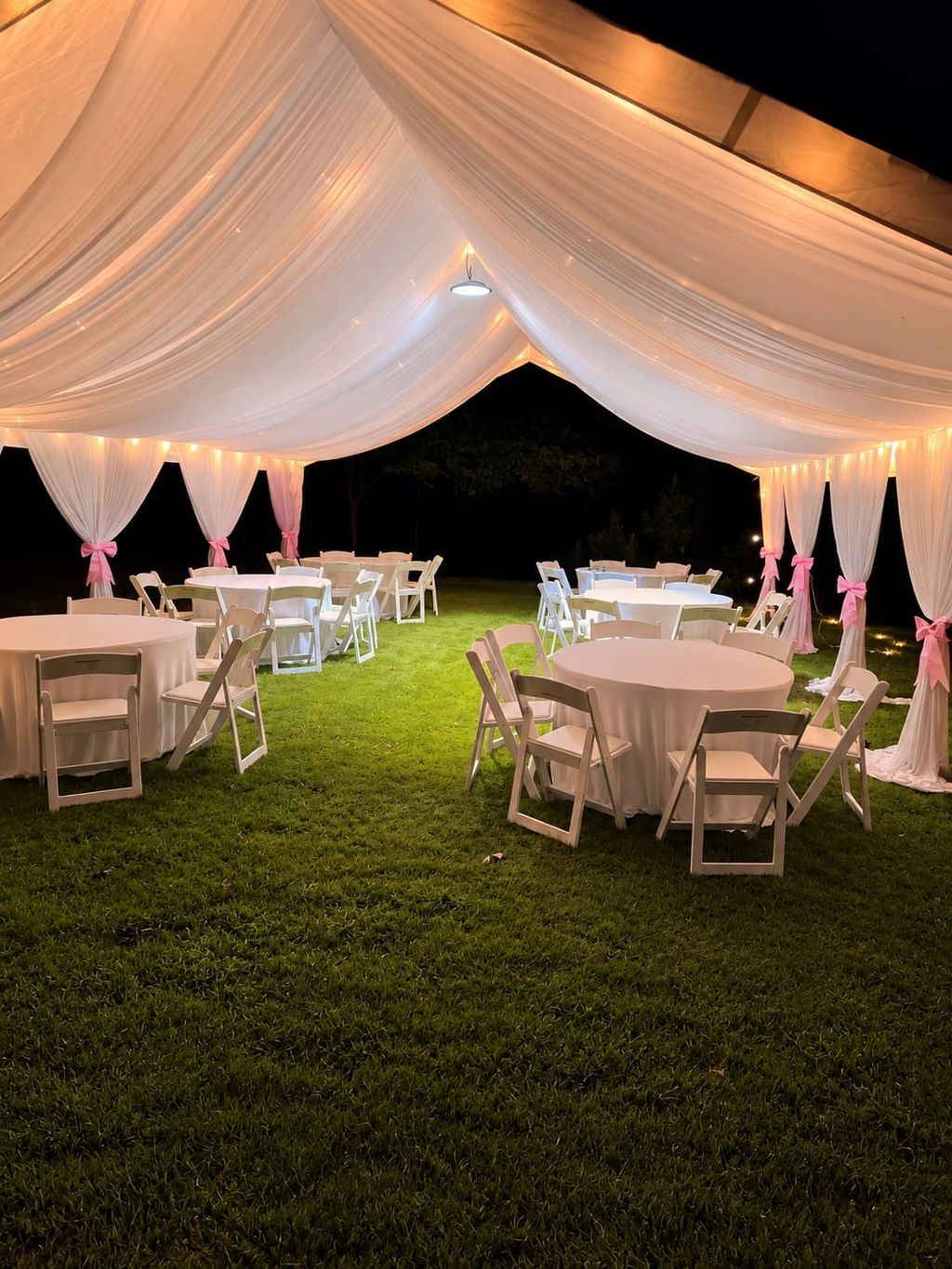
Assessing Your Guest Count and Activity Zones
Once you have a tentative head count, break the event into functional zones: dining, dancing, buffet, lounge, and any entertainment such as a bounce house or photo booth. Each zone has its own spatial requirements. For dining, allocate roughly 10 to 12 square feet per seated guest when using standard rectangular tables and chairs. For a lounge area with cocktail tables, allow about 6 to 8 square feet per standing guest. If you intend to include a dance floor, allocate an additional 4 to 5 square feet per dancer. These calculations, combined with the tent capacities mentioned earlier, help you decide whether a single large tent or a combination of two smaller tents will work best for your layout.
In Decatur, many backyards feature mature trees, slopes, or existing patios that can affect where a tent can be placed. Measure the available flat surface and note any obstacles such as underground utilities, sprinkler heads, or low‑hanging branches. A site check—often conducted by a representative after you provide your exact address—confirms whether the ground is suitable for staking or weighting the tent. Knowing these constraints early prevents last‑minute changes and ensures the installation team can secure the structure safely, whether the surface is grass, concrete, or a mixed substrate.
Understanding Tent Dimensions and Layout Options
Tent dimensions are expressed in width by length, and the height is typically uniform across the structure unless you request sidewalls or a peaked roof. The file lists several standard sizes that are commonly stocked for backyard events: 10×10, 10×20, 20×20, 20×30, 20×40, and the larger 30×60 COBIZI model. Each size comes with a specific frame design that influences how you can arrange tables and chairs inside. For example, the 20×20 frame provides a clear span of 20 feet in both directions, making it ideal for a square dining layout with a central dance floor. The 20×40 offers a rectangular footprint that can accommodate a long buffet line on one side and seating on the other.
When you need more space than a single tent provides, you can combine two compatible frames. The allowed combinations are limited to what the hardware permits: a 20×40 paired with a 20×20 creates a 20×60 run, while a 20×40 plus another 20×40 would require a custom solution that is not in the standard inventory. It is important to state the exact combination before finalizing the layout so the crew can bring the correct connectors and anchoring equipment. This approach avoids the risk of overpromising a size that does not exist in the rental fleet and keeps the setup process smooth on the day of the event.
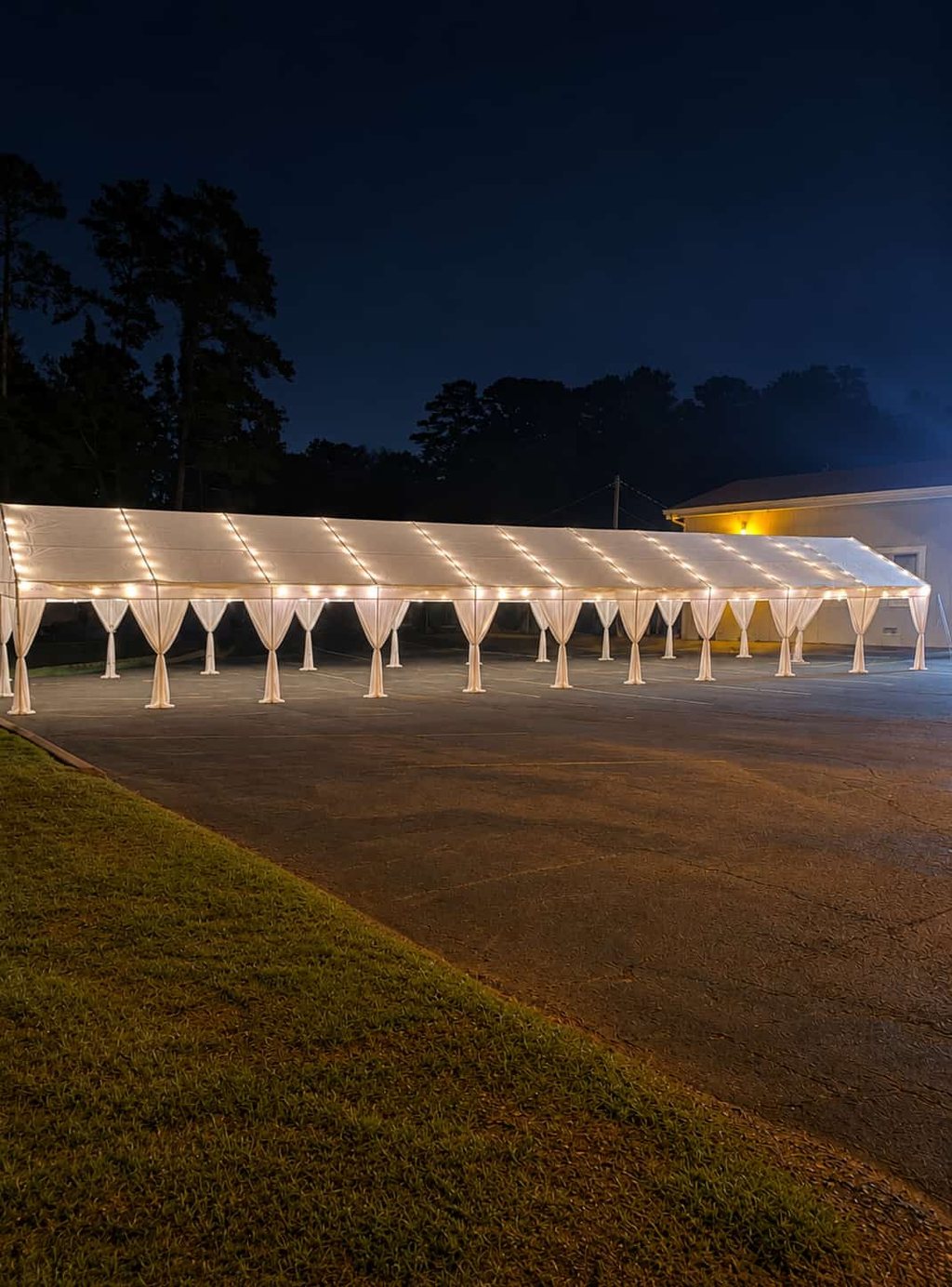
Preparing Your Decatur Yard for Installation
Proper yard preparation begins well before the arrival of the tent crew. Start by mowing the grass to a uniform height, removing any debris, toys, or garden tools that could interfere with staking or weighting. If the ground is soft after rain, consider laying down protective ground boards or plywood sheets to distribute the weight of the tent frame and prevent sinking. For concrete patios, ensure the surface is clean and level; any cracks or uneven spots should be noted so the team can use appropriate base plates or sandbags.
Access is another critical factor. The delivery truck needs a clear path from the street to the setup area, typically requiring at least 10 feet of width for maneuvering. Verify that there are no low‑hanging power lines, narrow gates, or sharp turns that could obstruct the truck. If the entry point is restricted, inform the team ahead of time so they can bring a smaller vehicle or arrange for a shuttle of equipment from a nearby parking spot. Providing the exact address, including street number, ZIP code, and any landmarks such as Oakhurst or Winnona Park, allows the logistics team to calculate the drive time from Pendergrass and schedule the arrival within your preferred window.
Weather Considerations and Rain Plan
Even with a tent in place, Georgia weather can shift quickly, especially during the spring and summer months. Sidewalls are a valuable add‑on for wind protection and temperature control; they can be installed on one or more sides of the tent depending on the forecast. The file notes that sidewalls are the highest‑value small upgrade for October and winter evenings, but they are also useful for sudden showers or gusty conditions in any season. When you discuss your event with the sales representative, mention whether you would like sidewalls included as part of the package.
In the event of severe weather that makes setup unsafe—such as sustained high winds or lightning—the company policy allows the date to be moved to a later, more suitable time. This flexibility is built into the service agreement and does not incur additional fees for rescheduling due to weather‑related safety concerns. Keep an eye on the forecast in the days leading up to your party, and maintain open communication with the team so any adjustments can be made swiftly and without stress.
Coordinating Delivery and Setup from Pendergrass
The distance from the Pendergrass warehouse to Decatur is approximately 58 minutes under normal traffic conditions, placing the location well within the 40‑mile service radius. Delivery fees are determined by the mileage bracket: 0–15 miles is free, 16–30 miles incurs a set fee, and 31–50 miles carries another set fee. Because Decatur falls into the 31–50 mile bracket, the delivery charge applies accordingly, but the exact amount is confirmed once the exact address is verified. The crew will load the tent, frames, sidewalls, lighting, and any additional items such as tables, chairs, or bounce houses onto the truck and secure them for transport.
Upon arrival, the team begins with a site walk‑through to confirm ground conditions, mark anchor points, and lay out the tent according to the approved plan. The installation process includes raising the frame, attaching the cover, securing sidewalls if requested, and positioning interior elements like tables, chairs, and lighting. Throughout the setup, the crew maintains clear communication with you or your designated point of contact, ensuring any last‑minute tweaks are addressed before the event starts. After the celebration, the same team returns to dismantle the tent, pack all equipment, and leave the yard in the same condition they found it.
Final Checklist Before Your Event
As the day of your party approaches, run through a concise checklist to confirm that everything is in order. Verify that the guest count finalized matches the tent size you selected, and that any additional rentals—such as extra tables, linens, or a dance floor—have been noted on the work order. Confirm the exact start time for delivery and setup, and make sure a responsible adult will be on site to greet the crew and provide access to power outlets if needed for lighting, blowers, or catering equipment.
Double‑check that the tent is properly anchored, that sidewalls are secured if weather calls for them, and that all electrical connections are grounded and protected from moisture. Ensure that any bounce houses or water slides are placed on open lawn away from the tent, with adequate clearance for the blower and safe exit paths for children. Finally, take a moment to walk the perimeter and admire the transformation of your backyard into a welcoming venue, knowing that the planning details have been handled professionally and that your guests will enjoy a comfortable, well‑organized celebration.
Frequently asked questions
What factors should I consider when choosing a tent size for a backyard party in Decatur?
Consider your exact guest count, the type of event (seated dinner vs cocktail style), the layout of activity zones such as dining, dancing, and buffet, and the physical characteristics of your yard including slope, obstacles, and access for the delivery truck. Use the verified capacities from the inventory to match the tent dimensions to your needs.
How do I prepare my yard for tent installation in Decatur?
Mow the grass, clear debris, and ensure the surface is relatively level. If the ground is soft, use protective boards or plywood to distribute weight. Verify that there is at least ten feet of clear width for the truck to reach the setup area, and inform the team of any low‑hanging branches, narrow gates, or utility lines that could affect access.
Can I combine two tents to create a larger covered area in Decatur?
Yes, you can combine compatible frames, such as a 20×40 with a 20×20 to form a 20×60 run. The inventory only allows specific combinations that the hardware supports, so you must confirm the exact pairing with the team before finalizing your layout to avoid attempting a size that is not available.
What weather precautions should I take for an outdoor party in Decatur?
Adding sidewalls provides protection from wind and light rain, and they are especially useful for evening events in cooler months. In case of unsafe conditions such as sustained high winds or lightning, the company policy permits rescheduling the date without extra fees for weather‑related safety concerns.
How is delivery cost determined for a tent rental to Decatur from Pendergrass?
Delivery fees are based on the distance from the Pendergrass warehouse: 0–15 miles is free, 16–30 miles incurs a set fee, and 31–50 miles incurs another set fee. Because Decatur falls within the 31–50 mile bracket, the delivery charge applies and is confirmed once the exact address is verified.
What is included in the setup and takedown process for a tent rental in Decatur?
The crew delivers the tent, frames, cover, sidewalls if requested, and any additional items such as tables, chairs, or bounce houses. They perform a site walk‑through, anchor the structure, raise the frame, attach the cover, position interior elements, and after the event dismantle everything and leave the yard as they found it.