
Guest‑Count Math
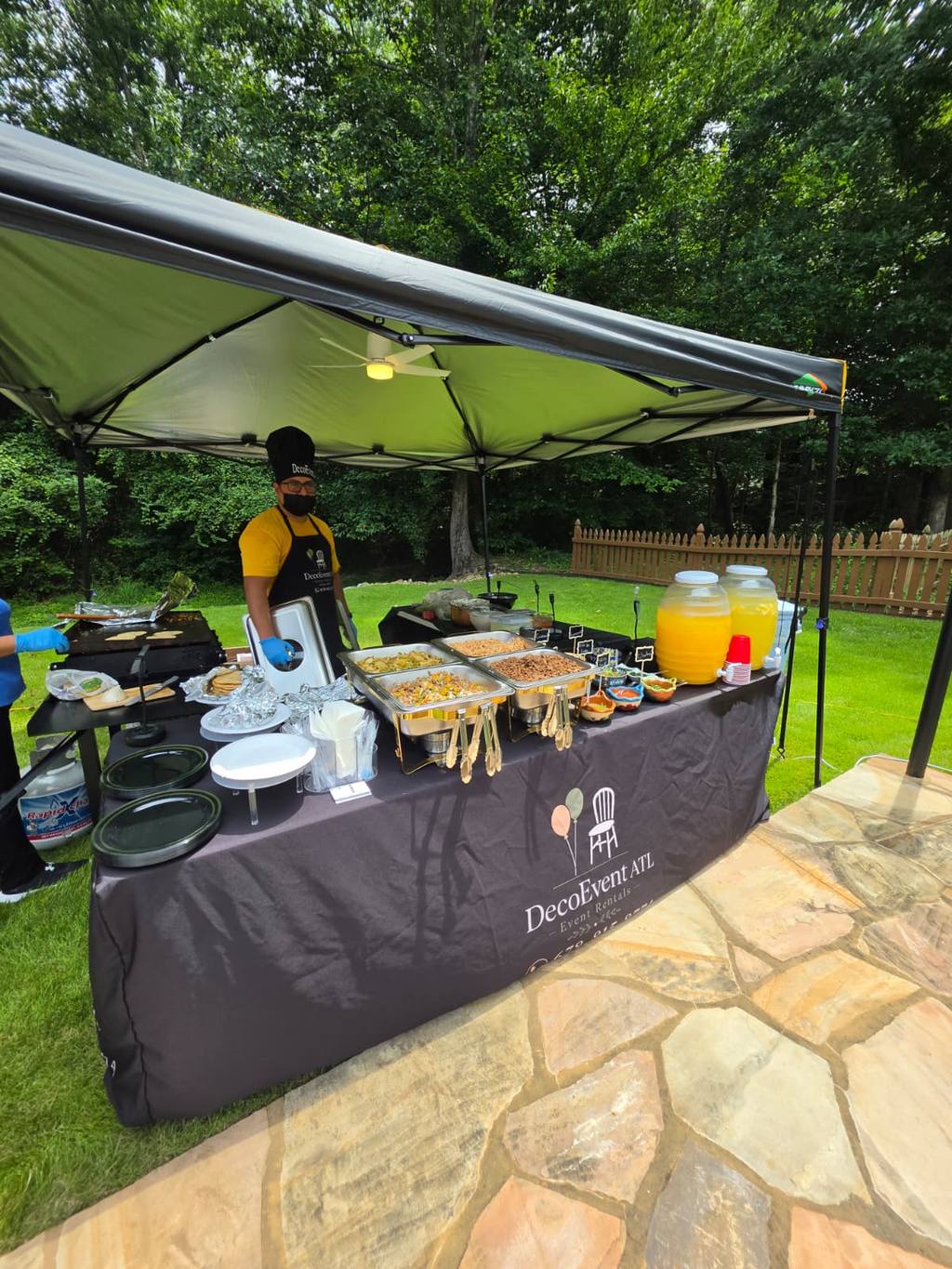
Understanding how many guests can be accommodated helps you choose the right tent size and table arrangement for your celebration. The following breakdown shows typical capacities for the most common tables and tents we provide.
Table Seating Options
A four‑foot round table comfortably seats four to six guests. A five‑foot round table fits eight guests with ease and can hold up to ten when the layout is optimized. A six‑foot round table accommodates ten guests comfortably and, only with a specially approved layout, can reach twelve. Six‑foot rectangular tables work well for six to eight guests, while eight‑foot rectangular tables handle eight to ten guests. Cocktail tables, which are thirty inches wide and either thirty or forty‑two inches high, are designed for two to four standing guests each.
Tent Capacity Guidelines
A ten‑by‑ten foot tent provides space for six to eight seated guests or eight to ten standing guests. A ten‑by‑twenty foot tent fits sixteen to twenty seated guests or up to twenty‑five guests in a cocktail style layout. A twenty‑by‑twenty foot tent holds thirty‑two to forty seated guests. A twenty‑by‑thirty foot tent accommodates forty‑eight to sixty seated guests. A twenty‑by‑forty foot tent fits sixty‑four to eighty seated guests or up to one hundred guests in a cocktail arrangement. A thirty‑by‑sixty foot tent can seat one hundred twenty to one hundred fifty guests depending on layout, or serve up to one hundred eighty guests in a cocktail setting.
Calculating Your Needs
Start with your total guest count. Divide by the seating capacity of the table type you prefer to determine how many tables are required. Add a few extra tables for buffet, gift, or display areas. Then match the total table footprint to a tent size that leaves room for aisles, a dance floor, and any additional structures such as a bounce house or a food service tent.
Yard Preparation
Getting the outdoor space ready ensures a smooth installation and a safe environment for everyone.
Measure and Map
Measure the length and width of the area where the tent will sit. Note any permanent features such as trees, garden beds, or utility lines. Sketch a simple map that marks the tent footprint, table rows, and zones for entertainment or food.
Surface Check
Verify that the ground is relatively level. Minor slopes can be compensated with proper anchoring, but significant unevenness may require leveling pads or a different location. Ensure the surface can support the weight of the tent, tables, and equipment.
Clear Obstacles
Remove loose items such as toys, garden tools, or decorative stones from the installation zone. Trim any low branches that could interfere with the tent poles or sidewalls. If you plan to place a bounce house, keep a clear perimeter of at least five feet around it for safe entry and exit.
Access and Utilities
Confirm that a delivery truck can reach the site without damaging landscaping. Identify the nearest grounded exterior outlet for blowers, lighting, or sound equipment. If no outlet is available, arrange for a generator in advance.
Load‑In Timeline
A clear schedule helps the crew set up efficiently while you focus on final details.
Arrival and Site Check
The team arrives at the agreed start time, conducts a quick site verification, and confirms measurements against the map you provided.
Tent Erection
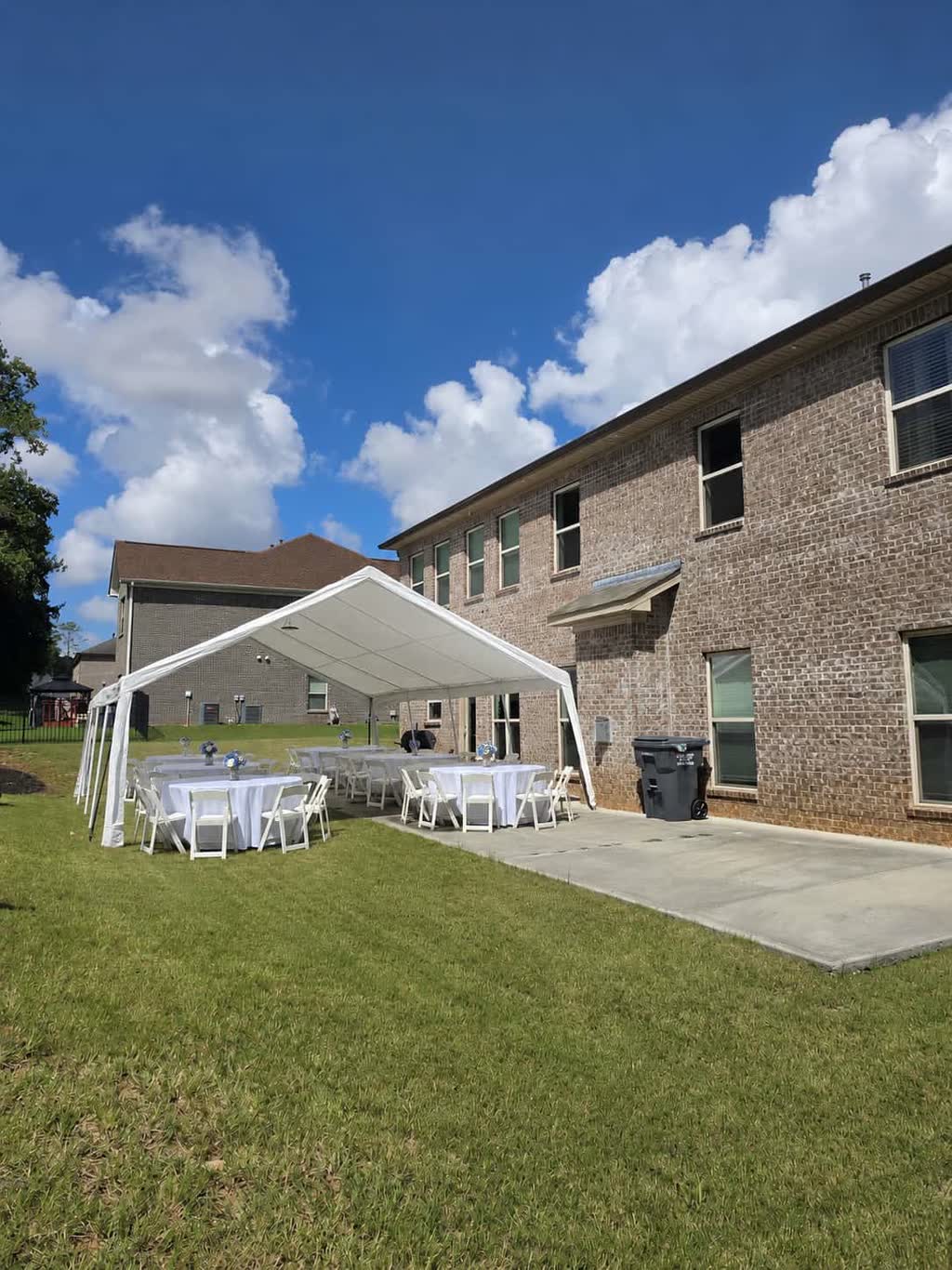
First, the tent frame is assembled and anchored. The cover is then secured, and sidewalls are attached if requested. This phase typically takes the longest, especially for larger tents.
Table and Chair Placement
Once the tent is secure, tables are positioned according to the layout plan. Chairs are added, and linens, runners, and napkins are draped.
Decor and Lighting Installation
Decorative elements such as draping, centerpieces, lanterns, and lighting strings are installed next. If you chose LED tent lighting or bistro strings, they are hung and tested for proper illumination.
Audio and Extras
The sound system, microphones, and any fans are set up and checked. Bounce houses, water slides, or other entertainment items are inflated, anchored, and inspected for safety.
Final Walk‑Through
Before guests arrive, the crew walks through the space with you to confirm that everything matches your expectations and to address any last‑minute adjustments.
Rain Plan
Weather can change quickly, so having a contingency plan protects your event and keeps guests comfortable.
Sidewall Options
Adding sidewalls to the tent creates a barrier against wind and light rain. You can choose to close two sides, three sides, or fully enclose the tent depending on the forecast.
Anchoring and Drainage
Proper anchoring prevents the tent from shifting in wet conditions. If the ground becomes soft, additional stakes or weights are used. Ensure that water can drain away from the tent footprint to avoid pooling.
Alternative Layouts
If the forecast calls for heavy rain or strong winds, consider shifting the event to a covered area such as a garage or a community pavilion. Keep the tent and equipment ready to be moved if needed.
Communication
Stay in touch with the crew on the day of the event. They will monitor conditions and advise you on the best course of action.
Local Logistics
Our service area covers a forty‑mile radius around Pendergrass, Georgia. Knowing how we handle delivery and setup helps you plan ahead.
Distance‑Based Delivery
Delivery charges are based on the mileage from our base in Pendergrass. The first fifteen miles are free, the next fifteen miles incur a flat fee, and distances beyond thirty miles are calculated per mile. We will confirm the exact amount once we have your full address.
Address Verification
Before any booking step we require the complete street address, city, state, and five‑digit ZIP code. We verify that the city and ZIP are inside our service area. If the location is not listed, we will hand the request to a human representative who will check the distance via WhatsApp.
Parking and Permits
If your street requires a parking permit for a delivery truck, please obtain it in advance or let us know so we can assist. We also coordinate with homeowners’ associations or property managers when needed.
Timing Considerations
Weekend dates from spring through fall tend to book quickly. We recommend contacting us at least four to six weeks ahead of your desired date to secure availability.
Checklist
Use this list to confirm all details before the event day.
- Full name of the host
- Exact event address with street, city, state, and ZIP
- Event date and start time
- Total guest count
- Preferred tent size and style
- Table types and quantities
- Chair selection and quantity
- Linens, runners, and napkins colors
- Decor preferences (draping, centerpieces, lanterns, etc.)
- Lighting choices (LED tent lighting, bistro strings, uplighting)
- Sound system requirements (microphones, speakers, playlist)
- Food and beverage arrangements (taquiza, paella, catering)
- Bounce house or water slide selection
- Need for generator or power outlet
- Any special requests (welcome mirror wording, photo video service)
- Contact phone number and WhatsApp
- Email address for the written quote
- Confirmation of payment method (credit card)