
Understanding Tent Options for Dunwoody Backyards
When planning a backyard celebration in Dunwoody, the first step is to explore the tent styles that DecoEvent ATL brings to the area. The inventory includes COBIZI commercial tents in sizes such as 10×10, 10×20, 20×20, 20×30, 20×40 and the expansive 30×60 model. Each unit features a galvanized steel frame, a waterproof cover with UV protection and professional installation and removal crews. The tents are designed to sit on grass or concrete after a quick site check, and they come with all necessary hardware for secure anchoring. Understanding the differences between these options helps you match the structure to the size of your gathering and the layout of your outdoor space.
Beyond the basic frame, each tent can be paired with optional accessories that enhance comfort and ambiance. You may choose to add sidewalls for wind protection, LED tent lighting for evening events, or decorative draping that matches your theme. The team evaluates the exact location in Dunwoody to confirm that there is enough clearance for the tent’s height and for any additional equipment such as blowers for bounce houses or generators if needed. Because the company serves only outdoor and at‑home events within a forty‑mile radius of Pendergrass, the crew knows the local roads, neighborhood restrictions and typical backyard dimensions in DeKalb County. This local knowledge ensures that the installation proceeds smoothly, without surprises on the day of your celebration.
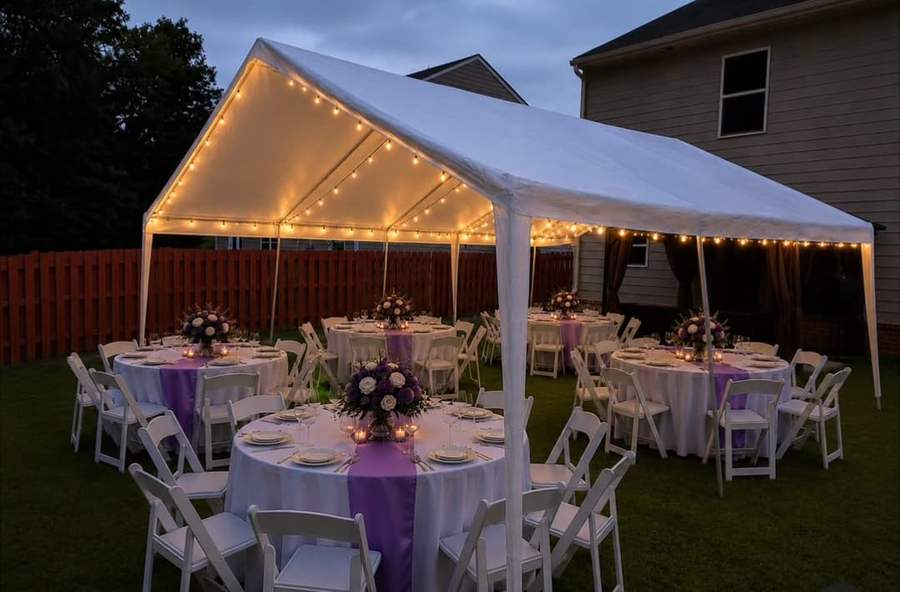
Guest‑Count Math: How Many People Fit Under Each Size
Knowing how many guests each tent size can accommodate helps you avoid overcrowding or unnecessary extra space. A 10×10 tent comfortably seats six to eight people for a dinner arrangement, while it can hold eight to ten guests in a standing cocktail layout. Moving up, a 10×20 tent provides room for sixteen to twenty seated guests or up to twenty‑five people when the area is used for a cocktail style. The 20×20 model fits thirty‑two to forty seated guests, and a 20×30 tent accommodates forty‑eight to sixty seated attendees. For larger gatherings, the 20×40 option holds sixty‑four to eighty seated guests, with the possibility of reaching one hundred people in a cocktail configuration, and the 30×60 tent can seat one hundred twenty to one hundred fifty individuals, or expand to one hundred eighty in a standing setup.
To translate these numbers into a real Dunwoody backyard scenario, start by listing every person who will attend, including children, adults and any vendors such as a caterer or a DJ. If you plan a seated dinner with tables, aim for the lower end of the seating range for each tent size; for a buffet or dance‑focused party, use the higher end of the standing capacity. For example, a family reunion of fifty guests would fit comfortably under a 20×20 tent, leaving room for a small buffet table and a dance floor, while a quinceañera with one hundred twenty attendees would need the 30×60 option to ensure everyone has space to sit and move freely. Adjust the count based on the exact layout you envision, remembering that accessories such as centerpieces, a welcome mirror or a
Preparing Your Dunwoody Yard for Installation
Proper yard preparation creates a safe and efficient setup for the tent and any additional equipment. Begin by walking the space to identify any obstacles such as garden tools, toys, or low‑hanging branches that could interfere with the frame or the cover.
Checking the Surface
Inspect the ground for soft spots, holes, or uneven areas. If the surface is grass, make sure it is not overly wet or muddy, as this can affect anchoring. For concrete or patio surfaces, verify that there are no cracks that could shift under weight.
Marking Utilities
Before any stakes or anchors are placed, locate underground utilities such as gas lines, water pipes, or electric cables. A quick call to the local utility locating service can prevent accidental damage.
Ensuring Access for Equipment
Confirm that the delivery truck can reach the backyard without damaging fences, landscaping, or shared driveways. Measure gate widths and clearance heights to accommodate the truck and the tent components.
Clearing Debris
Remove loose stones, twigs, and leaves from the area where the tent will sit. A clean surface helps the anchoring system grip securely and reduces the risk of tripping during the event.

Load‑In Timeline and Setup Process
Understanding the sequence of activities on installation day helps you coordinate with vendors and know what to expect.
Arrival and Unloading
The crew arrives at the scheduled time with the tent frame, cover, sidewalls, lighting, and any rented items such as tables, chairs, or bounce houses. They position the truck as close as possible to the work zone to minimize carrying distance.
Frame Assembly
Steel poles are connected according to the manufacturer’s specifications, forming the skeleton of the tent. Each joint is checked for tightness before moving to the next step.
Cover Attachment
The waterproof cover is draped over the frame and secured with straps, bungees, or clips. The team ensures the cover is taut to prevent pooling of water.
Anchoring the Structure
Depending on the surface, anchors are driven into the ground or weighted bases are placed on concrete. This step guarantees stability against wind.
Installing Accessories
Sidewalls are attached if selected, lighting strings are plugged in and tested, and decorative draping is hung. Any additional equipment such as blowers for bounce houses or generators is positioned and connected to power sources.
Final Walk‑Through
Before leaving, the crew performs a safety check, confirms that all zippers are fastened, and invites you to inspect the setup. Any adjustments are made at this stage.
Rain Plan and Weather Contingencies
Being prepared for changing weather protects your guests and keeps the celebration on schedule.
Using Sidewalls
Sidewalls add a barrier against wind and light rain. They zip securely to the tent frame and can be closed quickly if conditions worsen.
Monitoring the Forecast
The team checks reliable weather sources in the hours leading up to the event. If severe weather is predicted, they discuss options such as postponing or adjusting the layout.
Ensuring Proper Drainage
When the ground is sloped, the crew may create small channels to direct water away from the tent floor. This prevents interior pooling and keeps the interior dry.
Securing Loose Items
Any lightweight decor, signage, or tabletop items are anchored or moved inside the tent to avoid becoming projectiles in gusty conditions.
Local Logistics and Neighborhood Considerations
Operating within Dunwoody requires attention to community rules and practical details that affect setup and breakdown.
Homeowners Association Guidelines
Some neighborhoods have restrictions on tent height, placement duration, or noise levels. The crew reviews any HOA documents you provide to ensure compliance.
Parking and Street Access
If the truck must park on a public street, a temporary parking permit may be needed. The crew can advise on the application process or suggest alternative drop‑off points.
Noise Ordinances
Outdoor events with amplified sound must respect local decibel limits, especially after certain hours. The team can recommend speaker placement and volume settings to stay within limits.
Neighbor Notification
Informing adjacent residents about the event timing fosters goodwill and reduces the chance of complaints. A simple note or conversation can go a long way.
Event Day Checklist
Running through this list helps confirm that everything is ready before guests arrive.
- Guest count finalized and shared with the crew
- Tent size and layout confirmed
- Selected accessories (sidewalls, lighting, draping) verified
- Power source identified for lighting, blowers, or audio equipment
- Water source available for any wet bounce houses or slides
- Clear path from delivery point to installation zone
- Underground utilities marked and avoided
- Surface inspected for stability and debris
- HOA and parking permissions secured if required
- Weather forecast reviewed and rain plan ready
- Emergency contact information exchanged with the crew
- Final walk‑through completed and any last‑minute adjustments made