
Understanding Local Regulations and Permits
Before you schedule a bounce house rental Snellville ga for your backyard celebration, it is important to verify any local ordinances that apply to inflatable structures. Gwinnett County requires that any inflatable be placed on a level surface and secured with the manufacturer’s anchoring system. Homeowners in the Briscoe Park area and the neighborhoods off Scenic Highway typically need to obtain a simple “temporary structure” permit if the inflatable exceeds 12 feet in height. Checking with the Snellville Planning Department early prevents surprise stops on the day of the event and ensures that your party proceeds without a legal hiccup.
The permit process is straightforward: submit a one‑page request outlining the type of inflatable, its dimensions, and the exact address. Include the anticipated event date and the name of the rental company, which in most cases will be DecoEvent ATL. The county office usually issues the permit within 48 hours, provided the equipment meets safety certifications. Keep a printed copy of the permit in your yard, ideally near the entrance, so that any inspection officer can verify compliance quickly.
Preparing Your Yard for a Safe Inflatable Setup
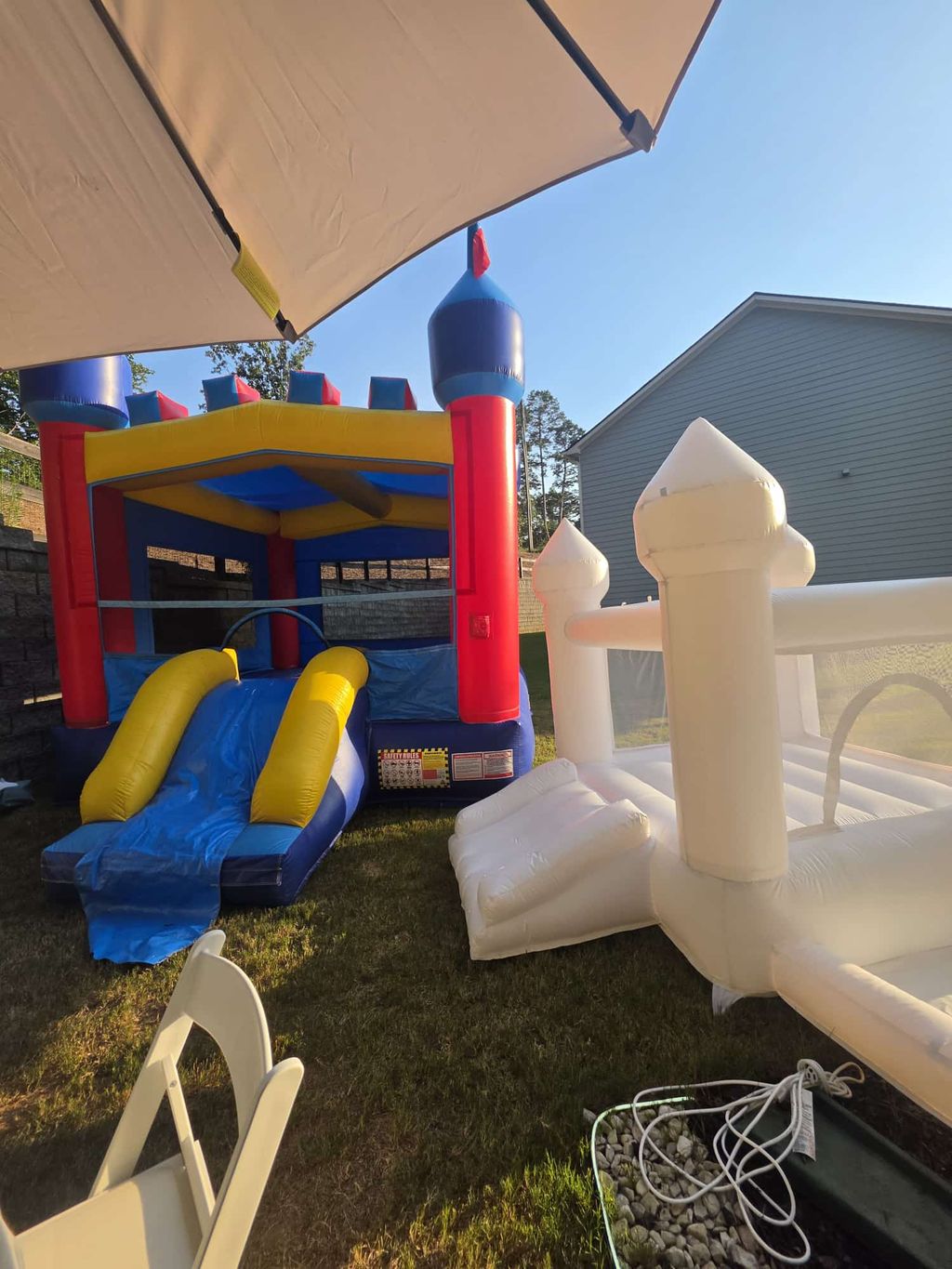
Snellville homes in the Briscoe Park vicinity often sit on gently sloping lots, which can affect the stability of a bounce house. Start by clearing a minimum of 10 feet of space on all sides of the inflatable; this clearance zone keeps guests from unintentionally walking into the structure or its anchoring lines. Remove all rocks, sticks, and debris, then lay down a clean, level tarp or the provided groundsheet to protect the inflatable from punctures. If the ground is grass, compact the soil lightly with a garden roller or a flat board to avoid deep indentations that could cause the anchoring stakes to shift.
When the yard includes a patio or concrete slab, place a set of rubber matting underneath the inflatable to prevent direct contact with hard surfaces that could reflect heat and cause material stress. For larger inflatable combos, such as a JOYMOR bounce house paired with a water slide, make sure the recommended setup area—approximately 22×15 feet for the bounce house and 18×10 feet for the slide—is fully accommodated within the cleared zone. A well‑prepared yard not only protects the equipment but also reduces the likelihood of tripping hazards for children and adults alike.
Calculating Guest Capacity and Supervision Ratios
The safe guest capacity of a bounce house depends on its model and the age of participants. A standard JOYMOR commercial bounce house is designed for up to six children at a time, while a HeroKiddo tropical water slide allows only one rider per turn. To avoid overcrowding, schedule rotation intervals of five minutes per group and limit simultaneous use to the manufacturer’s specifications. If you anticipate 30 children at a birthday party, you will need at least five rotation cycles for the bounce house, and you should plan for adult supervision of one adult per three children.
For a typical backyard event in Snellville, you might have 80 guests total, with 40 adults and 40 children. Using the 1‑adult‑per‑3‑children guideline, you would need at least 14 supervising adults on duty while the bounce house is active. Assign a dedicated “inflatable monitor” who is familiar with the safety rules and can enforce the rotation schedule, check that children are age‑appropriate (most bounce houses require participants to be at least three years old), and verify that no shoes or sharp objects are inside the inflatable.
Proper Installation and Ground Anchoring
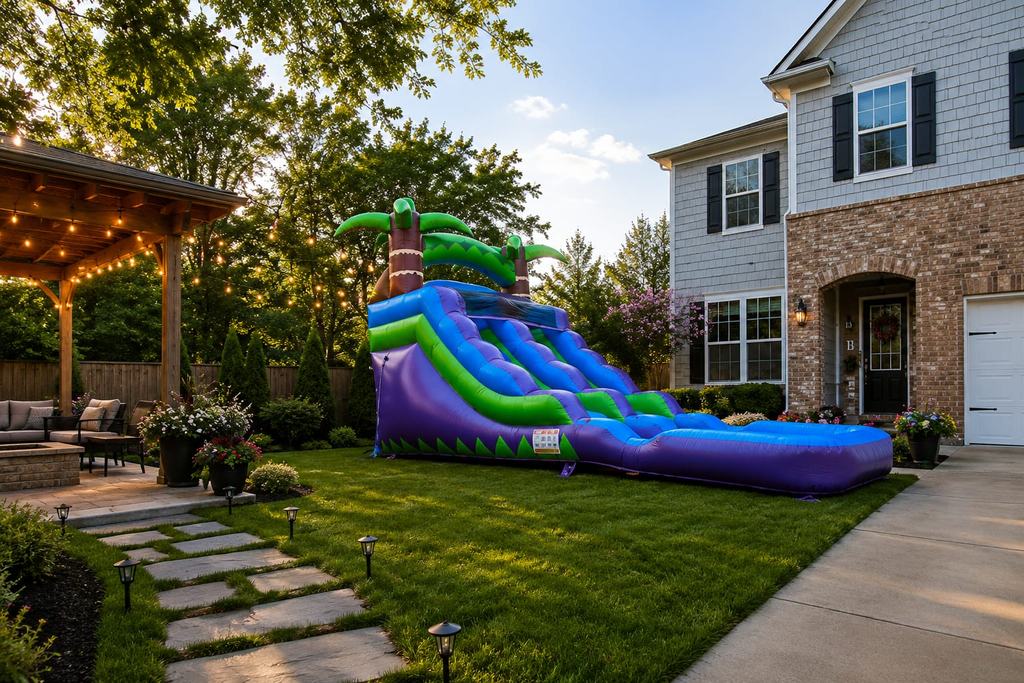
Correct installation is the cornerstone of bounce house safety. Once the delivery truck arrives—approximately a 45‑minute drive from our Pendergrass warehouse—technicians will unpack the unit and begin inflation with a high‑capacity blower. The blower operates at 1,500 watts and draws around 12.5 amps, so ensure a 110‑120 V outlet is available within three feet of the setup area. After inflation, anchor the inflatable using the supplied steel stakes; each stake must be driven at a 45‑degree angle into firm soil to resist wind uplift.
In addition to stakes, use the optional tie‑down ropes that run from the corners of the inflatable to weighted sandbags or concrete blocks if the ground is soft. Check the tension every 30 minutes during operation; wind gusts can loosen anchors quickly. A quick visual inspection before each use—looking for ripped seams, torn fabric, or loose anchoring hardware—will catch problems before they become hazards. When the event ends, deflate the unit slowly, fold the fabric neatly, and store it in a dry container to preserve its lifespan.
Weather Contingency: Rain Plan and Wind Limits
North Georgia weather can be unpredictable, especially in the Spring and Fall months when many families schedule birthday parties. If rain is forecasted, the safest approach is to have a side‑wall‑equipped tent ready to shelter the bounce house. Our 20×20 or larger tents provide a dry enclosure that still allows ventilation while protecting the inflatable from moisture that could cause slipping or electrical hazards. Ensure that the tent’s sidewalls are fully zippered before inflating the bounce house inside.
Wind is another critical factor. The manufacturer’s guidelines state that inflatables must not be used when wind speeds exceed 15 mph. Pay attention to local weather alerts and have a wind meter on hand for quick verification. If wind picks up, stop the activity immediately, secure the inflatable, and move guests to a safe indoor or covered area until conditions improve. Having a clear rain plan and wind threshold written into your event schedule helps all participants understand when the bounce house will be paused or moved.
Timeline and Day‑of Coordination
Effective time management reduces stress for both the rental crew and your guests. A typical day‑of timeline for a Snellville backyard party begins with the delivery crew arriving at the address you provided no later than 1.5 hours before the scheduled start time. They will set up the inflatable, anchor it, and perform a safety check. After the bounce house is ready, allow a 15‑minute “warm‑up” period for the blower to reach full pressure before any children enter.
Plan a 30‑minute interval between each rotation block, giving children time to hydrate, use the restroom, and transition safely. Incorporate a brief 10‑minute safety briefing at the start of the day, covering rules such as no flipping, no shoes inside, and the importance of listening to the monitor. After the final session, the crew will deflate, pack up, and perform a post‑event inspection to ensure the yard is left clean. Communicating this timeline to all adults in advance helps the day flow smoothly and ensures that the bounce house is used responsibly.
Transport, Delivery, and Return Logistics from Pendergrass
The drive from our Pendergrass warehouse (30567) to Snellville typically takes about 45 minutes via GA‑13 and GA‑124, passing familiar landmarks like the Briscoe Park residential area. Our truck is equipped with a lift‑gate to unload heavy equipment safely, and we always bring a backup blower in case of equipment failure. When the crew arrives, they will confirm the exact address you provided and verify the driveway width; a minimum width of 8 feet is required for the truck to turn and unload the inflatable safely.
Once the event concludes, our team will return to the site, deflate the bounce house, and load it back onto the truck. The return trip follows the same route to Pendergrass, where the equipment is inspected and prepared for the next rental. By coordinating delivery windows and clear access paths, you help us keep the process efficient and ensure that the inflatable arrives and departs without any logistical hiccups.
Frequently asked questions
What age range is safe for a JOYMOR bounce house?
Children 3 to 12 years old may use the JOYMOR bounce house, with a maximum of six children inside at one time; adults must supervise at all times.
Do I need a permit for a bounce house in Snellville?
Most residential yards in Snellville require a temporary structure permit for inflatables taller than 12 feet; the permit is easy to obtain from the Snellville Planning Department.
How far in advance should I book a bounce house for a Saturday event?
Because Saturday bookings fill quickly, it is best to request a reservation as soon as you have a confirmed date, ideally several weeks ahead, to guarantee availability.
Can I operate a bounce house in light rain?
Light rain is not advisable; use a side‑wall tent to protect the inflatable or reschedule. Operating a bounce house while wet can create slip hazards and damage the material.
What safety equipment should I keep on hand during the event?
Keep a first‑aid kit, a fire extinguisher rated for electrical fires, and a wind meter nearby. Also have a spare blower and extra anchoring stakes in case of wind or equipment issues.
How many adults should supervise a bounce house with 30 children?
The recommended supervision ratio is one adult for every three children, so you would need at least ten supervising adults to safely manage 30 children playing in the bounce house.