
Why a Rain Plan Matters for Your Snellville Outdoor Event
Snellville, a charming city in Gwinnett County just 45 minutes from DecoEvent ATL’s warehouse, enjoys mild spring and warm summer evenings, but weather can be unpredictable. A sudden shower can turn a beautifully set backyard into a muddy mess, jeopardizing guest comfort, décor, and safety. That’s why an outdoor event rain plan Snellville ga is essential for any wedding, birthday, or corporate picnic you host in neighborhoods off Scenic Highway or near the Briscoe Park area. By preparing in advance, you protect your investment, keep guests dry, and preserve the aesthetic you’ve worked hard to create.
When you partner with DecoEvent ATL, you receive more than just a tent; you get a comprehensive strategy that includes site assessment, appropriate tent size, sidewall options, drainage solutions, and a clear communication plan for guests. This guide walks you through each step so you can confidently say “yes” to an outdoor celebration, even when the forecast looks cloudy.
Outdoor Event Rain Plan Snellville GA: Key Steps and Timeline
The first step in any outdoor event rain plan Snellville ga is establishing a timeline that aligns with your event date, guest count, and local climate patterns. Start the planning process at least eight weeks before the event to allow for site visits, permit checks (if needed for larger tents), and coordination with vendors. In weeks six to four, confirm your guest count—DecoEvent ATL’s 4‑foot round tables seat 4–6 guests, while 5‑foot round tables comfortably accommodate 8 guests. Use these numbers to calculate the minimum number of tables and, consequently, the appropriate tent size.
From week three onward, focus on rain‑specific logistics: ordering sidewalls for the chosen COBIZI tent, arranging flooring (interlocking tiles or a raised dance floor) to prevent water from pooling, and scheduling a pre‑event walk‑through with the installation crew. The day before the event, reconfirm the weather forecast and have a backup power source ready for lighting and sound. On the morning of the event, the crew arrives early to set up the tent, install sidewalls, and secure any flooring. This structured timeline ensures no detail is overlooked and that the rain plan can be executed seamlessly.
Calculating Guest Capacity and Selecting the Right Tent
Accurate guest‑count math is the foundation of a solid rain plan. For example, if you expect 120 guests, you might choose a combination of tables: eight 5‑foot round tables (8 guests each) and four 6‑foot rectangular tables (8 guests each). This configuration seats 112 guests comfortably; you would add a few extra chairs for flexibility, bringing the total to 120. With this layout, a 20×40 tent provides space for 64–80 seated guests, meaning you’ll need either two adjacent tents or a larger 30×60 COBIZI tent, which can accommodate 120–150 seated guests depending on the arrangement.
Choosing the right tent size also dictates the amount of sidewall material needed for rain protection. A 30×60 tent, for instance, typically requires four 10‑foot sidewalls to enclose the front and sides, leaving the rear open for easy entry. The sidewalls are waterproof and UV‑protected, keeping rain out while allowing ventilation. DecoEvent ATL’s professional installation ensures the walls are anchored securely, even if wind gusts accompany a rain shower, giving you peace of mind that the interior stays dry.
Yard Preparation, Drainage, and Site Logistics in Snellville
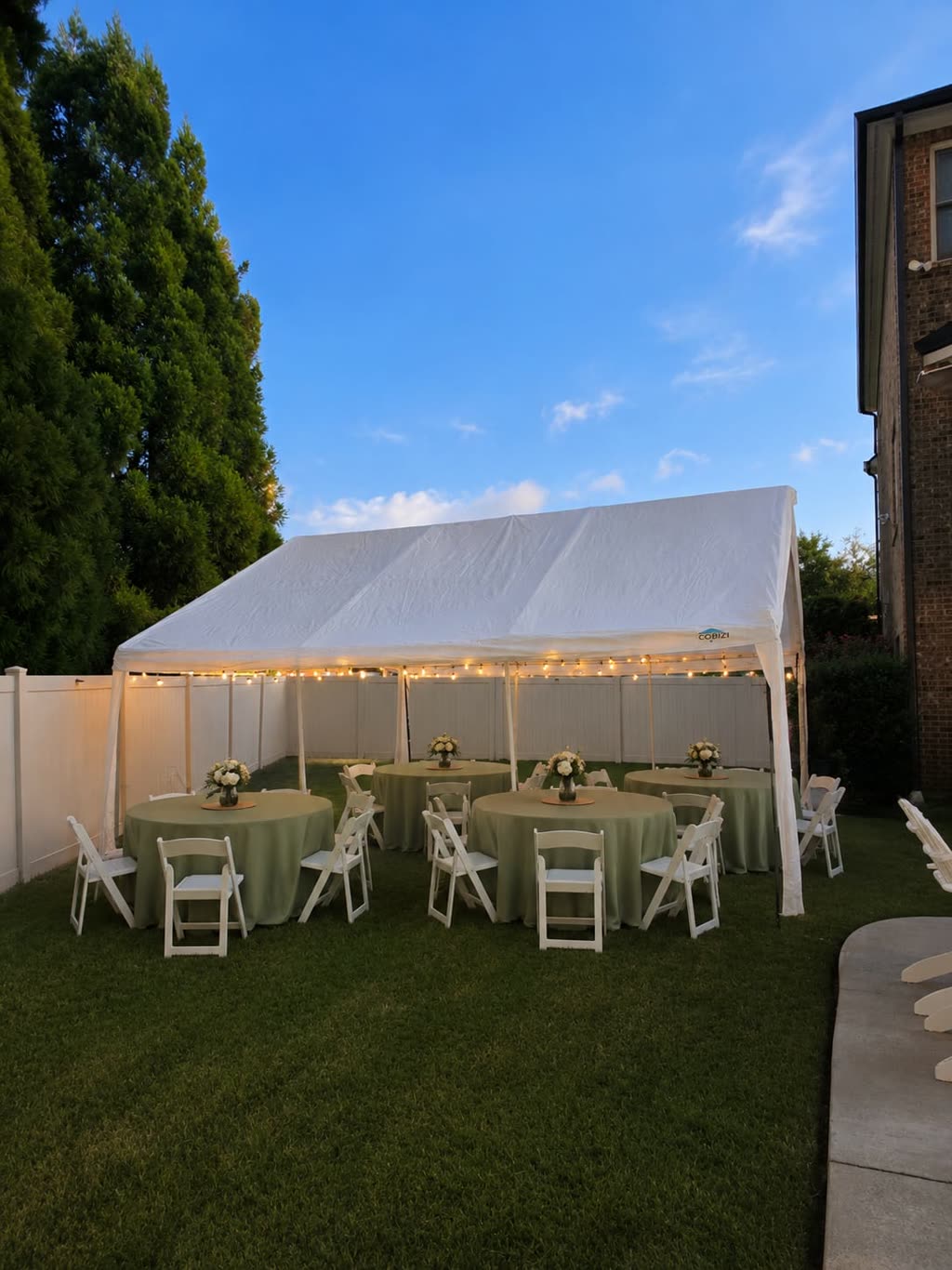
Snellville homes often sit on sloped yards or near mature trees, which can affect water runoff. Before the tent arrives, clear the event area of debris, level the ground as much as possible, and lay down a polyethylene groundsheet to serve as a moisture barrier. If the yard has a natural slope, create a gentle berm or use sandbags at the lower edge of the tent to direct water away from the entrance. Installing interlocking floor tiles or a raised wooden dance floor not only prevents mud but also provides a stable surface for tables, chairs, and any bounce houses you may add.
Logistics also include mapping the delivery route from the Pendergrass warehouse to your Snellville address. The most direct route follows GA‑124 West to Scenic Highway, then south to the residential area near Briscoe Park. Ensure a clear driveway for the delivery truck, and consider removing any obstacles such as garden décor or parked cars that could block the crew’s access. Communicating these details with DecoEvent ATL ahead of time helps the crew arrive on time and set up efficiently, even if rain shortens daylight hours.
Choosing Lighting and Power Solutions for a Rainy Day
Even when rain prevents outdoor lighting from shining directly, you still need adequate illumination for safety and ambiance. LED tent lighting, which brightens the entire tent structure, is a must‑have for any outdoor event rain plan Snellville ga. Unlike bistro strings, which are decorative and may not provide sufficient light in a fully enclosed tent, LED tent lighting ensures the interior stays well lit, reducing the risk of trips and allowing guests to see food stations and tables clearly.
Power considerations are equally critical. A generator or backup power source should be positioned outside the tent, with extension cords running through waterproof conduit into the interior. This setup powers the sound system (which can handle up to 300 guests), microphones, and any heating fans if temperatures dip. DecoEvent ATL’s crew will test the entire electrical system before the ceremony begins, confirming that all connections are dry and secure, thus eliminating any electrical hazards that rain might introduce.
Integrating Extras: Flooring, Fans, and Bounce Houses
If your Snellville event includes a children’s zone, a bounce house or water slide can be a highlight—provided the rain plan accounts for them. JOYMOR commercial bounce combos require a dry, level surface and a blower that must stay dry and ventilated. On rainy days, the blower is placed under a covered area or inside the tent, while the bounce house is positioned on the interlocking floor tiles to prevent water ingress. This arrangement keeps the equipment safe and ensures that kids can enjoy the activity without slipping.
Industrial fans are valuable for circulating air inside a fully enclosed tent, especially when sidewalls trap humidity. A high‑flow 1,500‑watt blower can be set up on a sidewall with clear ventilation, helping to keep the interior comfortable. When paired with LED lighting, fans improve overall guest experience, preventing the tent from feeling too warm after a sudden temperature rise following a brief rain shower.
Communicating the Rain Plan to Your Guests
Transparency builds confidence. Send an email or digital invitation update a week before the event, explaining the rain contingency measures: the location of the tent, sidewall entrances, and any shift in seating arrangement if a larger tent is used. Include a simple map showing the tent entrance and any covered walkways. For guests arriving by car, provide clear parking instructions and note that the delivery truck will occupy the driveway for a short period during setup.
On the day of the event, place a small sign at the front gate summarizing the rain plan: “All guests will be welcomed inside the covered tent. Sidewalls are in place to keep rain out. Restrooms and refreshments remain in the same location.” This concise message reassures attendees that you have thought through every scenario, reinforcing the professional nature of your celebration.
Final Checklist and How to Get Started with DecoEvent ATL
Before you finalize your outdoor celebration, run through this checklist: confirm guest count; calculate table and tent size; verify sidewall needs; arrange yard grading, groundsheet, and flooring; schedule power and lighting; plan for fans and any bounce houses; and draft the guest communication. Once you have these details, contact DecoEvent ATL via phone, WhatsApp, or email with your full name, exact event address (street, city, ZIP), event date and start time, guest count, phone number, and email address. The team will repeat the city and ZIP back to you, confirm that Snellville is in Gwinnett County, and provide a detailed quote that includes subtotal, 8% tax, and delivery cost based on distance.
Remember, the rain plan is not a backup—it’s an integral part of your event design. By partnering with DecoEvent ATL, you gain access to commercial‑grade COBIZI tents, professional installation, and a team that understands the unique weather patterns of Snellville, GA. Reach out today, and let us transform your backyard into a resilient, beautiful venue that’s ready for sunshine or rain.
Frequently asked questions
What size tent is best for 120 guests in Snellville?
A 30×60 COBIZI tent typically seats 120–150 guests, offering enough space for tables, sidewalls, and walkways.
How many sidewalls do I need for a rain‑proof tent?
For a 30×60 tent, four 10‑foot sidewalls usually cover the front and sides, leaving the rear open for easy entry.
Can I use a bounce house if it rains?
Yes, if the bounce house is placed on dry, interlocking flooring inside the tent and the blower is kept in a covered, ventilated area.
What is the delivery fee for a Snellville address?
Do I need a permit for a large tent in Gwinnett County?
Most residential backyard events do not require a permit, but if the tent exceeds 20×30 or is placed on a public right‑of‑way, check local regulations.
How far in advance should I book the rain plan?
Book at least eight weeks ahead to allow site assessment, permit checks, and coordination of tents, sidewalls, and flooring.