
Why Proper Lighting Matters for Your Backyard Event
When the sun dips behind the trees in Sandy Springs, the atmosphere of your outdoor celebration can transform from ordinary to unforgettable with the right lighting. Proper illumination ensures that guests can safely navigate pathways, enjoy the décor, and capture memorable photos without harsh shadows or blinding glare. In the context of a backyard party, lighting also sets the mood—soft bistro strings create an intimate, romantic feel, while bright LED tent lighting keeps the entire space bright enough for dancing and dining. Choosing the correct event lighting rental in Sandy Springs, GA, means balancing aesthetics with functionality, and aligning the lighting plan with the size of the yard, the number of guests, and the layout of tables, chairs, and décor elements.
Beyond the visual appeal, lighting contributes to safety and compliance with local ordinances in Fulton County. Well‑lit walkways reduce the risk of trips, especially on uneven grass or when children are playing near bounce houses. Adequate lighting also helps your service crew work efficiently during setup and teardown, ensuring that the tent, draping, and equipment are installed correctly before the party begins. By treating lighting as a central component of your event design, you create a cohesive experience that feels polished from the first arrival to the final goodbye.
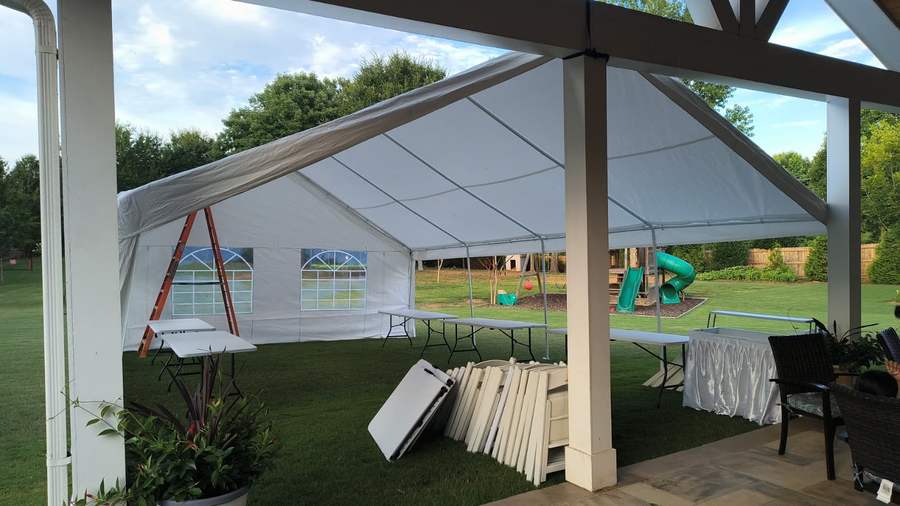
Choosing the Right Event Lighting Rental Sandy Springs ga for Your Theme
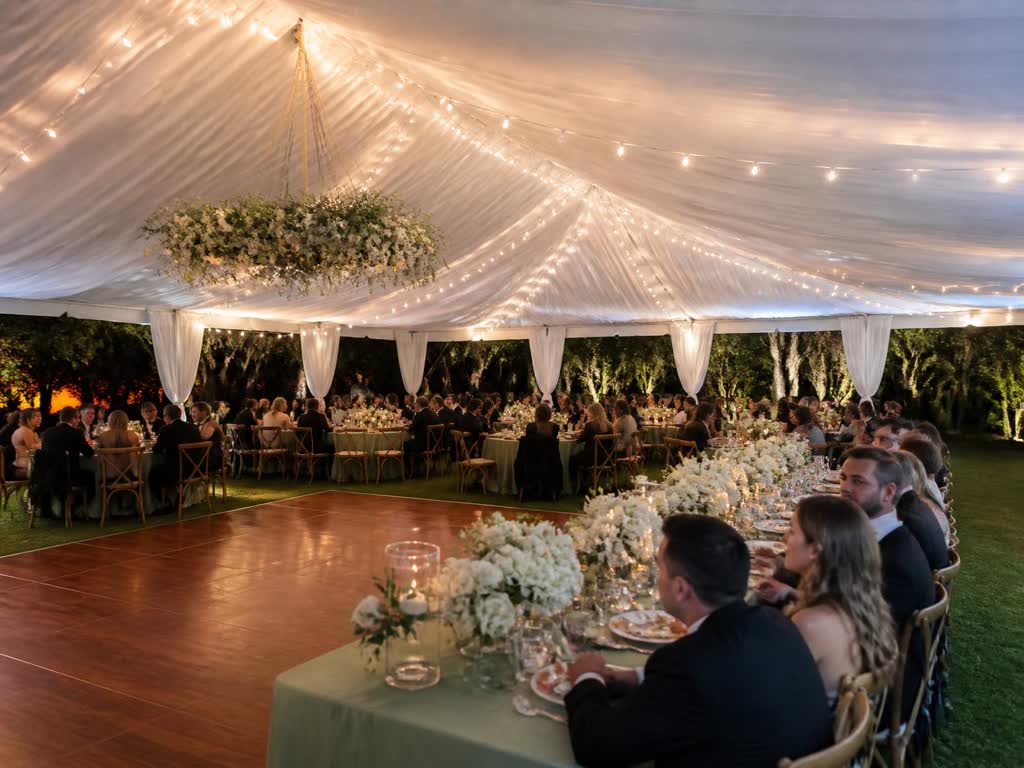
DecoEvent ATL offers two distinct lighting families that complement any backyard theme: LED tent lighting and bistro string lighting. LED tent lighting is a structural solution that illuminates the entire interior of your rented tent, providing even, flicker‑free light that can be adjusted in brightness to suit dinner, dancing, or a cocktail hour. This lighting is essential for larger tents such as the 20×40 or 30×60 models, where a single source of illumination ensures guests can see each other across the space. Bistro strings, on the other hand, are decorative fixtures that hang above tables and walkways, casting a warm, twinkling glow that adds romance to a wedding or a lively sparkle to a quinceañera.
When selecting the appropriate lighting, consider the overall décor palette and the time of your event. If you plan a formal dinner with a white drape canopy, a cooler white LED spectrum can enhance the elegance of the setting. For casual family reunions or birthday celebrations, warmer amber bistro strings paired with soft LED uplighting on the perimeter walls create a festive, inviting vibe. Matching the color temperature of the LEDs with the hue of your artificial florals and balloon arches ensures a harmonious visual experience throughout the night.
Mapping Your Backyard Layout and Guest‑Count Calculations
Accurate guest‑count math is essential for determining how many lighting fixtures you’ll need. Begin by estimating the number of tables based on your confirmed guest count. For a typical backyard wedding in Sandy Springs, a 6' round table comfortably seats 10 guests, while a 5' round table comfortably seats 8 guests. If you anticipate 80 guests, you would likely arrange eight 6' round tables (8 × 10 = 80) or ten 5' round tables (10 × 8 = 80). Each table should have at least one bistro string spanning the length of the table and the surrounding chairs, which translates to roughly one string per table for clear illumination.
In addition to table lighting, you must plan for general area illumination. A 20×30 tent typically requires three to four LED tent lighting units to evenly cover the entire interior, especially when the tent is equipped with sidewalls that block natural light. For a larger 30×60 tent, consider five to six LED units positioned at strategic points near the entrance, dance floor, and catering stations. By aligning the number of lighting units with the tent size, you ensure consistent brightness levels, avoid dark corners, and maintain an inviting ambiance for all guests.
Logistics: Delivery, Setup, and Drive Considerations
The journey from our Pendergrass hub to Sandy Springs takes approximately 55 minutes, traveling primarily along GA‑400 and I‑285. When planning delivery, provide the exact street address, including the ZIP code, so our logistics team can calculate the appropriate mileage and schedule a convenient arrival window. Our crew will arrive early in the afternoon—typically two to three hours before the agreed start time—to unload, assemble the tent, install the LED lighting framework, and drape any decorative fabrics. This buffer allows for precise placement of bistro strings above each table and ensures that all electrical connections are safely routed to avoid tripping hazards on grass or concrete surfaces.
Our installation team follows a step‑by‑step checklist: first, they level the ground and lay out the tent stakes or weights, then they erect the frame and attach the waterproof cover. Once the tent is secure, the LED lighting fixtures are mounted on the internal ribs or hanging brackets, and power cables are run to a portable generator if the property lacks sufficient outlets. Finally, bistro strings are strung across the overhead beams or along the perimeter using discreet clips that blend with the décor. This systematic approach minimizes disruptions and guarantees that every lighting element is positioned for optimal effect.
Weather Contingency: Rain Plans and Lighting Adjustments
Even in North Georgia, evening events can be surprised by an unexpected shower. Our tents come with sidewalls that can be fully closed to protect guests and equipment from rain, while still allowing the LED lighting to shine through the transparent sections. If a sudden downpour forces you to close the sidewalls, you may need to increase the brightness of the LED fixtures to compensate for reduced natural light leaking through the tent walls. Our technicians are trained to adjust the dimmer settings on site, ensuring that the ambiance remains vibrant without over‑illumination.
Should the weather forecast indicate a high likelihood of rain, we recommend adding a layer of waterproof LED lighting strips along the perimeter of the dance floor. These strips are sealed against moisture and can be powered by the same generator that runs the main lighting system. Additionally, ensure that all bistro strings are rated for outdoor use and are securely fastened to prevent wind from pulling them down. By having a rain plan that includes both structural and lighting adaptations, you protect your investment in décor while keeping your guests comfortable and impressed.
Timeline: From Setup to Teardown
Crafting a detailed timeline helps you and our crew stay on track, especially when coordinating with catering and entertainment. A typical schedule for a sunset event in Sandy Springs might look like this: 2:00 PM – Delivery of tents, tables, chairs, and lighting equipment; 2:30 PM – Tent erection and stake placement; 3:30 PM – Installation of LED tent lighting and connection to power; 4:00 PM – Placement of tables, chairs, and bistro strings; 4:45 PM – Final walkthrough with the host to confirm lighting levels and décor placement; 5:30 PM – Guests begin arriving; 6:00 PM – Event start.
After the celebration ends, the teardown process mirrors the setup in reverse order. At approximately 10:30 PM, our crew will begin taking down bistro strings, disconnecting LED units, and packing the lighting equipment. The tent is then deflated, stakes removed, and all reusable components loaded onto the truck for transport back to the warehouse. This systematic approach typically requires two to three hours, depending on the size of the tent and the amount of décor. Communicating the exact end time to our team ensures that the neighborhood remains undisturbed and that any noise ordinances in Fulton County are respected.
Final Tips for a Brilliant Backyard Night
To maximize the impact of your event lighting rental in Sandy Springs, consider layering light sources. Combine ambient LED tent lighting with accent uplights aimed at decorative pillars or a flower arch, and finish with bistro strings for table‑level sparkle. This three‑dimensional lighting strategy adds depth, highlights focal points, and guides guests through the space. Additionally, test all lighting levels during daylight to confirm that dimming controls work correctly, and request a brief walkthrough with our technician to adjust any hot spots or shadows before the party begins.
Lastly, keep safety at the forefront. Ensure that all cords are taped down or covered, especially near high‑traffic areas and bounce houses, and verify that the generator is placed on a stable, well‑ventilated surface away from guests. By integrating thoughtful lighting design, precise logistics, and a solid contingency plan, your backyard event in Sandy Springs will shine brilliantly long after the sun sets, leaving guests with a lasting impression of elegance and enjoyment.
Frequently asked questions
What types of lighting do you offer for backyard events?
We provide LED tent lighting that illuminates the entire tent interior and decorative bistro strings that create a warm, twinkling glow above tables and walkways.
How many bistro strings are needed for a typical dinner layout?
Plan for one bistro string per table; for eight 6‑foot round tables, eight strings will evenly light the dining area.
Can the lighting be adjusted if we close tent sidewalls due to rain?
Yes, our crew can raise LED brightness levels on site to compensate for reduced natural light when sidewalls are fully closed.
How far is the drive from Pendergrass to Sandy Springs, and does it affect setup timing?
The drive is about 55 minutes; we schedule delivery early in the afternoon to allow ample time for tent erection, lighting installation, and final adjustments.
What safety steps are taken with lighting cords around bounce houses?
All cords are taped down or covered, and positioned away from high‑traffic zones to prevent tripping hazards, especially near active bounce houses.
Do you provide a timeline for setup and teardown?
Yes, we recommend a detailed schedule that includes delivery, tent erection, lighting installation, décor placement, guest arrival, and a coordinated teardown after the event ends.