
party guest count planning Gillsville ga
When you start thinking about an outdoor celebration in Gillsville, Hall County, the first step is to align the number of guests you expect with the physical area of your yard. This process, often referred to as party guest count planning Gillsville ga, helps you avoid overcrowding or leaving large empty spaces that can affect the flow of the event. Begin by measuring the usable lawn area, taking into account any permanent structures like sheds, gardens, or trees that cannot be moved. A typical residential lot in Gillsville offers between 2,500 and 4,000 square feet of open grass, though properties along the Hall and Banks county line may have larger expanses suitable for bigger gatherings. Knowing this baseline lets you move on to selecting the right tent size and arranging tables, chairs, and activity zones without guesswork.
Next, translate the square footage into a comfortable guest capacity using industry‑standard spacing guidelines. For a seated dinner, allow roughly 10 to 12 square feet per person, which includes space for a chair, table portion, and easy movement. For a cocktail‑style reception where guests stand and mingle, you can plan for 8 to 10 square feet per person. If you intend to include a dance floor, allocate an additional 2 to 3 square feet per dancer. By applying these ratios to your measured yard, you obtain a target guest range that informs every subsequent decision, from tent selection to rental quantities, ensuring the event feels both welcoming and well‑organized.
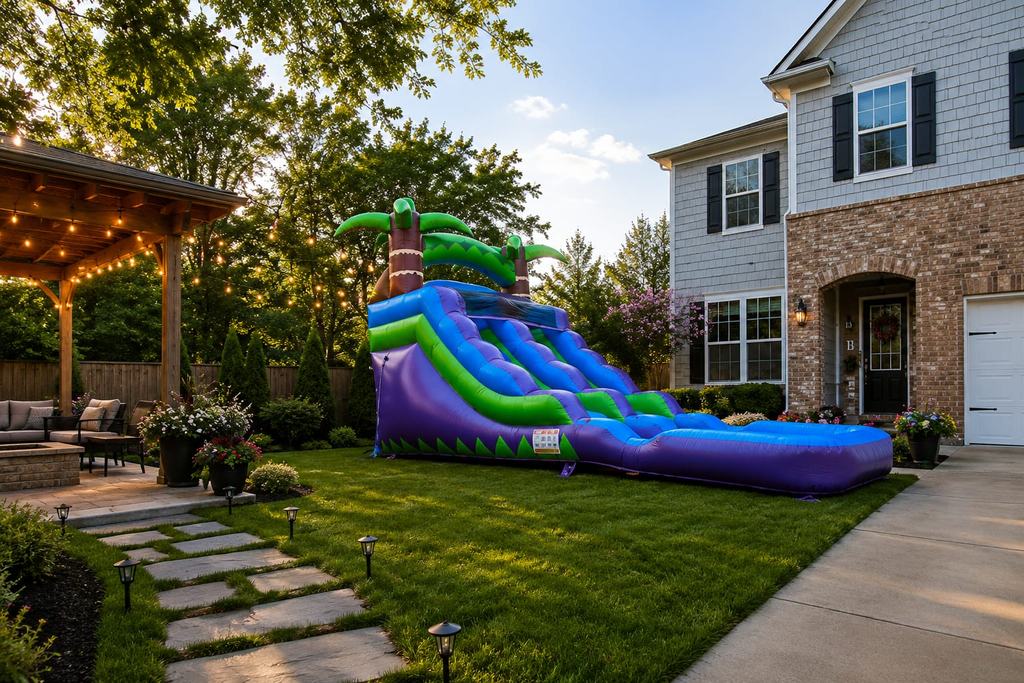
Understanding Your Yard Space in Gillsville
Gillsville’s geography features rolling farm lawns that often straddle the Hall and Banks county line, giving many properties a mix of open pasture and shaded woodlots. When you walk the perimeter, note any slopes or low spots that could collect water after rain; these areas may need extra drainage or be better suited for decorative elements rather than heavy equipment. The soil in this part of North Georgia tends to be a loamy clay blend, which provides good stability for tent stakes when the ground is firm but can become soft after prolonged wet periods. Checking the firmness a day before delivery helps the installation crew decide whether to use standard stakes or longer, ground‑anchoring options.
Additionally, consider the proximity to utilities and access routes. Most residential driveways in Gillsville are paved or gravel and can support the weight of a delivery truck carrying a 20×20 or 30×60 tent, but narrow gates or low‑hanging branches may require trimming. Measure the clear width of the driveway entrance and any side gates to confirm that the truck and trailer can pass without obstruction. If the property lies near a county road, verify any local ordinances about temporary structures and noise, especially if you plan to run sound equipment for a taquiza or live paella service. Having these details ready streamlines the logistics conversation with the rental team.
Calculating Guest Count Based on Tent Size
Once you know the usable square footage, match it to the tent dimensions that DecoEvent ATL offers. A 10×10 tent covers 100 square feet and comfortably accommodates 6 to 8 seated guests or 8 to 10 standing. Moving up, a 10×20 tent provides 200 square feet, suitable for 16 to 20 seated guests or up to 25 in a cocktail layout. The 20×20 tent doubles the area to 400 square feet, seating 32 to 40 guests. For medium‑sized gatherings, the 20×30 tent (600 square feet) holds 48 to 60 seated guests, while the 20×40 tent (800 square feet) seats 64 to 80 guests or up to 100 cocktail‑style. The largest option, the 30×60 COBIZI tent, delivers 1,800 square feet and can host 120 to 150 seated guests or as many as 180 in a standing reception.
To determine which tent fits your yard, subtract the space needed for ancillary zones such as a buffet table, gift table, or bounce house from the total lawn area. For example, if you have a 3,000‑square‑foot yard and plan to reserve 400 square feet for a catering station and 200 square feet for a children’s play area, you have 2,400 square feet left for guest accommodation. Dividing that by the 10‑to‑12 square feet per seated guest guideline yields a maximum of about 200 seated guests, which would point toward a combination of tents or the 30×60 option supplemented with additional seating arrangements. This math ensures you neither over‑rent nor under‑utilize the available space.
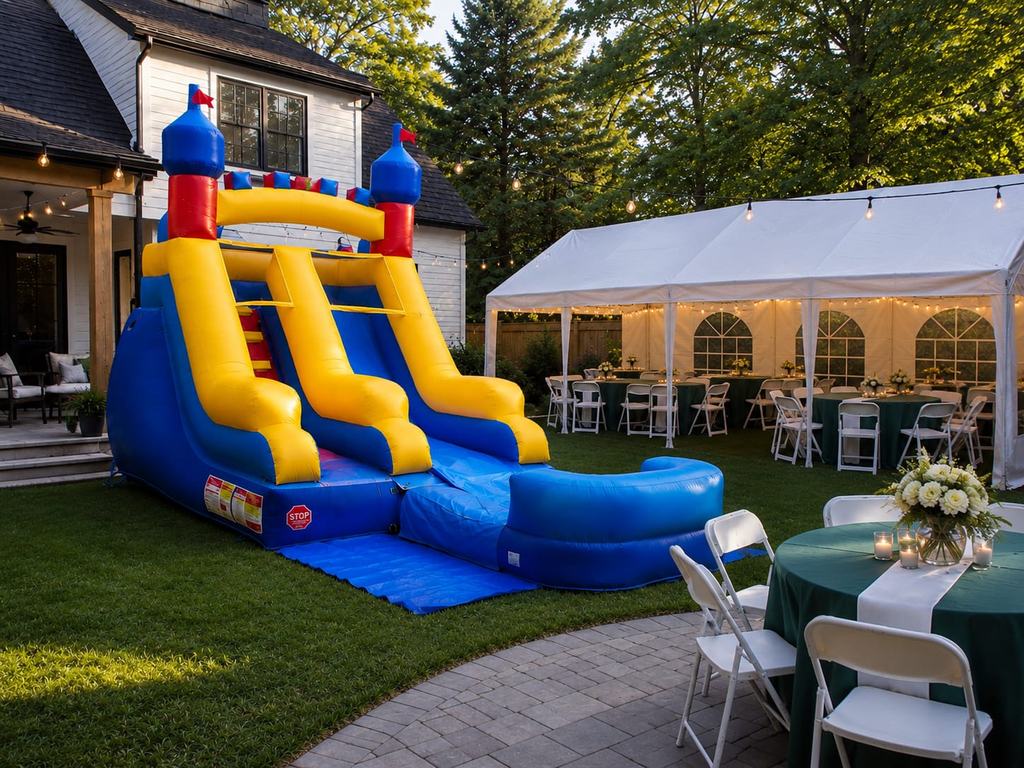
Seating Layouts and Flow for Different Events
The way you arrange tables and chairs influences both the perceived capacity and the guest experience. For a seated dinner, a common layout uses rectangular tables placed in parallel rows with a central aisle, allowing servers to move easily between the kitchen or buffet and the guests. If you opt for round tables, a 60‑inch round table seats eight to ten people and creates a more intimate atmosphere; you can fit roughly four to five of these tables inside a 20×20 tent while maintaining comfortable walkways. For a cocktail‑style party, high‑boy tables or bistro‑style cocktail tables encourage standing and mingling, and you can place more units per square foot because they require less footprint per person.
Consider also the placement of focal points such as a dance floor, a photo backdrop, or a live paella station. A dance floor typically needs a clear, flat surface of at least 12×12 feet for up to 30 dancers; positioning it opposite the dining area prevents traffic collisions. If you include a taquiza catering station, locate it near a power source for warmers and keep the serving line at least three feet wide to avoid bottlenecks. By mapping each zone on a sketch before the rental arrives, you can verify that the total footprint stays within the measured yard limits and that guests can move freely between eating, dancing, and socializing areas.
Preparing the Yard for Setup: Timeline and Logistics
A smooth installation begins weeks before the event date. Start by confirming the exact address, including street, ZIP code, and noting that Gillsville, GA 30541 lies within Hall County. Share this information with the rental company so they can calculate the delivery distance from their Pendergrass warehouse—approximately 22 minutes via GA‑53 and US‑129, covering roughly 18 miles, which falls into the free‑delivery zone (0–15 miles) or the 16–30 mile band depending on the exact route. Knowing the delivery window helps you plan any necessary driveway clearing or gate unlocking.
Two days prior to the rental, mow the lawn to a uniform height and remove any debris, sticks, or pet waste that could interfere with stakes or weigh down the tent floor. If the forecast shows rain, consider laying down a ground protection tarp under the tent area to keep the fabric dry and simplify cleanup. On the morning of delivery, ensure a clear path from the street to the setup zone; if you have livestock or farm equipment, relocate them temporarily to avoid accidents. The installation crew will then unload the tent, begin anchoring, and raise the structure, a process that typically takes two to three hours for a 20×20 tent and up to five hours for the larger 30×60 COBIZI unit, depending on ground conditions.
Weather Considerations and Rain Plan for Gillsville Events
North Georgia weather can shift quickly, especially in the spring and summer months, so having a rain plan is essential. DecoEvent ATL provides sidewalls that can be added to any tent to shield guests from wind and precipitation. If the forecast calls for heavy rain, you may also decide to move the event to an alternate date; the company allows date changes when conditions make setup unsafe, provided you give sufficient notice. Keep an eye on the hourly forecast the day before and the morning of the event, and have a designated contact person ready to relay any updates to the rental team.
In addition to sidewalls, consider extra drainage solutions if your yard has a known low‑lying area. Simple sandbags or absorbent pads placed under the tent perimeter can help divert water away from the flooring. For events that include electrical equipment such as sound systems or lighting, use ground‑fault circuit interrupters (GFCIs) and keep all cords elevated or covered with protective tape. By preparing these contingencies in advance, you protect both your guests and the rental investment, ensuring the celebration proceeds smoothly regardless of atmospheric changes.
Final Checklist and Day‑of Coordination
On the day of the event, run through a concise checklist to verify that every element is in place. Confirm that the tent is fully anchored, sidewalls are secured if used, and that the interior lighting—whether LED tent lighting or bistro strings—is functioning and set to the desired ambiance. Ensure that all tables, chairs, linens, and any rented decor items are arranged according to your pre‑drawn layout, and that the sound system is tested for coverage up to the expected guest count (DecoEvent ATL’s system supports up to 300 guests). Check that any bounce houses or water slides have their blowers plugged in, that the required hose connections are present for wet units, and that adult supervisors are assigned as needed.
Finally, walk the perimeter with a quick visual scan for any hazards such as loose stakes, tripping cords, or uneven ground. Greet your guests with a clear flow path from the parking area to the welcome zone, and have a designated point of contact for the rental company in case any last‑minute adjustments are required. By following this structured approach—from initial guest‑count planning through setup, weather contingencies, and day‑of coordination—you create an outdoor celebration in Gillsville that feels spacious, welcoming, and professionally executed, all while staying within the realities of your yard’s size and the local logistical landscape.
Frequently asked questions
How do I measure my yard for guest capacity?
Measure the length and width of the usable lawn area, subtract any permanent structures, then multiply length by width to get square footage. Divide that number by 10‑12 square feet per seated guest (or 8‑10 for standing) to estimate how many people your space can comfortably accommodate.
What tent size should I choose for 50 guests in Gillsville?
For 50 seated guests, a 20×20 tent (400 sq ft) provides ample room, seating 32‑40 guests comfortably; you could add a 10×10 for extra space or opt for a 20×30 if you want more breathing room and room for a buffet or dance area.
How far is DecoEvent ATL’s warehouse from Gillsville, GA?
The warehouse in Pendergrass, GA is about 22 minutes away, roughly 18 miles via GA‑53 and US‑129, placing most Gillsville addresses in the free or low‑cost delivery band depending on exact route.
Can I set up a bounce house and a tent in the same yard?
Yes, as long as you allocate separate zones; measure the bounce house footprint (e.g., JOYMOR combo ~22×15 ft) and ensure the combined area of tent, bounce house, and required clearances stays within your total lawn measurement.
What should I do if rain is forecast for my event day?
Add tent sidewalls for protection, monitor the forecast, and be prepared to reschedule if conditions become unsafe; DecoEvent ATL allows date changes when weather prevents safe setup.
Do I need to provide power for lighting and sound?
Yes, the rental requires access to a 110V outlet for LED tent lighting, bistro strings, sound system, and any blower units; plan extension cords and GFCI protection if outlets are far from the setup zone.