
Understanding Your Yard’s Capacity in Peachtree Corners
Peachtree Corners features a mix of spacious suburban lots along the Technology Park corridor and narrower river‑side properties that back up to the Chattahoochee. Many homes in this Gwinnett County community have backyards ranging from 2,500 to 5,000 square feet, with some larger estates exceeding 7,000 square feet. Knowing the exact dimensions of your usable area is the first step in determining how many guests you can comfortably accommodate while leaving room for tables, chairs, a dance floor, and any entertainment pieces you might want.
When measuring, start from the property line or fence and note any permanent obstacles such as trees, sheds, or utility boxes that cannot be moved. Subtract a buffer of at least three feet around these features to allow for safe passage and to meet local fire‑code clearances. Also consider the slope of the land; a gentle grade is fine for a tent, but steep inclines may require leveling or additional anchoring. By taking these measurements early, you create a reliable foundation for the guest‑count calculations that follow.
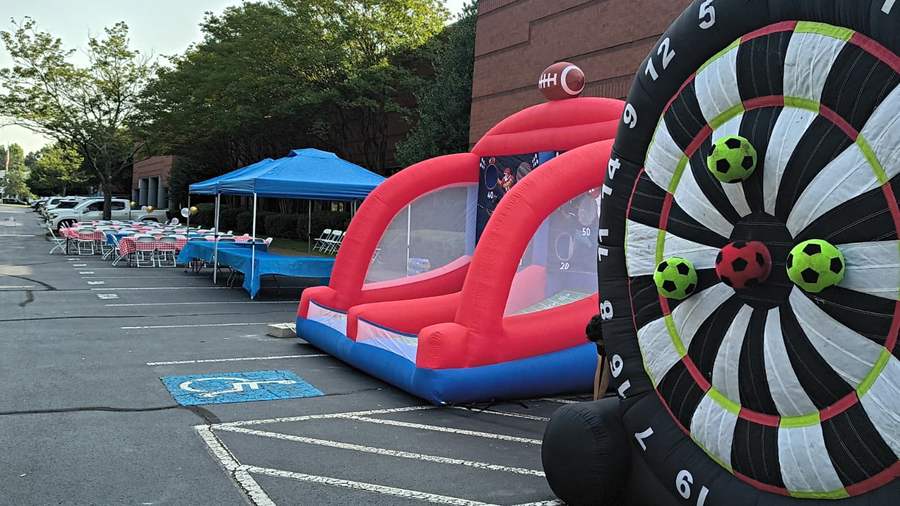
party guest count planning Peachtree Corners ga
To translate square footage into a guest count, begin by selecting the tent size that fits your yard’s cleared area. DecoEvent ATL offers a range of COBIZI commercial tents, from a 10×10 footprint suitable for intimate gatherings to a 30×60 structure that can host larger celebrations. Each tent size has a documented seated capacity: for example, a 20×30 tent comfortably seats 48 to 60 guests, while a 20×40 accommodates 64 to 80 seated guests. Use these figures as a baseline, then add space for cocktail tables, a dance floor, and any bounce‑house or water‑slide units you plan to include.
Next, factor in the layout of tables and chairs. A 60‑inch round table seats up to ten guests when arranged optimally, while a 8‑foot rectangular table fits eight to ten. Allow at least two feet of clearance between table edges for guest movement and service access. If you intend to have a dance floor, reserve a minimum of 12×12 feet for a modest area or larger for a full‑size floor. By subtracting the square footage taken up by these elements from your total usable yard space, you arrive at a realistic guest count that ensures comfort and safety.
Preparing the Yard for Setup
Before the delivery crew arrives, clear the designated area of debris, toys, gardening tools, and any loose stones that could puncture tent walls or create tripping hazards. Mow the grass to a uniform height of about two inches to provide a stable surface for the tent’s anchoring system. If your yard includes a sprinkler system, mark the heads so they can be avoided or temporarily shut off during installation.
Lay down ground protection pads or interlocking flooring where the tent’s weight will be concentrated, especially if the soil is soft after recent rain. Ensure there is a clear, unobstructed path at least ten feet wide from the street or driveway to the setup zone for the delivery truck and the crew’s equipment. Verify that nearby power outlets are accessible for lighting, sound systems, and any blowers required for bounce houses; if not, plan for extension cords that meet outdoor safety standards.
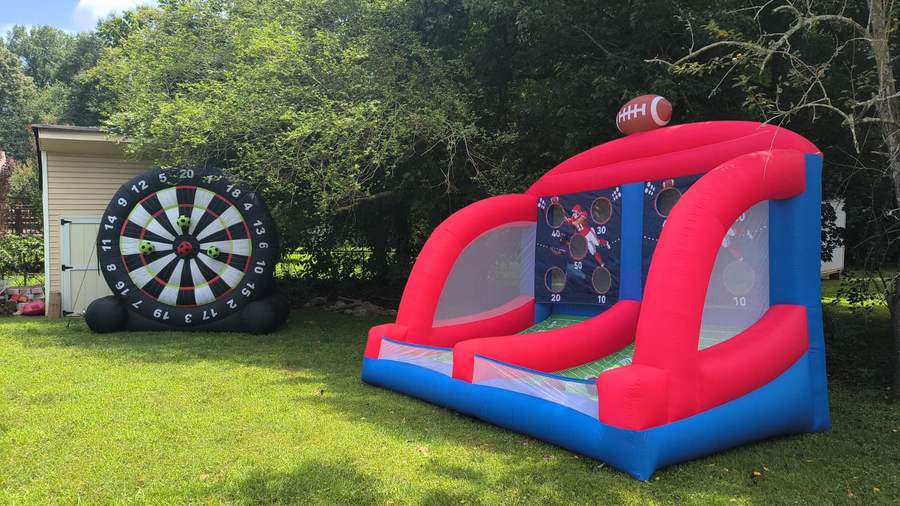
Timeline from Booking to Event Day
Once you have confirmed your event date with DecoEvent ATL, the company will schedule a site visit within a few business days to verify measurements, discuss layout options, and note any specific requirements such as sidewall needs for rain protection. This visit typically lasts 30 to 45 minutes and includes a walkthrough of the yard, a check of access routes, and a conversation about desired decor elements like draping, lighting, and floral arrangements.
Approximately one week before the event, the team will reconfirm the delivery window and any last‑minute adjustments you may have requested. On the day prior to the event, the crew arrives early to begin tent erection, anchoring, and installation of lighting and sound systems. The morning of the event, they complete the final styling, place tables and chairs, set up any catering stations, and conduct a safety walk‑through to ensure everything is ready for guest arrival.
Rain Plan and Backup Options
Peachtree Corners can experience sudden showers, especially during the spring and summer months. DecoEvent ATL’s rain plan includes the option to add sidewalls to any tent, which zip securely to the frame and provide a waterproof barrier while preserving visibility. If the forecast calls for heavy rain or strong winds, the crew can recommend postponing the setup to a safer time slot, and dates can be rescheduled without penalty as long as the new date falls within the company’s service window.
In addition to sidewalls, consider positioning the tent near a natural windbreak such as a fence line or a row of shrubs to reduce wind load. The crew will also secure all anchoring points with extra stakes or weight bags if the ground is soggy. Communication is key; the team will keep you informed of any weather‑related changes and will work with you to ensure the event proceeds smoothly, whether under clear skies or with the protective sidewall system in place.
Drive Logistics from Our Warehouse
DecoEvent ATL’s warehouse is located in Pendergrass, Georgia, roughly a 45‑minute drive to most parts of Peachtree Corners under normal traffic conditions. The most common route takes I‑85 South to Exit 105, then follows GA‑141 (Peachtree Parkway) toward the Technology Park area. During peak commuting hours, allow an extra 10 to 15 minutes for potential congestion near the I‑85/GA‑141 interchange.
The delivery truck departs the warehouse early enough to arrive at your yard within the agreed window, typically two hours before the scheduled start time for setup. This lead time allows the crew to unload the tent, tables, chairs, and any specialty items such as bounce houses or sound equipment, and to begin anchoring before the heat of the day builds. After the event, the same crew handles breakdown and reloads the truck for the return trip to Pendergrass, ensuring all equipment is accounted for and ready for the next booking.
Final Checklist for a Smooth Setup
On the morning of the event, walk through the yard with the crew to confirm that all items are in place: the tent is securely anchored, sidewalls are attached if needed, lighting is operational, and sound levels are appropriate for the planned guest count. Verify that tables are level, chairs are evenly spaced, and any decorative elements such as draping or floral arrangements are correctly positioned according to the agreed design.
Ensure that access routes remain clear for catering vendors, that waste receptacles are positioned conveniently, and that any rental items like bounce houses have their blowers connected to grounded outlets with proper cord protection. After the celebration concludes, the crew will perform a final sweep to collect all decorations, break down the tent, and load everything back onto the truck. Your yard will be left clean and ready for regular use, and you will have a detailed record of the setup for future reference.
Guest‑Count Calculation Guide
Start by measuring the cleared area of your yard in square feet. Subtract the footprint of any fixed structures like sheds, permanent planters, or utility boxes that cannot be moved. Then decide on the tent size that best fits the remaining space; each COBIZI model has a published floor area (e.g., 20×30 = 600 sq ft).
Next, allocate space for essential guest amenities. A typical 60‑inch round table with chairs occupies roughly 12 sq ft per table, while an 8‑foot rectangular table needs about 16 sq ft. Allow at least two feet of walking clearance between furniture groups, which adds roughly 10 % to the total furniture area.
If you plan a dance floor, reserve a minimum of 144 sq ft (12×12) for a modest area; larger events may require 200‑300 sq ft. For entertainment units such as bounce houses, add their rated footprint plus a safety buffer of three feet on all sides.
Finally, subtract the combined area of tent, furniture, dance floor, and entertainment from your cleared yard space. The remaining area divided by an average of 10 sq ft per seated guest gives a comfortable guest count. Adjust upward if you expect a cocktail‑style layout with more standing room.
Example Calculation
Suppose your cleared yard is 2,000 sq ft. You choose a 20×30 tent (600 sq ft). You plan eight 60‑inch round tables (8 × 12 = 96 sq ft) plus a 12×12 dance floor (144 sq ft) and a 15×15 bounce house (225 sq ft) with a three‑foot buffer adding roughly 108 sq ft. Total used space ≈ 600 + 96 + 144 + 225 + 108 = 1,173 sq ft. Remaining area = 827 sq ft. Dividing by 10 sq ft per guest yields about 82 guests seated comfortably.
Yard Preparation Best Practices
Begin preparation at least two days before the scheduled delivery. Walk the perimeter and remove any loose rocks, branches, or garden décor that could interfere with tent stakes or anchor straps. If you have pets, secure them indoors or in a fenced area to prevent them from digging near anchor points.
Trim any low‑hanging branches that are within three feet of the planned tent height to avoid fabric tears. For yards with irrigation, shut off the system and cover sprinkler heads with protective caps to keep them dry during installation.
Lay down interlocking foam pads or plywood sheets under the tent’s corner plates and along the perimeter where the weight of the structure will be greatest. This protects the grass from compaction and provides a level surface for the tent frame.
Ensure a clear, ten‑foot‑wide corridor from the street or driveway to the setup zone. Remove any parked vehicles, trash cans, or garden hoses that could block the delivery truck’s path. If the route crosses a sidewalk, place temporary ramps or boards to protect both the pavement and the equipment.
Check the availability of outdoor‑rated power outlets within 50 feet of the tent location. If outlets are scarce, plan to use heavy‑duty extension cords rated for outdoor use, and keep them coiled and secured to avoid tripping hazards.
Load‑In and Setup Timeline
The load‑in process begins when the delivery truck arrives at your property, typically two hours before the scheduled start time. The crew first unloads the tent components, placing them near the setup zone to minimize double‑handling.
Next, they lay out the ground protection pads and begin erecting the tent frame. Anchors are driven into the ground or secured with weight bags, depending on soil conditions. Once the frame is upright, the canopy is pulled over and fastened.
While the tent is being secured, another team member runs power cords to the designated outlet and installs the lighting system. Sound equipment, including speakers and mixers, is positioned and tested for proper levels.
After the tent and infrastructure are in place, tables and chairs are unfolded and arranged according to the agreed layout. Decorative elements such as draping, floral centerpieces, and balloon arches are added last to avoid damage during earlier stages.
The crew conducts a final safety walk‑through, checking that all anchor points are tight, electrical cords are properly grounded, and there are no loose fabrics or tools left in the guest area. Once cleared, the event is ready for guest arrival.
Rain Management Strategies
Beyond adding sidewalls, consider using a waterproof ground tarp underneath the tent floor if the soil is prone to saturation. This prevents water from seeping upward and keeps the interior dry.
If heavy rain is forecast, the crew can install additional reinforcement straps around the tent’s perimeter to increase wind resistance. These straps are attached to the frame and anchored with extra stakes or sandbags.
For events that must proceed despite drizzle, clear sidewalls can be left partially open to maintain airflow while still blocking rain. Zippered panels allow quick adjustment as weather changes.
In the event of lightning, the crew follows safety protocol by lowering any elevated equipment and advising guests to seek shelter indoors until the threat passes.
After the weather clears, the team inspects the tent for any water accumulation, removes excess moisture with absorbent towels, and ensures that all electrical equipment is dry before resuming activities.
Local Delivery Logistics for Peachtree Corners
Our drivers use real‑time traffic apps to select the optimal route from Pendergrass to your address, avoiding construction zones and accidents whenever possible. They also check for any road closures or events that could affect travel time on the day of your event.
When delivering to subdivisions with guard‑controlled entries, the crew contacts the property management or homeowners’ association ahead of time to arrange access codes or temporary passes.
For deliveries that require navigating narrow cul‑de‑sacs or low‑clearance bridges, the truck may be positioned at the nearest accessible point and the remaining equipment moved via hand‑carts or a smaller utility vehicle.
All delivery vehicles are equipped with GPS trackers, allowing our office to provide you with an accurate estimated arrival window and to notify you instantly if any delays arise.
After the event, the same route is used for the return trip, and the crew performs a quick visual check of the truck’s load to ensure nothing was left behind before departing for the warehouse.
Comprehensive Setup Checklist
- Confirm tent size, sidewall option, and anchoring method with the crew.
- Verify that ground protection pads are laid out and secured.
- Check that all tent poles, connectors, and ratchets are present and undamaged.
- Ensure the canopy is properly aligned, tensioned, and free of wrinkles.
- Test lighting fixtures for correct color temperature and brightness.
- Validate sound system levels and microphone functionality.
- Arrange tables and chairs according to the floor plan, maintaining required clearances.
- Place decorative items such as draping, florals, and balloon arches after furniture is set.
- Connect bounce‑house blowers to grounded outlets and secure cords with cable covers.
- Confirm that waste receptacles are positioned and liners are ready.
- Conduct a final walk‑through to identify any tripping hazards or loose equipment.
- After the event, verify that all rented items are accounted for before loading.
Frequently asked questions
How far in advance should I book my party in Peachtree Corners?
It is advisable to reach out at least four to six weeks before your desired date, especially for weekend events during the peak spring‑to‑fall season, to secure the tent and equipment you need.
What information do I need to provide for a site visit?
Please have your full name, exact event address with ZIP code, the event date and start time, an approximate guest count, and a contact phone number ready when you schedule the visit.
Can I set up a tent on a sloped backyard in Peachtree Corners?
A mild grade is generally acceptable, but steep slopes may require leveling or additional anchoring; the crew will assess the site during the visit and advise on any preparation needed.
Are bounce houses and water slides allowed in my yard?
Yes, as long as there is sufficient clear space, access to a 110V power source, and a water hookup for wet units, and adult supervision is present throughout use.
What happens if the weather turns bad on the day of my event?
The crew can add sidewalls to the tent for rain protection, or if conditions become unsafe, we can work with you to reschedule the date at no extra cost.
Do I need to obtain any permits for a tent installation in Peachtree Corners?
For residential backyard events under the size limits we operate, no special permits are typically required, but we recommend checking with your homeowner’s association if applicable.