
Planning a memorable backyard gathering in Commerce, GA starts long before the first chair is set out. With DecoEvent ATL’s local expertise—just an 18‑minute drive from our Pendergrass warehouse—you can trust that every detail, from power needs to weather contingencies, is accounted for. This guide walks you through a comprehensive event setup timeline Commerce ga that aligns with typical guest counts, yard preparation, delivery logistics, and the final teardown, ensuring a smooth experience for hosts in the neighborhoods around Commerce City Park and the lots off Highway 441.
Pre‑Event Planning and Site Survey
Begin the process at least four weeks before the event date. Schedule a site survey with a DecoEvent ATL representative who will drive the 18‑minute route, noting landmarks such as the entrance to Commerce City Park and the main thoroughfare on Highway 441. During the visit, the team will confirm the exact address, measure the usable yard space, and check for utilities like power outlets or generators. They will also assess terrain for leveling, verify that the ground can support a 30×60 COBIZI tent or smaller options, and discuss potential sidewall placement for rain protection. This thorough assessment prevents surprises on the day of the event.
At the same time, finalize your guest count, because it drives every equipment decision. For a typical 100‑guest celebration, you will need approximately five 10‑foot round tables (each seating 8–10 guests comfortably) and a matching number of chairs. If you anticipate a larger crowd—say 150 guests—consider adding a 20×30 tent, which comfortably seats 48–60 guests, supplemented by cocktail tables for standing areas. These calculations help the team provide an accurate list of tents, tables, chairs, and lighting fixtures needed for your specific event.
Delivery Day: Arrival and Unloading
On the day of the event, the delivery fleet leaves the Pendergrass warehouse early to arrive at your Commerce address no later than two hours before the advertised start time. The driver follows the most direct route, passing the historic downtown square and turning onto the main frontage near the lots off Highway 441. Upon arrival, a crew member conducts a quick walk‑through to ensure the access road is clear, the parking area is level, and any gate codes have been provided. This moment is also the final check for power availability; if the venue lacks sufficient outlets, the team will position a generator in a safe, ventilated spot.
Unloading proceeds systematically: tents are first staged near the house, followed by tables, chairs, and decorative elements. The crew uses hand trucks and dollies to protect your lawn and driveway from damage. While the tents remain covered to prevent premature exposure to wind, the team verifies that there is at least a two‑foot clearance around the perimeter to allow for safe tent anchoring and sidewall installation later in the day.
Tent Installation and Structural Setup
With the equipment positioned, the professional install crew begins erecting the chosen tent. For a 20×30 COBIZI tent, the process typically takes 60–75 minutes, including pole placement, canvas tensioning, and securing the structure with steel stakes or sandbags, depending on whether the ground is grass or concrete. The crew checks the alignment with the house and the driveway to keep the open side facing the most scenic view, often overlooking the gentle slope near Commerce City Park.
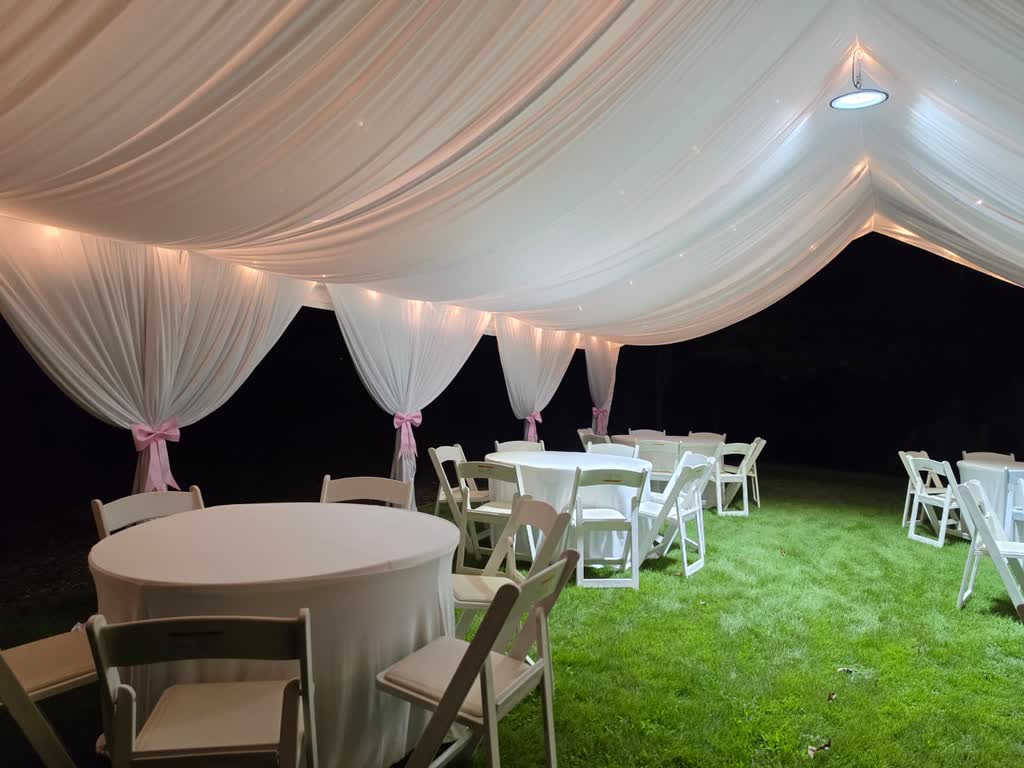
If rain is a possibility, sidewalls are attached during this phase. The sidewalls—water‑proof and UV‑protected—slide into the pre‑installed tracks on the tent frame, sealing the interior from wind and moisture. The team also installs LED tent lighting, outlined on the interior to provide even illumination for dinner service and dancing. This lighting is different from bistro strings, which are reserved for decorative overhead placement on open‑air patio spaces.
Table, Chair, and Decor Placement
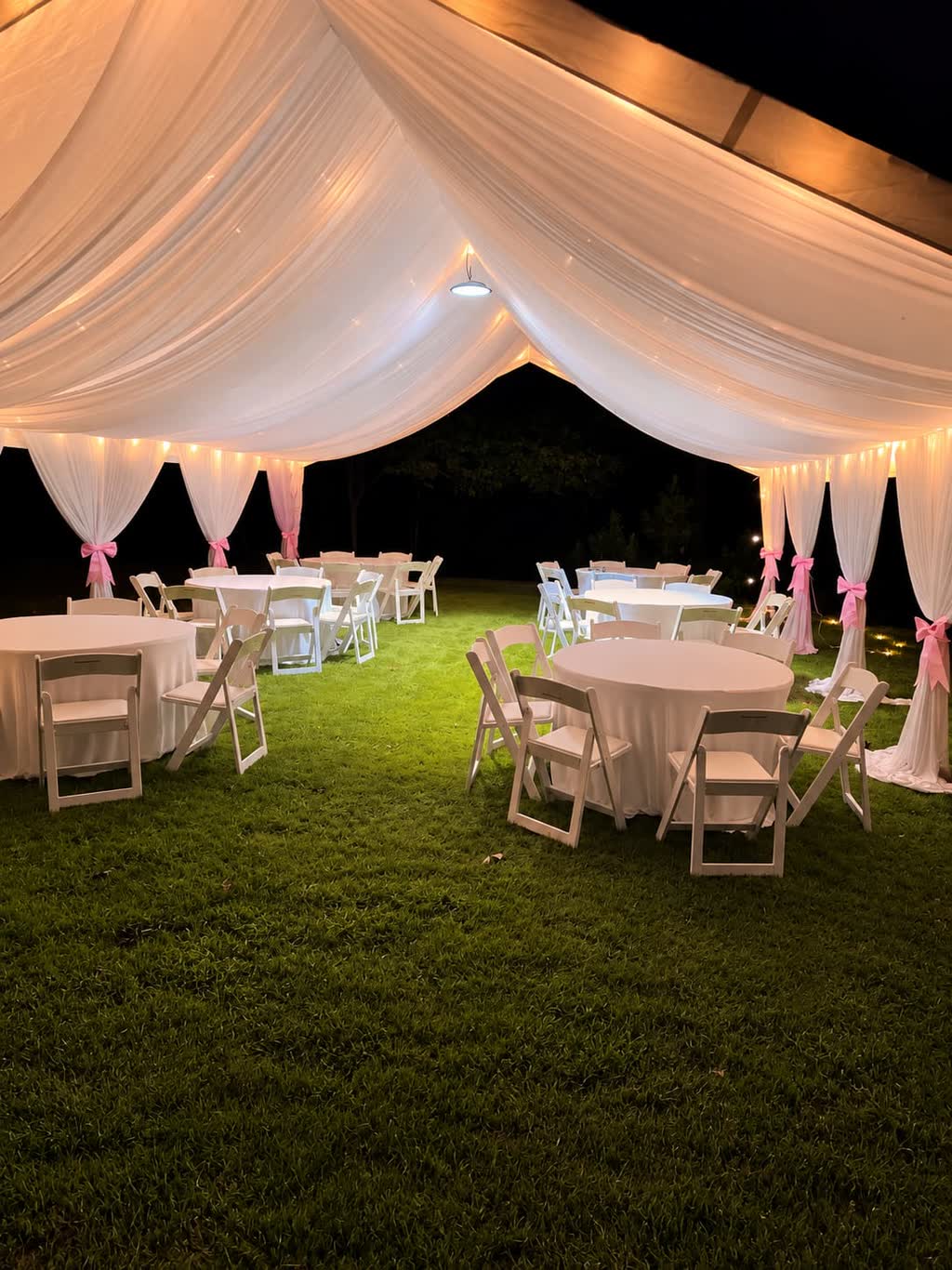
After the tent frame is secured, the crew arranges the 4‑foot round tables in a balanced layout that maximizes guest flow and accommodates the central dance floor. For a 100‑guest event, five tables placed in a rectangular island formation leave ample space for a 12‑foot dance area, a buffet station, and a designated cocktail section with two to three Flash Furniture cocktail tables. Each table receives premium white resin folding chairs, which are lightweight yet sturdy enough for grass or concrete surfaces.
Decoration follows the seating plan. The draping team hangs full‑coverage drape panels that match the tent size—no pillar‑only draping is quoted without a personalized color discussion. Artificial floral arrangements and balloon arches are positioned at the entrance near the lot off Highway 441, creating a festive arrival point. All linens, runners, and napkins are laid out at this stage, ensuring a cohesive visual style before the final lighting touches are added.
Sound, Lighting, and Final Touches
With the physical layout complete, the audio‑visual crew sets up the sound system capable of supporting up to 300 guests, ensuring clear music playback and microphone coverage for speeches. Speakers are discreetly placed on either side of the dance floor, and an auxiliary power source is connected to the generator if needed. Uplighting is positioned around the tent’s perimeter to highlight architectural features, while bistro string lights are draped above the cocktail area for a warm, inviting ambience.
The final walkthrough includes checking all pathways for safety, confirming that the industrial fans are operating to maintain comfortable airflow, and verifying that any bounce houses—such as the JOYMOR commercial combo—are positioned on level ground with a clear 22×15‑foot footprint. A brief rain plan recap is given: if a storm develops, the sidewalls will be fully closed, and the dance floor can be relocated to a covered area inside the tent.
Teardown and Post‑Event Cleanup
Once the celebration concludes, the teardown crew arrives typically one hour after the event end time. They begin by dismantling sound equipment, removing lighting fixtures, and securing all electrical connections. Next, the bounce houses are deflated, cleaned, and stored in climate‑controlled spaces to maintain hygiene for future rentals. Tent removal proceeds from the top down, taking approximately 45 minutes for a 20×30 structure, followed by the removal of sidewalls and stakes.
The crew then loads tables, chairs, and decorative items onto the trucks, ensuring that any linens or floral components are packed separately for safe transport back to the Pendergrass warehouse. A final site inspection confirms that the yard is left in the same condition as when it arrived, with any debris swept away. The team provides a brief report to the host, noting any observations about yard wear or suggestions for future events, completing the full event setup timeline Commerce ga cycle.
Key Takeaways for a Successful Commerce, GA Home Event
By adhering to this detailed timeline, hosts in Commerce can enjoy a stress‑free experience that balances logistical precision with creative flair. The proximity of the DecoEvent ATL warehouse—just 18 minutes away—means rapid response for any last‑minute adjustments, whether it’s adding extra seating for a surprise guest surge or deploying additional sidewalls if a sudden shower approaches. Remember to share your exact address, confirm the county (Jackson County), and provide the guest count early, as this information drives every decision from tent size to the number of chairs needed.
Finally, always keep open communication with the DecoEvent ATL team via phone or WhatsApp. Their bilingual support ensures that any question—whether about power requirements, rain contingency, or yard preparation—receives a prompt, clear answer, allowing you to focus on celebrating with family and friends in the beautiful setting of your Commerce backyard.
Frequently asked questions
What is the rain plan for a backyard event in Commerce?
If rain is forecast, sidewalls are installed on the tent, and the dance floor can be moved inside the covered area to keep guests dry and comfortable.
How far is Commerce, GA from the DecoEvent ATL warehouse?
Commerce is about 18 minutes by car from our Pendergrass warehouse, using Highway 441 and local streets near the City Park.
Can a 100‑guest party fit inside a 20×30 tent?
Yes, a 20×30 tent comfortably seats 48–60 guests, so additional tables and cocktail stations are used to accommodate a 100‑guest layout.
Do I need to provide power for sound and lighting?
Your venue should have accessible outlets; if not, we provide a generator positioned safely to power the sound system, lights, and any additional equipment.
What yard preparation is required before the crew arrives?
Mow the grass, clear debris, ensure a level surface for tents and bounce houses, and provide clear access for trucks near the lots off Highway 441.
How long does teardown usually take after the event ends?
For a standard 20×30 tent setup, teardown typically takes about 45 minutes, followed by loading tables, chairs, and decor for transport back to the warehouse.