
Planning a backyard celebration in Tucker, GA means coordinating many moving parts while staying within the 40‑mile service radius from our Pendergrass hub. Our detailed event setup timeline Tucker ga walks you through each hour, from the moment our truck rolls onto a Main Street area home or a yard off Lawrenceville Highway, to the final removal of equipment after the last guest leaves. By following this guide, you’ll know exactly when to expect delivery, how to prepare your yard for a 20×30 COBIZI tent, and what steps keep your event on schedule even if a sudden shower threatens your outdoor plans.
Understanding the Event Setup Timeline Tucker GA
At DecoEvent ATL, we base every schedule on realistic travel times, crew availability, and the specific gear you have selected. The typical timeline for a mid‑size gathering—approximately 120 guests—begins with a confirmed delivery window set for 8:00 AM on the event day. Our drivers travel the roughly 50‑minute, 85‑mile route from Pendergrass to Tucker, allowing for a brief check‑in at the local post office for any last‑minute paperwork. Once on site, the crew conducts a rapid safety walk‑through, ensuring the ground is level, free of debris, and capable of supporting the anchor points required for a 20×30 commercial tent. This initial assessment usually takes 15‑20 minutes but is critical for preventing later delays.
After the safety walk, the crew unloads the tent, framing, and accessories in a pre‑planned sequence that matches the day’s overall timeline. Each step is timed to keep the entire setup under four hours for a 120‑guest event, leaving ample margin for lighting, draping, and furniture placement before the ceremony or dinner begins. The timeline portion dedicated to the tent includes erection, sidewall installation (if a rain plan is needed), and the rigging of LED tent lighting that illuminates the entire structure while preserving power safety. By structuring the day this way, you can confidently greet your guests at 1:00 PM with a fully dressed venue.
Pre‑Event Yard Preparation and Guest‑Count Planning
Before any equipment arrives, the host should clear the designated area of lawn furniture, toys, and any objects that could obstruct the tent footprint. For a 20×30 tent, you’ll need a minimum of 620 square feet of flat, unobstructed space; we recommend marking the perimeter with stakes or garden hoses a day in advance. If the yard slopes, a temporary wooden platform or leveler pads may be required—our crew can advise during the pre‑event call. Additionally, confirm that there is a nearby power source capable of supplying 110‑120 V for lighting, sound, and any bounce house blowers; an outdoor extension rated for the load is essential.
Guest‑count math guides the selection of tables and chairs. A 4‑foot round table comfortably seats 4–6 guests; for 120 guests we recommend twelve 5‑foot round tables—each seats 8 comfortably and can accommodate up to 10 if the layout is tight. This configuration yields 120 seats exactly, removing the need for extra chairs. Pair the tables with our premium white resin folding chairs, which can be placed on grass without damaging the lawn. By finalizing these numbers now, the crew can load the correct quantity, avoiding any on‑site shortages and keeping the schedule on track.

Day‑Of Delivery: Arrival, Unloading, and Site Inspection
When our truck arrives at the Tucker address—whether it’s a historic home near Main Street or a newer residence off Lawrenceville Highway—we begin with a brief greeting and a verification of the exact address and gate codes. The driver then positions the vehicle on a level driveway or parking area that allows a clear path to the tent site, keeping traffic flow smooth for any neighboring homes. Unloading proceeds in a staged manner: first the tent frames, then the canvas, followed by lighting racks and any sidewalls requested for rain protection. Each component is palletized and moved using inflatable dollies to protect the lawn.
While the tent is being unpacked, a second crew member conducts a site inspection for drainage and wind exposure. Tucker’s spring evenings can bring occasional gusts, so the team checks for nearby trees that may need trimming or temporary anchoring. If the inspection reveals a potential wind issue, we adjust the anchor layout—adding more steel stakes or using weighted sandbags—to meet safety standards. This proactive step ensures that the tent can stand securely, and that the rest of the timeline proceeds without unexpected interruptions.
Tent Installation, Lighting, and Draping Sequence
With the frames on the ground, four crew members begin the erection of the 20×30 COBIZI tent, following a step‑by‑step method that typically takes 45‑60 minutes. The galvanized steel poles are snapped into place, and the canvas is tensioned using built‑in tensioning systems that reduce the need for additional ropes. Once the tent shell is up, we install sidewalls if rain protection is part of your plan; these are attached with zip‑tape fasteners and can be removed quickly if the weather clears. The entire tent installation is completed well before the noon lunch window, giving time for interior styling.
Lighting installation follows immediately after the tent is stable. Our LED tent lighting system is sized to the tent dimensions, providing uniform illumination that highlights the canopy without creating glare. We also hang bistro strings above the dining area—these are separate from tent lighting and add a warm, ambient glow to the tables. For events that extend into evening, we add uplighting along the tent walls to create a vibrant backdrop for photos. All electrical connections are run through waterproof conduit and checked with a portable circuit tester, guaranteeing a safe power supply for the rest of the day.
Furniture, Tables, Chairs, and Guest‑Count Math
After lighting is secured, the crew places the twelve 5‑foot round tables in a symmetrical layout that maximizes flow and accommodates the 120 guests. We position the tables with a 5‑foot aisle between them, ensuring comfortable movement for servers and guests alike. Each table receives a set of six premium white resin folding chairs, leaving two extra seats per table for unexpected guests or older relatives who may need a sturdy seat. The chairs are positioned with the backrests facing outward, allowing easy access for those entering and exiting the tent.
In addition to the main dining area, we set up a cocktail table station near the entrance, using a 30‑inch Flash Furniture table that comfortably holds 2–4 standing guests per square foot. This station is ideal for a welcome drink or a quick snack line before guests move into the main dining space. For families with children, a bounce house can be positioned in a separate lawn area away from the tent, with clear signage directing parents to the nearest water source for the blower. All furniture placement is double‑checked against the original layout plan, ensuring that the event remains within the allotted square footage and complies with local fire safety codes.
Entertainment, Bounce Houses, Sound, and Rain Contingency
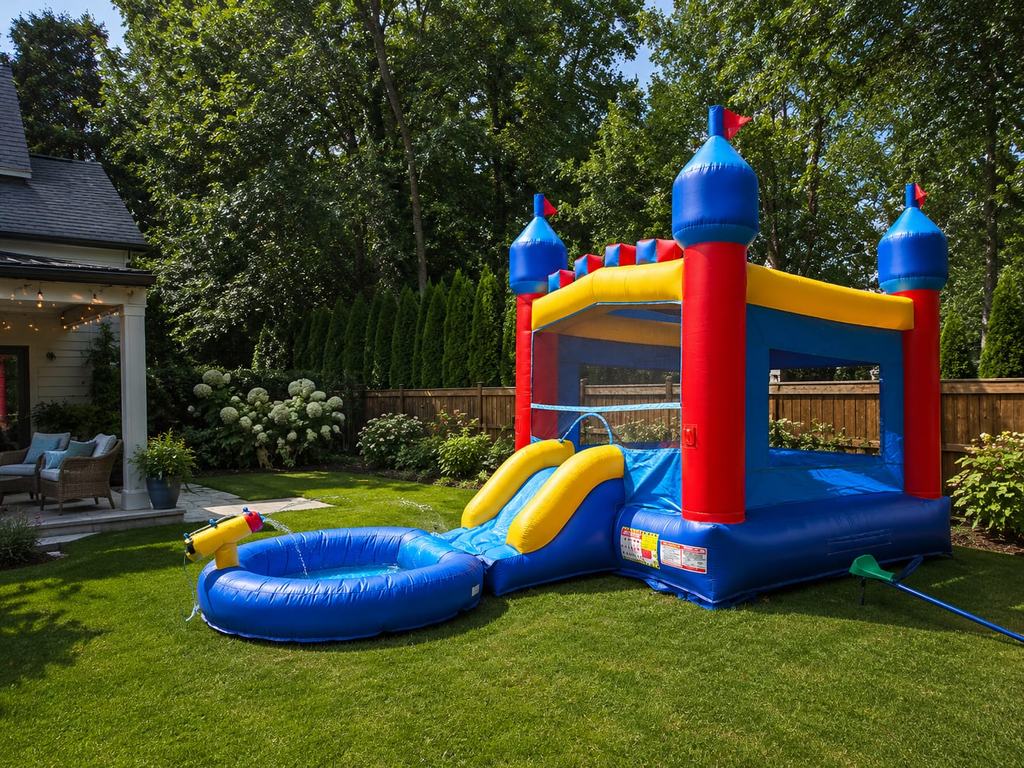
Sound and music are essential for keeping the atmosphere lively. Our professional sound system supports up to 300 guests, so a 120‑guest event will have crystal‑clear audio for speeches, music playlists, and microphone use. Speakers are placed at opposite ends of the tent to distribute sound evenly, and we run power cables through the same waterproof conduit used for lighting. If you have requested a bounce house—such as the JOYMOR commercial model—we locate it on a flat, shaded portion of the yard, providing both a dry area and a hose connection for wet use if the weather calls for it.
Should a sudden rain shower develop, the sidewalls already attached to the tent act as a first line of defense, keeping guests dry while the event continues. Our rain plan also includes a contingency clause that allows you to shift the date without penalty if the storm becomes severe or if wind speeds exceed the safe operating limit for our tents. The crew monitors local forecasts throughout the day, and if conditions deteriorate, we communicate immediately with the host to decide whether to close the sidewalls completely or move the event indoors—though indoor venues are not part of our service offering, we can advise on nearby options.
Teardown, Cleanup, and Final Walk‑Through
At the conclusion of the celebration, typically after guests have departed around 10:00 PM, the crew begins the teardown process. We start by turning off all electrical equipment, disconnecting the sound system, and carefully packing the LED tent lighting and bistro strings for transport. The tent is then taken down in reverse order of installation: sidewalls are removed first, followed by the canvas and finally the frame. This systematic approach allows us to reuse the same equipment efficiently for the next booking.
Following tent removal, we collect all tables, chairs, and bounce house components, wiping down surfaces and ensuring that any sand or water used during the event is fully drained. The crew performs a final walk‑through with the host to verify that the yard is left clean, any temporary stakes are removed, and the property is restored to its original condition. We also double‑check that no debris or equipment is left behind, completing the service with a professional courtesy that reinforces our reputation as Tucker’s trusted outdoor event partner.
Frequently asked questions
What is the typical start time for a Tucker, GA home event setup?
Delivery usually begins at 8:00 AM, allowing the crew to complete the entire setup by early afternoon.
How far is Tucker, GA from DecoEvent ATL’s warehouse?
Tucker is about 50 minutes and roughly 85 miles from our Pendergrass location.
Can I host an event for 120 guests with just round tables?
Yes, twelve 5‑foot round tables with six chairs each will comfortably seat 120 guests.
What rain protection options are available for a 20×30 tent?
Sidewalls can be installed during the tent erection and provide full coverage if a shower develops.
Do you provide sound equipment for a 120‑guest party?
Our sound system supports up to 300 guests, delivering clear audio for speeches and music.
How long does teardown take after an evening event?
The crew typically finishes teardown and cleanup within two hours after guests leave.