
Understanding Sloped Yard Challenges in Carl, GA
Hosting an event in Carl, Barrow County often means working with residential properties that feature gentle to moderate slopes, especially those tucked away off Highway 211 where the terrain follows the natural rolling hills of the area. A sloped surface can affect how a tent stands, how weight is distributed across the frame, and how water runs off during unexpected showers. Recognizing these factors early helps you decide what preparations are needed before the arrival of equipment, ensuring the structure stays level and secure throughout the celebration.
When the ground is not flat, the tent’s anchoring system must compensate for the angle to prevent shifting or leaning. This may involve using longer stakes, additional sandbags, or adjustable base plates that can accommodate uneven footing. In Carl, many yards have a mix of grass and compacted soil, which influences how well stakes hold. By assessing the slope direction and degree, you can plan where to place the heaviest components, such as the central poles or sidewalls, to maintain balance and avoid stress on any single point of the frame.

Evaluating Your Yard’s Slope and Soil Conditions
Start by walking the intended setup area with a simple level or a smartphone app that shows incline. Note the highest and lowest points, and measure the vertical difference over a known horizontal distance to calculate the percentage slope. In Carl, many residential lots show slopes between five and fifteen percent, which is manageable with proper preparation but still requires attention to detail. Take note of any natural drainage paths, as water will follow the slope and could pool under the tent if not redirected.
Soil type also plays a role in anchoring effectiveness. Clay-heavy soil, common in parts of Barrow County, can become slick when wet, reducing stake grip, while sandy patches may shift under load. If you encounter a mix, consider using a combination of ground spikes and weighted plates to achieve a reliable hold. Documenting these observations helps the delivery team know exactly what equipment to bring, reducing delays on the day of the event.
Preparing the Site for a Stable Tent Installation
Site preparation begins with clearing the area of debris, rocks, and loose vegetation that could interfere with stake placement or cause tripping hazards. Mow the grass to a uniform height, as taller blades can hide uneven spots and make it harder to see where the ground dips or rises. After mowing, lightly water the soil if it is overly dry and compacted; this helps the stakes penetrate more easily while still providing enough firmness to hold tension.
Next, create a level base by adding a thin layer of coarse sand or crushed stone along the lower edge of the slope. This layer acts as a shim, allowing the tent’s frame to sit more evenly without requiring extensive excavation. Spread the material evenly, tamp it down, and re‑check the slope with your level. In Carl, many homeowners find that a two‑inch layer of sand provides sufficient adjustment for slopes under ten percent, preserving the natural look of the yard while delivering a stable platform.
Choosing the Right Tent and Anchoring System for Uneven Ground
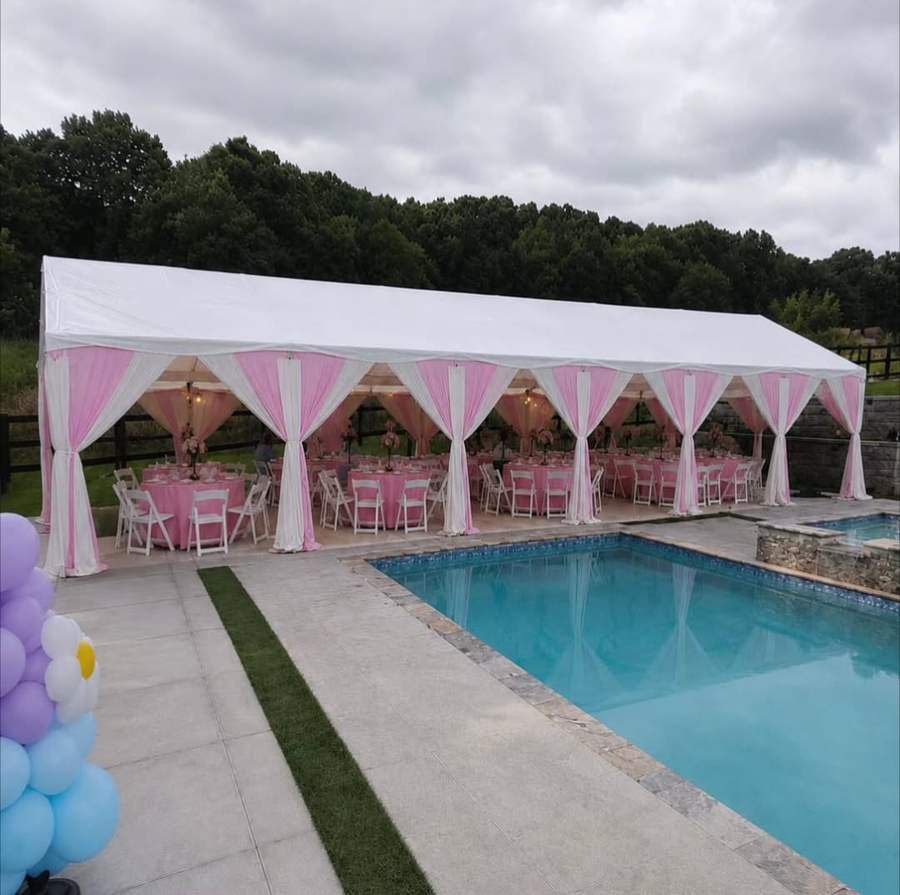
Select a tent model that offers adjustable leg lengths or modular base plates, features commonly found in the COBIZI commercial line used by DecoEvent ATL. These components let you extend or retract each leg to match the varying height of the ground, ensuring the roof stays level even when the footing does not. Pair the tent with heavy‑duty steel stakes designed for deeper penetration, and consider adding ratchet straps that can be tightened to counteract any lateral pull caused by the slope.
For added security, especially if the event will last several hours or include sidewalls, use sandbags or water‑filled weights on the higher side of the slope. These weights offset the tendency of the frame to shift toward the lower side. In Carl’s residential settings, where space may be limited, compact weight stacks that can be placed discreetly along the perimeter provide the needed ballast without obstructing walkways or seating areas.
Timeline: From Delivery to Setup and Teardown on a Sloped Yard
Plan for a slightly longer window than you would on flat terrain, as the crew will need time to assess the slope, adjust leg lengths, and secure all anchoring points. In Carl, a typical delivery from the Pendergrass warehouse takes about twenty‑two minutes under normal traffic conditions, allowing the team to arrive early in the morning for a daytime event. Upon arrival, the first step is a quick site walk‑through to confirm the slope measurements noted during the planning phase.
The actual installation begins with placing the base plates or stakes at the predetermined points, followed by raising the frame and fine‑tuning each leg to achieve a level roof. This adjustment process can add fifteen to twenty minutes compared to a flat‑yard setup. Once the frame is secure, the canopy is draped, sidewalls are attached if desired, and any lighting or decor is installed. Teardown follows the reverse sequence, with extra care taken to release tension gradually on the sloped legs to avoid sudden movement.
Rain Plan and Contingency Measures for Sloped Terrains
Even with a well‑anchored tent, water runoff can become a concern on a slope, especially if heavy rain arrives unexpectedly. To mitigate this, consider installing a shallow trench or swale on the uphill side of the tent to divert water away from the structure. In Carl, many homeowners use a flexible garden hose laid in a shallow groove to create a temporary channel that guides water toward a natural drainage point or a designated runoff area.
Additionally, ensure that sidewalls are properly sealed and that any ground‑level openings are equipped with flaps or skirts that prevent water from seeping underneath. If the forecast shows a high chance of precipitation, discuss with the crew the option of adding extra weight to the downhill side or using adjustable sidewall tension to keep the fabric taut. Having a clear rain plan reassures guests that the event can proceed comfortably, regardless of the terrain’s inclination.
Final Checklist for a Successful Tent Event in Carl, GA
Before the guests arrive, walk the perimeter to verify that all stakes are firmly seated, that the tent fabric is evenly tensioned, and that there are no loose flaps or sagging sections. Confirm that any lighting fixtures are securely fastened and that cables are routed away from walkways to avoid tripping hazards. Check that the entrance is clear and that the ground near the doors is level enough for safe passage, adding a small ramp or temporary board if needed.
Keep a basic tool kit on hand, including a mallet for stake adjustments, a spare set of straps, and a level for quick re‑checks if the wind picks up. Communicate the plan to any vendors or entertainers so they know where to place equipment without disturbing the anchoring system. With these steps completed, your tent will remain stable and welcoming, turning the natural slope of your Carl yard into a distinctive feature of your outdoor celebration.
Guest‑Count Calculations for Your Carl Event
Start with the total number of guests you expect. Use the verified capacities: a 4' round table seats 4‑6 people, a 5' round table seats up to 10, and a 6' round table seats 10‑12 when the layout is approved. Divide the guest count by the chosen table size to find the minimum number of tables, then add a few extra for mingling or buffet service. Remember that cocktail tables accommodate 2‑4 standing guests, so plan roughly one per 8‑12 guests if you want a standing area. Keep the final total within the seated capacity of your selected tent size.
Yard Preparation Steps Specific to Carl Properties
Begin by walking the lawn to locate any hidden irrigation lines, septic tanks, or utility markers; flag them to avoid damage during stake placement. Mow the grass to a uniform height and remove sticks, rocks, or loose mulch that could create tripping hazards. If the soil is very dry, lightly water it to improve stake penetration without making it soggy. Lay down ground protection mats or plywood sheets along the delivery path from Highway 211 to protect the turf and provide a stable surface for the truck and equipment.
Load‑In Timeline Details for Barrow County
The crew leaves the Pendergrass warehouse and typically reaches Carl in about twenty‑two minutes under normal traffic on GA‑211. Upon arrival, they first confirm the slope measurements noted during planning, then unload the tent components, tables, chairs, and any specialty items such as bounce houses or lighting kits. Next, they place base plates or stakes, adjust leg lengths to match the slope, and tighten all anchoring points before raising the frame. After the canopy is secured, sidewalls, draping, lighting, and decor are installed, followed by a final walk‑through with the client. Teardown follows the reverse order, with extra time allocated for releasing tension on the sloped legs and re‑loading the truck.
Local Logistics and Permit Considerations in Carl
Check Barrow County regulations for temporary structures; most residential events under a certain size do not require a permit, but larger tents or those with sidewalls may need notification. Review any homeowners’ association guidelines that might restrict noise levels, setback distances, or hours of operation. Confirm that the delivery van can park legally on the street or driveway without blocking fire hydrants or mailboxes. Inform close neighbors of the event schedule to manage expectations about music or guest traffic. Ensure there is a clear, unobstructed path for emergency vehicles to access the property if needed.
Enhanced Rain‑Plan Strategies for Sloped Yards
Place additional sandbags or water‑filled weights on the downhill side of the tent to counteract the pull of water runoff. Install a temporary gutter extension using a length of PVC or flexible tubing that channels rainwater from the roof edge to a safe drainage area away from the tent footprint. If the soil becomes saturated, lay a thin layer of coarse sand or gravel under the tent floor to improve drainage and reduce slipping. Keep sidewall ties and extra straps on hand to quickly tighten the fabric if wind pushes water underneath. Have a small portable pump or wet‑vac ready to remove any standing water that accumulates near the entrance.
Comprehensive Event Checklist for Carl, GA
Verify the final guest count and cross‑reference it with your table and chair quantities. Test all lighting strings, uplights, and battery‑operated fixtures before the event starts. Confirm that the blower for any bounce house or water slide is functional, has the correct voltage, and that the hose connection is secure for wet use. Double‑check that every stake or sandbag is firmly seated and that strap tension is even around the perimeter. Ensure sidewalls are properly sealed, zippers work, and any velcro flaps are fastened to keep moisture out. Keep a spare set of straps, extra stakes, and a mallet in a readily accessible kit. Have a first‑aid kit, fire extinguisher, and trash bins positioned conveniently. Confirm arrival times for any catering, entertainment, or rental vendors and provide them with a clear load‑in path. Finally, walk the perimeter one last time to spot any loose fabric, sagging areas, or potential tripping hazards before guests arrive.
Frequently asked questions
What is the first step to assess a sloped yard in Carl before tent installation?
Walk the intended area with a level or inclinometer app to measure the height difference between the highest and lowest points, calculate the slope percentage, and note any natural drainage paths that could affect water flow during the event.
How can I create a level base for a tent on a gentle slope in Carl without major excavation?
Spread a thin layer of coarse sand or crushed stone along the lower edge of the slope, tamp it down, and re‑check with a level; this shim allows the tent frame to sit evenly while preserving the yard’s natural appearance.
Which anchoring tools work best for uneven ground in Carl, Barrow County?
Use adjustable base plates or extendable tent legs, heavy‑duty steel stakes for deep penetration, ratchet straps for lateral stability, and sandbags or water‑filled weights on the higher side to counteract slope‑induced shift.
How long does delivery from the Pendergrass warehouse to Carl typically take?
Under normal traffic conditions, the drive from the warehouse in Pendergrass to Carl, GA takes about twenty‑two minutes, allowing the crew to arrive early for morning event setups.
What simple rain‑diversion method can protect a tent on a sloped yard in Carl?
Install a shallow trench or lay a flexible garden hose in a groove on the uphill side to channel water away from the tent structure and toward a natural drainage point or designated runoff area.
What should be checked during the final walk‑through before guests arrive at a tent event in Carl?
Verify that all stakes are firmly seated, fabric is evenly tensioned, sidewalls are sealed, lighting is secure, walkways are clear, and the entrance area is level enough for safe passage, adding a temporary ramp if needed.