
Tent on sloped yard Lilburn ga: Understanding the Challenge
When planning an outdoor celebration in Lilburn, Gwinnett County, many homeowners discover that their backyard is not perfectly flat. A gentle slope or uneven patches can affect how a tent sits, how water drains, and how guests move through the space. Recognizing the degree of incline early helps the team choose the right anchoring method and layout. In the shaded backyards off Killian Hill Road, the soil often contains a mix of clay and loam, which can shift after rain, making a preliminary site check essential for safety and comfort.
The first step is a simple walk‑around with a long level or a smartphone inclinometer app to measure the grade across the intended footprint. If the slope exceeds a few degrees, the installation crew will use adjustable base plates or weighted sandbags to keep the frame level. This approach prevents the tent fabric from pooling water on one side and keeps the interior floor uniform for tables, chairs, and dance areas. By addressing the slope before the tent arrives, the event proceeds without last‑minute surprises.

Assessing the Slope: Measuring Grade and Safety
Accurate measurement of the yard’s slope is the foundation for a secure tent setup. Crews use a combination of a laser level and a measuring stake to determine the rise over run for the area where the tent will be placed. In Lilburn’s residential lots, a slope of up to five percent is common and can be managed with standard anchoring hardware, while steeper grades may require additional support such as ground spikes or concrete‑filled buckets placed discreetly under the frame.
Safety considerations extend beyond the tent itself. Uneven ground can create tripping hazards around the perimeter, especially when guests are moving between the dining area and a bounce house or water slide. The crew marks any low spots or protruding roots and either fills them with compacted soil or places protective flooring panels. This proactive work ensures that the event space meets both aesthetic and functional standards for a comfortable guest experience.
Preparing the Yard: Leveling Techniques and Anchoring
Once the slope is quantified, the preparation phase begins. For minor undulations, the team may spread a thin layer of screened gravel or sand to create a more uniform surface, then tamp it down with a plate compactor. This method works well on the grassy lawns typical of Gwinnett County subdivisions, providing stability without damaging the existing turf. In areas where the soil is softer, geotextile fabric is laid first to prevent mixing of the fill material with the native earth.
Anchoring is adjusted to match the terrain. Standard stakes are driven vertically where the ground permits; on sloped sections, angled stakes or screw anchors are used to resist lateral forces. The crew also checks that the tent’s sidewalls, if installed, are tensioned evenly so that the fabric does not sag on the lower side. These steps guarantee that the structure remains wind‑resistant and that the interior layout stays true to the planned design.
Choosing the Right Tent Type for Uneven Ground
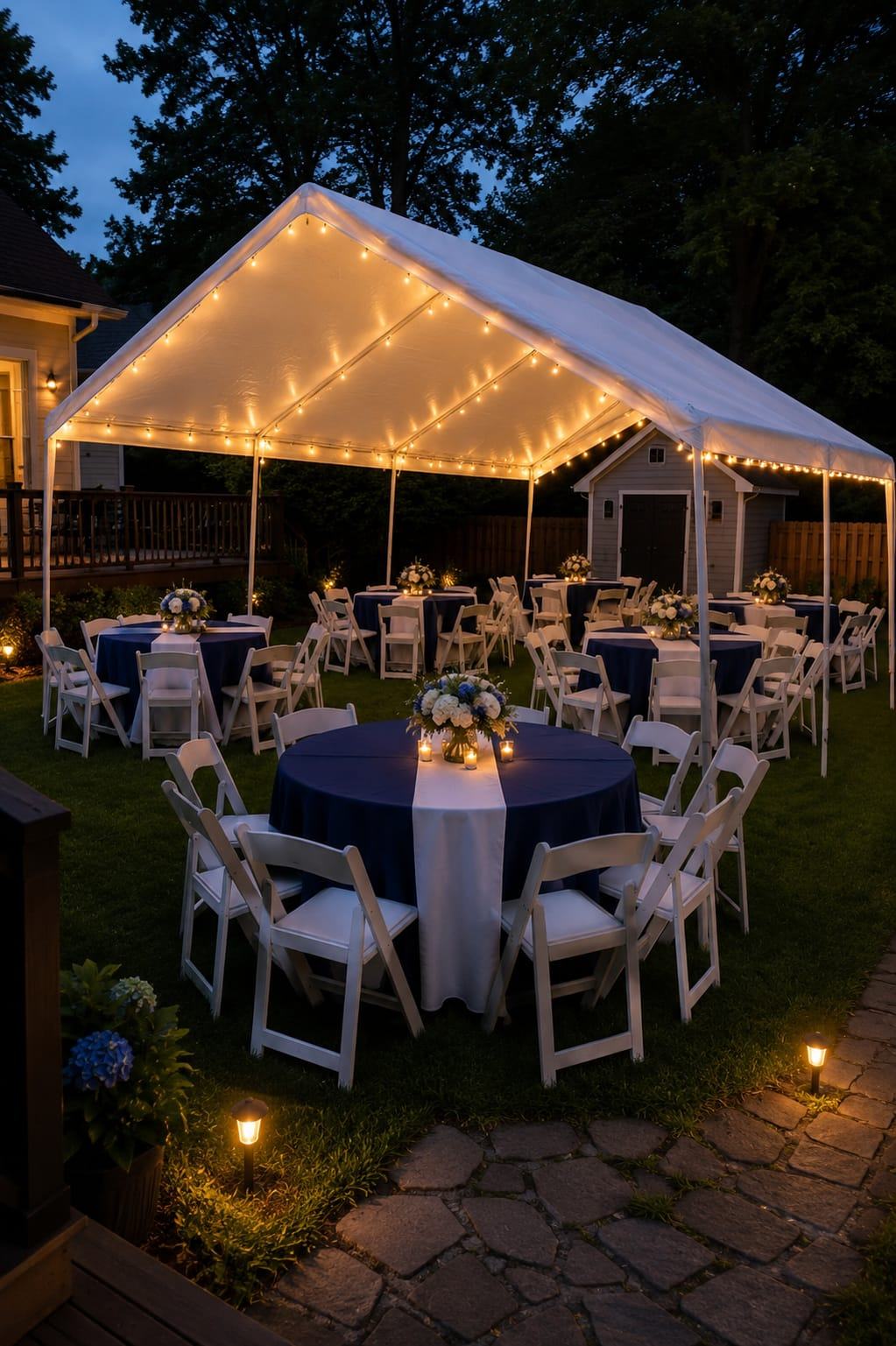
Not all tent models respond the same way to a sloped yard. The COBIZI commercial line offered by DecoEvent ATL features a galvanized steel frame that can accommodate slight variations in ground height through adjustable leg bases. For events in Lilburn where the backyard shows a noticeable dip, a frame with telescoping legs allows each corner to be set at its own height, keeping the roof plane level. This flexibility is especially useful when the event includes a central dance floor or a catering station that needs a flat working surface.
When the slope is more pronounced, the crew may recommend a smaller footprint tent paired with a leveling platform built from pressure‑treated lumber and plywood. This platform distributes the load evenly and provides a solid deck for tables and chairs. By matching the tent style to the specific topography of the yard, the installation remains both safe and visually appealing, ensuring that guests enjoy the celebration without noticing any tilt beneath their feet.
Timeline: From Delivery to Setup and Takedown
The logistics schedule for a tent installation in Lilburn begins well before the event date. After the client confirms the guest count and desired layout, the operations team calculates the travel time from the Pendergrass, Georgia warehouse, which is approximately forty minutes under normal traffic conditions. The delivery window is scheduled to arrive early enough to allow for yard preparation, frame assembly, and fabric tensioning, typically starting at least three hours before the guest arrival time.
Setup follows a clear sequence: first, the ground is checked and any necessary fill material is spread; second, the frame is erected with the adjustable legs set to compensate for the slope; third, the canopy is unfurled and secured; fourth, sidewalls, lighting, and draping are added as requested; finally, furnishings such as tables, chairs, and any rented bounce houses are positioned. Takedown mirrors the process in reverse, with the crew ensuring that all equipment is loaded back onto the truck and the yard is left in its original condition, ready for the homeowner’s next use.
Rain Plan and Weather Considerations for Sloped Sites
Even with a well‑prepared site, weather can change quickly in North Georgia. For a sloped yard, water runoff is a primary concern; the crew evaluates the natural drainage paths and may place shallow French‑style trenches or gravel swales to direct water away from the tent footprint. In the event of a forecasted shower, sidewalls can be added to the tent to keep the interior dry, and the floor surface is inspected for any signs of saturation before guests arrive.
If wind speeds increase, the adjustable leg bases allow the crew to lower the center of gravity by shortening the legs on the windward side, enhancing stability. The team monitors real‑time weather updates and maintains contact with the client via phone or WhatsApp to make any last‑minute adjustments. This proactive approach ensures that the celebration continues comfortably, regardless of whether the sky stays clear or a brief storm passes through.
Drive Logistics: Access from Pendergrass Warehouse to Lilburn
Traveling from the Pendergrass hub to a Lilburn residence involves taking Interstate 85 South and exiting at the appropriate ramp for Gwinnett County. The route typically passes through the cities of Braselton and Buford before merging onto Georgia State Route 20, which leads directly into Lilburn’s residential neighborhoods. Knowing the exact street address, including the ZIP code, allows the driver to plan the most efficient path and avoid low‑clearance bridges or weight‑restricted roads that could delay the arrival of the tent and accessories.
Upon reaching the property, the crew performs a quick site walk to confirm that the driveway or curb provides sufficient space for the delivery truck and the subsequent placement of equipment. If the backyard access is narrow, smaller utility vehicles may be used to transport the frame and fabric from the street to the final location. This careful coordination of drive logistics ensures that the timeline remains on track and that the setup proceeds without unnecessary interruptions.
Guest‑Count Math: Matching Seating and Standing Capacity
Knowing how many guests will sit versus stand helps DecoEvent ATL recommend the right mix of tables, chairs, cocktail tables and open floor space. For a seated dinner, each 60‑inch round table comfortably seats ten guests, while a 72‑inch round can hold twelve when the layout is approved. Cocktail tables, typically 30‑inch round, accommodate two to four standing guests and are spaced about one per eight to twelve attendees to encourage mingling.
- Round tables: 4‑foot seats 4‑6, 5‑foot seats 8, 6‑foot seats 10‑12 (approved layout).
- Rectangular tables: 6‑foot seats 6‑8, 8‑foot seats 8‑10.
- Cocktail tables: 2‑4 standing guests each.
Calculating Table and Chair Needs
To determine the exact quantity, start with the total guest count, subtract the number expected to stand at cocktail tables, then divide the remainder by the seating capacity of the chosen table size. Add a 10 % buffer for last‑minute additions or vendor staff. This method ensures there are enough seats without overcrowding the layout.
- Identify seated guests vs. standing guests.
- Select table shape and size based on venue flow.
- Apply the seating capacity chart from the technical specs.
- Add a modest surplus for flexibility.
Yard Preparation Checklist: What to Do Before the Crew Arrives
Homeowners can speed up the setup by completing a few simple tasks ahead of time. Clearing the area of toys, garden tools, and low‑hanging branches reduces obstacles for the installation team. Marking utility lines or irrigation heads prevents accidental damage during anchoring. Ensuring a clear path from the driveway to the tent site allows the crew to move equipment efficiently.
- Remove personal items and debris from the footprint.
- Trim back vegetation that could interfere with sidewalls.
- Locate and flag any underground lines or sprinklers.
- Provide access to a water source if wet bounce houses are planned.
- Confirm that pets are secured indoors or in a separate area.
Load‑In Timeline: Hour‑by‑Hour Breakdown
A detailed hour‑by‑hour schedule helps everyone know what to expect on the day of the event. The timeline below assumes a standard four‑hour setup window before guest arrival, but can be adjusted based on tent size and site conditions.
- Hour ‑ 4: Crew arrives, conducts site safety briefing, unloads trucks.
- Hour ‑ 3: Ground inspection, spreading of fill material if needed, compaction.
- Hour ‑ 2: Frame erection with adjustable legs set for slope, anchoring.
- Hour ‑ 1: Canopy unfurled, secured, sidewalls and lighting installed.
- Hour 0: Furniture placement, final walk‑through with client, ready for guests.
Local Logistics: Permits, HOA Rules and Neighbor Courtesy
Even though DecoEvent ATL handles the bulk of the work, being aware of local regulations avoids surprises. Some Gwinnett County neighborhoods require a temporary event permit for structures over a certain size, and homeowners’ associations may have guidelines on noise, lighting, or parking. Informing nearby neighbors about the event timing fosters goodwill and can prevent complaints.
- Check with Lilburn city hall for any temporary structure permit requirements.
- Review HOA covenants for restrictions on tents, generators, or amplified sound.
- Schedule noisy activities (e.g., generator use) during daytime hours.
- Provide guests with clear parking instructions to avoid blocking driveways.
- Leave a contact number for the crew in case neighbors have questions.
Emergency Checklist: What to Pack for the Day of the Event
Being prepared for minor hiccups keeps the celebration running smoothly. Packing a small emergency kit ensures that the crew and hosts can address common issues without delaying the program. Items should be stored in a dry, accessible location near the tent entrance.
- Extra anchoring straps and sandbags for unexpected wind.
- Ground‑leveling shims or wooden wedges for slight slope adjustments.
- Spare light bulbs and batteries for LED tent lighting.
- Basic tool set: adjustable wrench, screwdriver, hammer.
- First‑aid kit with band‑aids, antiseptic wipes, and pain relievers.
- Contact list: DecoEvent ATL office, client’s point of contact, local emergency services.
Frequently asked questions
What is the first step to prepare a sloped yard for a tent in Lilburn
The first step is measuring the slope with a level or inclinometer app to determine the grade across the intended footprint, which guides the anchoring and leveling approach.
How does the crew anchor a tent on uneven ground in Gwinnett County
They use adjustable base plates, angled stakes, or screw anchors on sloped sections, and standard vertical stakes where the ground permits, ensuring even tension across the frame.
Can a tent be installed on a yard with a noticeable dip in Lilburn
Yes, a tent with telescoping legs or a leveling platform made of pressure‑treated lumber can compensate for dips, keeping the roof plane flat and the interior usable.
What timeline should be expected for delivery and setup in Lilburn
Delivery is scheduled to arrive at least three hours before guests, allowing time for yard preparation, frame erection, canopy securing, and addition of any requested accessories.
How is rain runoff managed on a sloped tent site in North Georgia
The crew evaluates natural drainage paths and may add shallow trenches or gravel swales to direct water away from the tent, and sidewalls can be deployed if needed.
What drive route is used from the Pendergrass warehouse to Lilburn
The route follows Interstate 85 South, exits toward Gwinnett County, passes through Braselton and Buford, then takes State Route 20 into Lilburn’s neighborhoods for efficient access.