
Understanding the Challenges of a Tent on Sloped Yard Nicholson GA
Nicholson sits in Jackson County, just a short fifteen‑minute drive from our Pendergrass warehouse, surrounded by large rural yards that stretch north toward Athens. Many of these properties feature gentle to moderate slopes that can add character to a backyard celebration but also introduce unique considerations when erecting a tent. The angle of the ground affects how weight is distributed across the tent frame, how water runs off during rain, and how guests experience the space underfoot. Recognizing these factors early helps you choose the right equipment and preparation steps to keep the event safe and comfortable.
When a tent is placed on uneven terrain, the poles may bear unequal loads, which can lead to shifting or instability if not properly anchored. Soil that is softer on one side may give way under tension, while a steeper grade can cause the fabric to pull unevenly, creating pockets where water collects. Wind can also exert different forces on the high and low sides of the structure. By acknowledging these dynamics, you can plan for additional anchoring, ground‑leveling techniques, and tent accessories that counteract the slope and maintain a level interior floor for dining, dancing, or lounging.

Assessing the Slope Before Delivery
Before the delivery truck arrives, take a simple walk across the proposed site with a long carpenter’s level or a smartphone inclinometer app. Measure the change in height over a ten‑foot run to express the slope as a percentage; a grade under five percent is generally manageable with standard anchoring, while five to ten percent may require extra preparation. Note the direction of the slope—whether it runs from the house toward the backyard fence or across the width of the yard—as this influences where you place the heavier side of the tent and where you position drainage solutions.
In Nicholson’s rural yards, you may encounter a mix of grass, compacted soil, and occasional rocky outcrops. Identify any low spots where water tends to pool after a storm, as these areas will need extra attention to prevent water from seeping under the tent floor. Mark the high and low points with spray paint or stakes so the delivery team can see the exact topography at a glance. This pre‑survey ensures that the crew brings the right amount of ballast, sidewall weights, and any needed ground‑protective mats.
Ground‑Preparation Techniques for Uneven Terrain
Start by clearing the area of debris, sticks, and loose stones that could puncture the tent floor or create tripping hazards. If the slope is modest, you can build a simple leveling platform using landscape timbers or pressure‑treated planks laid perpendicular to the fall of the grade. Secure the timbers with ground spikes or rebar, then fill the frame with compacted gravel or crushed stone to create a firm, flat base that distributes the tent’s weight evenly.
For steeper sections, consider using adjustable steel base plates or screw‑jack anchors that can be turned to raise or lower individual tent poles to match the contour of the ground. These devices allow you to achieve a level interior floor without extensive earth moving. Lay down a ground‑protective tarp or interlocking foam tiles over the prepared surface to shield the tent floor from abrasion and to provide a slight cushion for guests walking barefoot or in soft‑sole shoes.
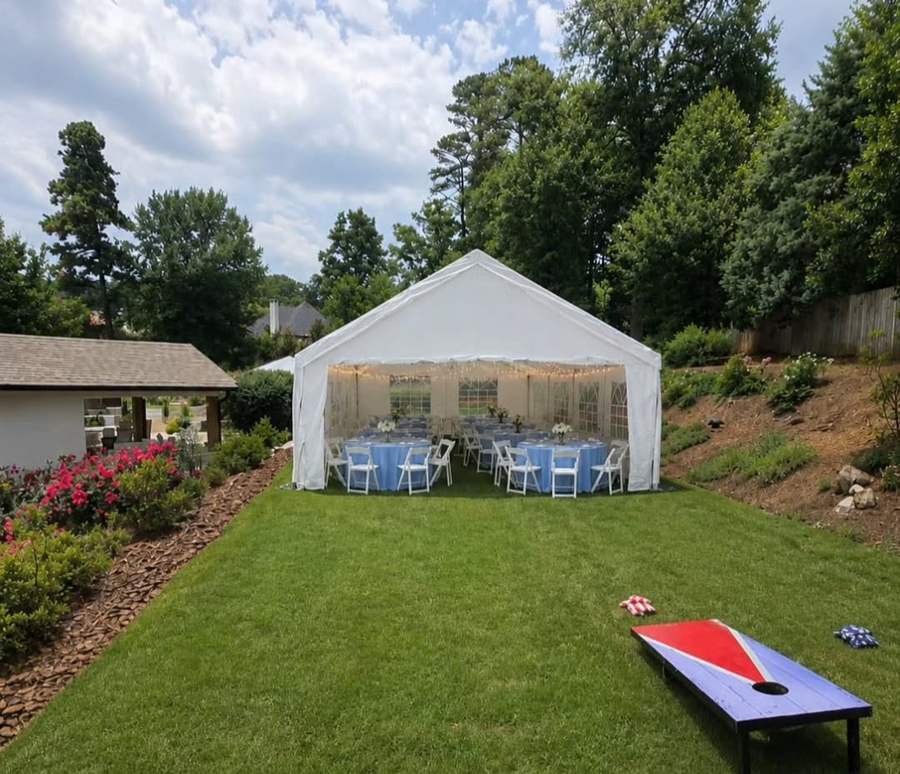
Selecting the Right Tent Style and Size for a Sloped Yard
Our COBIZI commercial tents come in a range of footprints—from ten by ten up to thirty by sixty feet—each engineered with galvanized steel frames and waterproof covers that resist UV degradation. When working on a slope, a tent with a reinforced ridge pole and multiple sidewall anchor points offers greater rigidity. For events that require a clear‑span interior without interior poles, the freestanding design of the COBIZI line ensures that the frame can be adjusted at each corner to counteract uneven ground.
Size selection should factor in both guest count and the need for a level walking aisle. A twenty‑by‑twenty foot tent comfortably seats thirty‑two to forty guests in a banquet layout; if you anticipate a dance floor or a buffet line, add extra width to accommodate traffic flow. On a sloped site, it is often wise to choose a tent that is slightly larger than the strict guest‑count minimum, giving you room to place leveling platforms or ballast bags without squeezing the usable space.
Setup Timeline: Delivery, Anchoring, and Styling
Delivery from our Pendergrass warehouse to Nicholson typically takes about fifteen minutes via Highway 211 and local county roads, assuming normal traffic conditions. The crew will first unload the tent components, ground‑protective mats, and any anchoring equipment you have pre‑requested. They will then lay out the frame according to the pre‑marked high‑ and low‑points, adjusting screw‑jack bases or adding ballast bags to achieve a level ridge line. This phase usually takes between forty‑five and ninety minutes depending on the tent size and the degree of slope.
Once the frame is secure, the cover is unfolded and fastened, followed by the installation of sidewalls if you have opted for them. Interior styling—such as draping, lighting, and furniture placement—can begin once the tent is taut and stable. Our team will coordinate with you to place tables, chairs, and any decorative elements, ensuring that walkways remain clear and that the tent’s tension is not compromised by heavy items placed too close to the poles. The entire process, from arrival to guest‑ready space, is designed to fit within a typical three‑hour window for medium‑sized tents.
For larger installations, such as a thirty‑by‑sixty foot COBIZI tent, the crew may split the work into two stages: first erecting the frame and anchoring system, then deploying the cover and accessories. This approach allows for careful monitoring of tension on each section of the frame, especially when the ground varies significantly along the length of the site. Throughout the build, the lead technician will continuously check level readings to confirm that the interior floor stays within an acceptable tolerance.
Guest‑Count Math and Layout Planning on a Slope
Understanding how many guests your tent can accommodate helps you plan seating, catering stations, and activity zones without overcrowding. A ten‑by‑ten foot tent provides space for six to eight seated guests or eight to ten standing guests, making it suitable for intimate gatherings or cocktail‑style receptions. Moving up to a ten‑by‑twenty foot footprint raises the seated capacity to sixteen to twenty guests, with the ability to host up to twenty‑five guests in a standing cocktail arrangement.
For a twenty‑by‑twenty foot tent, expect thirty‑two to forty seated guests, which works well for family reunions, modest weddings, or birthday parties. If you opt for a twenty‑by‑thirty foot layout, the seated capacity climbs to forty‑eight to sixty guests, suitable for larger quinceañeras or anniversary celebrations. The twenty‑by‑forty foot option supports sixty‑four to eighty seated guests, or up to one hundred guests in a cocktail configuration, giving you flexibility for buffet lines, dance floors, or lounge areas. Remember to subtract space taken by any leveling platforms, ballast bags, or equipment racks when calculating the final guest count.
When arranging tables, consider placing the longer side of rectangular tables parallel to the slope’s contour to reduce the chance of items sliding. Round tables tend to be more stable on uneven ground because their weight is distributed evenly around the central pedestal. Use the venetian‑blind style of chair placement—alternating the direction of chair backs—to create a natural flow that follows the tent’s shape while keeping aisles clear for service staff.
Weather Contingency and Rain Plan for Nicholson Events
Georgia weather can shift quickly, especially in the spring and summer months when afternoon thunderstorms are common. Our tents are designed with optional sidewalls that zip securely to the frame, providing a barrier against wind‑driven rain and helping to keep the interior dry. If rain is forecast, we recommend deploying the sidewalls early in the setup process so that the crew can seal all seams and verify that the ground‑level drainage directs water away from the tent perimeter.
In the event that conditions become unsafe for setup—such as sustained winds above twenty miles per hour or lightning within a ten‑mile radius—the crew will pause the installation and consult with you about postponing the event to a later date. Because we maintain a flexible scheduling system, we can often move the booking to the next available day without penalty, provided the new date falls within our service window. Throughout the process, we stay in touch via phone or WhatsApp to keep you informed of any weather‑related adjustments.
After the event, the teardown follows the reverse of the build: sidewalls are removed, the cover is folded and stored, the frame is disassembled, and all anchoring equipment is collected. The ground‑protective mats are lifted last, revealing the prepared surface underneath. Our team will then perform a quick site check to ensure that no stakes, ballast bags, or debris remain, leaving your Nicholson yard in the same condition it was before the celebration began.
[[FAQ] What is the best way to measure the slope of my yard before the tent arrives? :: Use a long carpenter’s level or a smartphone inclinometer app to measure the height change over a ten‑foot run; express this as a percentage to determine how much leveling or anchoring you may need. How do I prevent water from pooling under the tent on a sloped site? :: Identify low spots during your site survey, then create a simple drainage ditch or use gravel‑filled trenches to direct water away from the tent perimeter before laying the ground‑protective mat. Can I use regular tent stakes on uneven ground, or do I need special equipment? :: Standard stakes work for minor slopes, but for grades over five percent consider screw‑jack bases, adjustable steel plates, or extra ballast bags to keep the frame level and secure. What size tent should I choose for a fifty‑person banquet on a sloped yard in Nicholson? :: A twenty‑by‑twenty foot COBIZI tent provides comfortable seating for thirty‑two to forty guests; for fifty guests consider a twenty‑by‑thirty foot layout to allow extra space for leveling and traffic flow. Is it possible to have a dance floor inside a tent on a slope? :: Yes, by installing a leveling platform or using adjustable bases under the tent frame, you can create a flat interior surface suitable for a dance floor without compromising stability. How far in advance should I schedule the tent delivery for a Nicholson event? :: We recommend booking at least two weeks ahead for weekend dates, especially from spring to fall, to guarantee availability of tents, chairs, and any specialty items you need.