
Why Tent Size Matters for a Jefferson GA Backyard Party
Choosing the correct tent dimensions is the first step toward a comfortable celebration in Jefferson, Georgia. The town sits just ten minutes from our Pendergrass warehouse, making logistics simple for residents near Old Pendergrass Road, the Traditions of Braselton subdivision, and the neighborhoods surrounding Jefferson High School. A tent that is too small leaves guests crowded, while one that is too large can overwhelm a modest yard and create unnecessary setup work. By matching the shelter size to your actual guest list and the activities you plan, you ensure smooth flow, adequate shade, and space for dining, dancing, or a bounce house.
The right tent also supports the other services we provide, such as draping, lighting, and sound, without forcing compromises. When the structure fits the yard, anchor points can be placed securely on grass or concrete, and sidewalls can be added if needed for evening coolness or wind protection. This thoughtful sizing approach helps you avoid last‑minute adjustments on the day of the event and lets you focus on enjoying the party with family and friends.
Measuring Your Jefferson GA Yard
Begin by walking the area where you intend to place the tent and noting the longest clear stretch in both directions. Use a tape measure or a laser distance tool to record the width and length of the usable lawn, subtracting any permanent features such as trees, garden beds, or swing sets that cannot be moved. In Jefferson, many backyards off Old Pendergrass Road have a gentle slope; take the highest point as your reference and ensure the tent floor will be level after anchoring. Remember to leave at least three feet of clearance around the perimeter for stake placement, blower access, and safe guest movement.
Next, consider the vertical space. Measure from the ground up to any low branches, eaves, or overhead wires that might interfere with the tent peak. Most of our tent models require a minimum vertical clearance equal to the tent height plus an additional foot for safety. If you plan to add lighting strings or a chandelier inside, factor in the extra drop length. Accurate measurements prevent surprises on delivery day and allow our team to confirm that the selected tent will fit comfortably within your property lines.
Tent Size Options and Their Capacities
Our inventory includes several standard sizes that work well for residential settings. A 10 × 10 foot tent provides shelter for six to eight seated guests or eight to ten standing guests. Moving up, a 10 × 20 foot unit accommodates sixteen to twenty seated guests or up to twenty‑five guests in a cocktail‑style layout. The 20 × 20 foot tent holds thirty‑two to forty seated guests, making it suitable for medium‑sized gatherings such as birthday parties or small reunions.
For larger events, the 20 × 30 foot tent seats forty‑eight to sixty guests, while the 20 × 40 foot version holds sixty‑four to eighty seated guests or up to one hundred guests in a cocktail arrangement. Our biggest offering, the 30 × 60 foot tent, can seat one hundred twenty to one hundred fifty guests depending on interior layout, or accommodate up to one hundred eighty guests in a cocktail setting. All capacities are based on tested configurations and should be used as a guide when you match the tent to your expected headcount.
Matching Tent Size to Guest Count
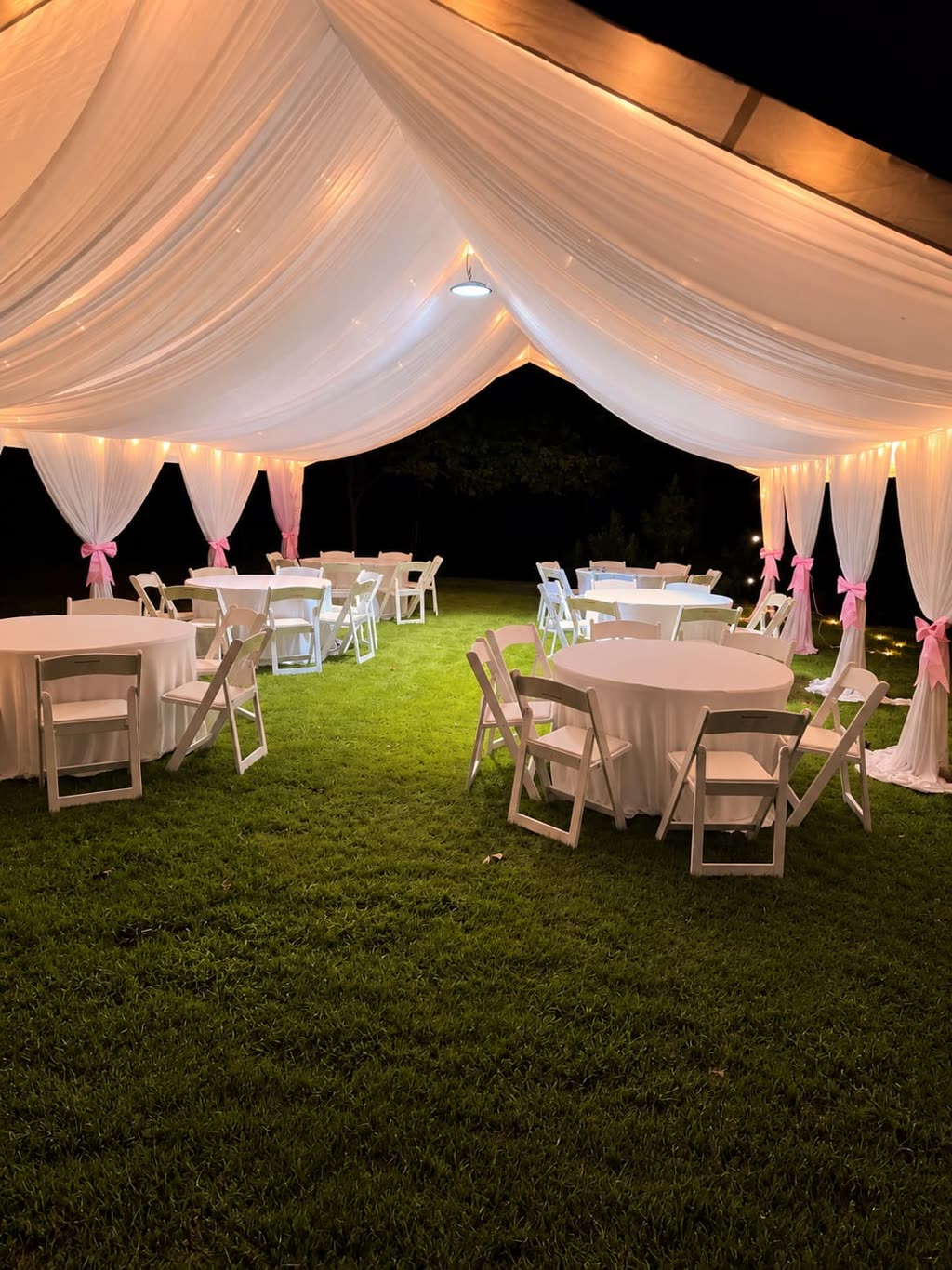
Start with a firm guest count and then add a buffer for comfort and any additional elements like a dance floor or buffet table. For example, if you expect fifty guests and want a modest dance area, a 20 × 20 foot tent provides thirty‑two to forty seats; adding a second 10 × 20 foot tent for the buffet or lounge area brings total covered space to roughly fifty‑five to sixty seated guests, which meets the need without over‑crowding. This two‑tent approach follows the guideline that combinations are limited to what the frames allow, such as pairing a 20 × 40 with a 20 × 20 to create a 20 × 60 run.
If your guest list reaches one hundred twenty, a single 30 × 60 foot tent meets the seated capacity range of one hundred twenty to one hundred fifty. For events that anticipate a cocktail flow with many guests standing, the same tent can support up to one hundred eighty standing guests. Always consider the layout of tables, chairs, and any specialty items like a taquiza station or a bounce house, as these occupy floor space and reduce the effective guest capacity.
Preparing the Site: Grass, Concrete, and Utilities
Our tents are designed to anchor securely on both grass and concrete surfaces. On grass, we use heavy‑duty stakes and weight plates that penetrate the soil without damaging the lawn. In Jefferson, many residential yards have natural grass that holds stakes well; if the soil is particularly soft, we can add extra weight or use ground spikes for additional stability. Always inform us if there are irrigation lines or hidden utilities so we can avoid them during installation.
For concrete patios or driveways, we employ weighted base plates and sandbags that keep the frame stationary without penetrating the surface. Power needs are straightforward: our blowers for bounce houses and any required lighting run on standard 110 V outlets. Verify that an exterior outlet is within reach of the intended bounce house location; if not, a generator can be arranged. Our team will confirm the exact power requirements during the site visit after you provide the exact address.
Delivery, Setup, and Timeline
Delivery is scheduled based on the distance from our Pendergrass warehouse to your Jefferson address. We plan the arrival window so that the tent and all accessories are on site well before the event start time, allowing ample time for a calm setup. Our crew arrives with the necessary tools, stakes, blowers, and safety equipment to erect the frame, attach the cover, and secure all anchor points according to manufacturer specifications.
Setup time varies with tent size; a 10 × 10 foot unit typically takes under an hour, while a 30 × 60 foot structure may require three to four hours with a experienced crew. After the event, we break down the tent, clean the equipment, and load it for return. The takedown process mirrors the setup in reverse and usually finishes within the same timeframe. Throughout the process we keep communication open so you know exactly when each phase will begin and end.
Weather Preparedness: Sidewalls and Rain Plan
Even with a clear forecast, outdoor events in North Georgia can experience sudden changes. Sidewalls are an effective upgrade that adds protection against wind, light rain, and cooler temperatures. They attach securely to the tent frame and can be closed on one or two sides depending on the direction of the wind and the layout of your space. For evening gatherings in October or early November, sidewalls help retain warmth and keep guests comfortable while still allowing visibility.
If rain becomes a concern, our tents are made from waterproof material and the seams are sealed to prevent leakage. In the event of severe weather that makes setup unsafe, we work with you to reschedule the date or shift the timing to a window when conditions improve. We recommend deciding on a rain plan at least three weeks before the event, confirming sidewall needs, and finalizing the guest count two weeks out to ensure all details align with the weather outlook.
Next Steps: Getting Your Custom Quote
To move forward, we need a few key details: your full name, the exact event address including street, city, state, and ZIP code, the event date, the start time, a phone number where we can reach you, and an email address for sending the written quote. Please also provide the approximate guest count and any specific services you are interested in, such as draping, lighting, sound, taquiza, or bounce houses. With this information we can calculate the appropriate tent size, confirm delivery feasibility, and prepare a detailed itemised outline.
Once we have the address, we will verify that it lies within our forty‑mile service radius from Pendergrass, Georgia, and we will name the county it belongs to—Jefferson is in Jackson County. If the address falls outside the listed area, we will hand the conversation to our WhatsApp line for a human to confirm the exact distance. You can reach us at (678) 815-8774, via WhatsApp at https://wa.me/16788158774, or by email at Info@decoeventatl.com. We look forward to helping you create a memorable backyard party in Jefferson, GA.
Frequently asked questions
What tent size is best for a 50‑guest backyard party in Jefferson GA?
For fifty guests, a 20 × 20 foot tent provides seating for thirty‑two to forty people; adding a second 10 × 20 foot tent for buffet or lounge space brings total covered seating to roughly fifty‑five to sixty guests, which comfortably accommodates the group.
How far in advance should I book a tent rental in Jefferson GA?
We recommend securing your date and tent footprint four to six weeks before the event, especially for popular weekend dates, to guarantee availability of the desired size and any additional accessories such as sidewalls or lighting.
Can the tent be installed on a sloped yard in Jefferson?
Yes, our crew can level the frame using adjustable stakes and weight plates; we assess the slope during site preparation and take the necessary steps to ensure a stable and safe installation.
Do I need to provide power for bounce houses and lighting?
Our equipment runs on standard 110 V outlets; please confirm an exterior outlet is within reach of the bounce house location, or let us know if a generator is required for remote setups.
What happens if the weather turns bad on the day of my event?
Our tents are waterproof and sidewalls can be added for wind and rain protection; if conditions become unsafe for setup, we will work with you to reschedule or adjust the timing based on the latest forecast.
Are there any restrictions on placing a bounce house under the tent?
For safety and proper blower ventilation, bounce houses must be positioned on open lawn beside the tent, not underneath it, to allow adequate space for stakes, blowers, and guest exit.