
Understanding Tent Sizes and Guest Capacity
When you start looking at tent options for a backyard gathering in Winterville, the first step is to match the shelter size to the number of people you expect. A 10‑by‑10 foot canopy comfortably seats six to eight guests in a dining arrangement or accommodates eight to ten standing guests for a cocktail style layout. Moving up to a 10‑by‑20 foot tent raises the seated capacity to sixteen to twenty, while still allowing up to twenty‑five people to mingle freely if you prefer a more open flow. The 20‑by‑20 foot model is a popular middle ground, fitting thirty‑two to forty seated guests or supporting a larger standing crowd when you arrange furniture around the perimeter.
For larger celebrations, the 20‑by‑30 foot tent accommodates forty‑eight to sixty seated guests, and the 20‑by‑forty version expands that range to sixty‑four to eighty seated or up to one hundred cocktail‑style attendees. If you anticipate a very big event, the thirty‑by‑sixty foot structure can hold one hundred twenty to one hundred fifty seated guests or as many as one hundred eighty standing. Knowing these ranges helps you avoid over‑ or under‑estimating the space you need, ensuring everyone has room to eat, dance, and enjoy the festivities without feeling cramped.
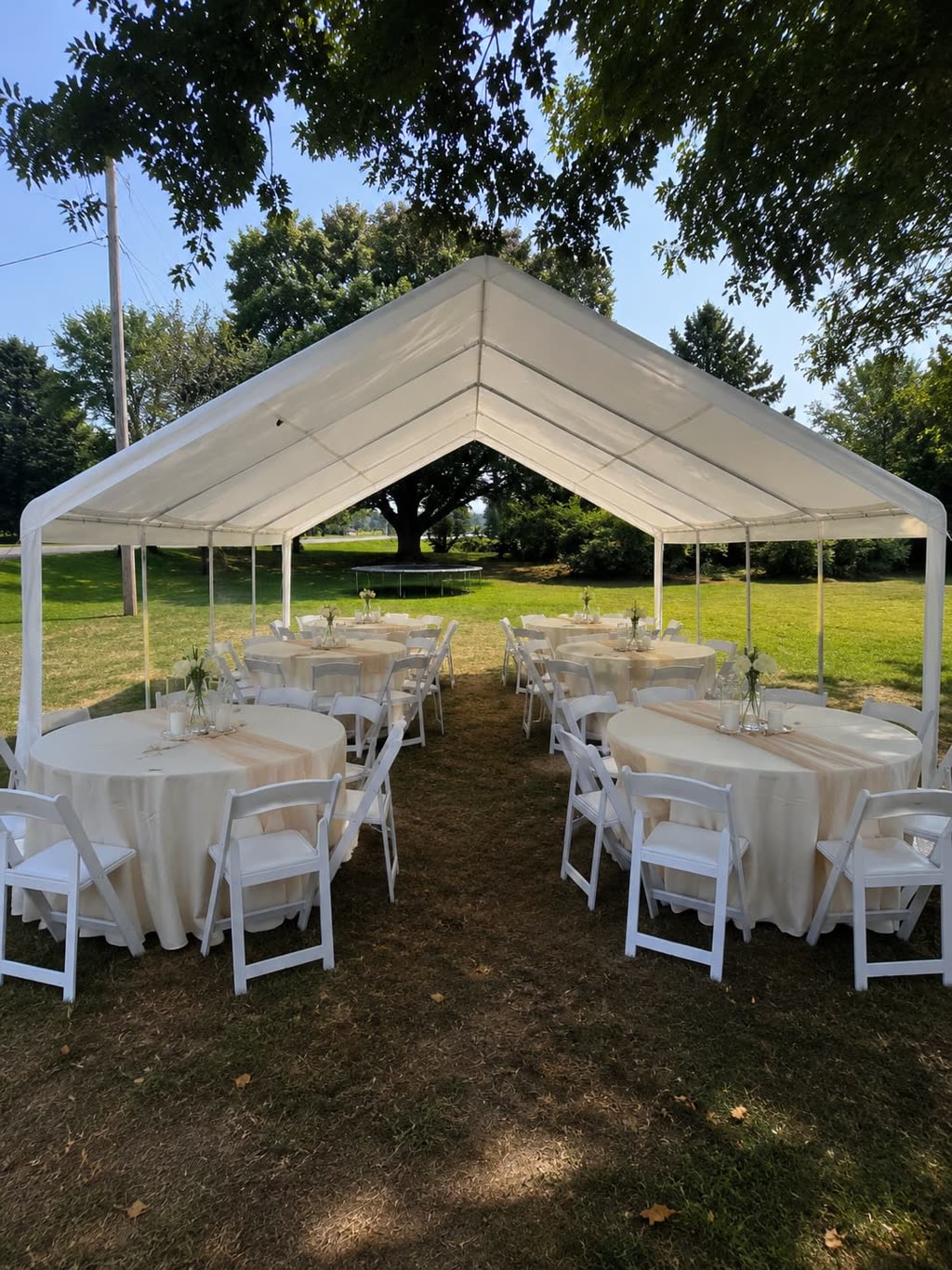
Assessing Your Winterville Backyard Space
Winterville homes often feature modest lawns shaded by mature trees, especially in the historic‑village area east of Athens. Before you commit to a tent size, walk the yard and note any slopes, low spots, or permanent fixtures like garden beds, swing sets, or patios that could interfere with anchor placement. Measure the length and width of the clear area where you intend to set up the shelter, remembering to leave at least three feet of clearance around the perimeter for stakes, ropes, and easy guest movement.
Consider how you will arrange tables and chairs inside the tent. A common layout uses rectangular tables that seat six to eight each, leaving aisles of at least three feet wide for servers and guests to pass. If you plan a dance floor, allocate a separate zone of roughly ten by ten feet inside the tent, which reduces the available seating capacity accordingly. By sketching a simple diagram on paper or using a free online tool, you can visualize how many tables fit and whether you need a second, smaller tent for a buffet or lounge area.
Planning the Timeline for Setup and Event Flow
Start the planning process at least two weeks before your event date to confirm the tent size, any additional equipment, and the delivery window. On the day before the party, our team arrives early in the morning to unload the poles, fabric, and anchoring gear. The actual erection of a 20‑by‑20 foot tent typically takes between forty‑five minutes and an hour, depending on ground conditions and the number of crew members present. Larger structures like the thirty‑by‑sixty foot model may require up to two hours, so we schedule extra time for those builds.
Once the tent is standing, we add sidewalls if requested, install lighting, and place tables and chairs according to your layout plan. This preparation phase usually finishes by mid‑morning, leaving the afternoon free for you to decorate, set up food stations, or conduct a final walk‑through with vendors. After the celebration ends, the breakdown crew returns to disassemble the shelter, pack the equipment, and leave the yard clean, often completing the teardown within the same timeframe as the setup.
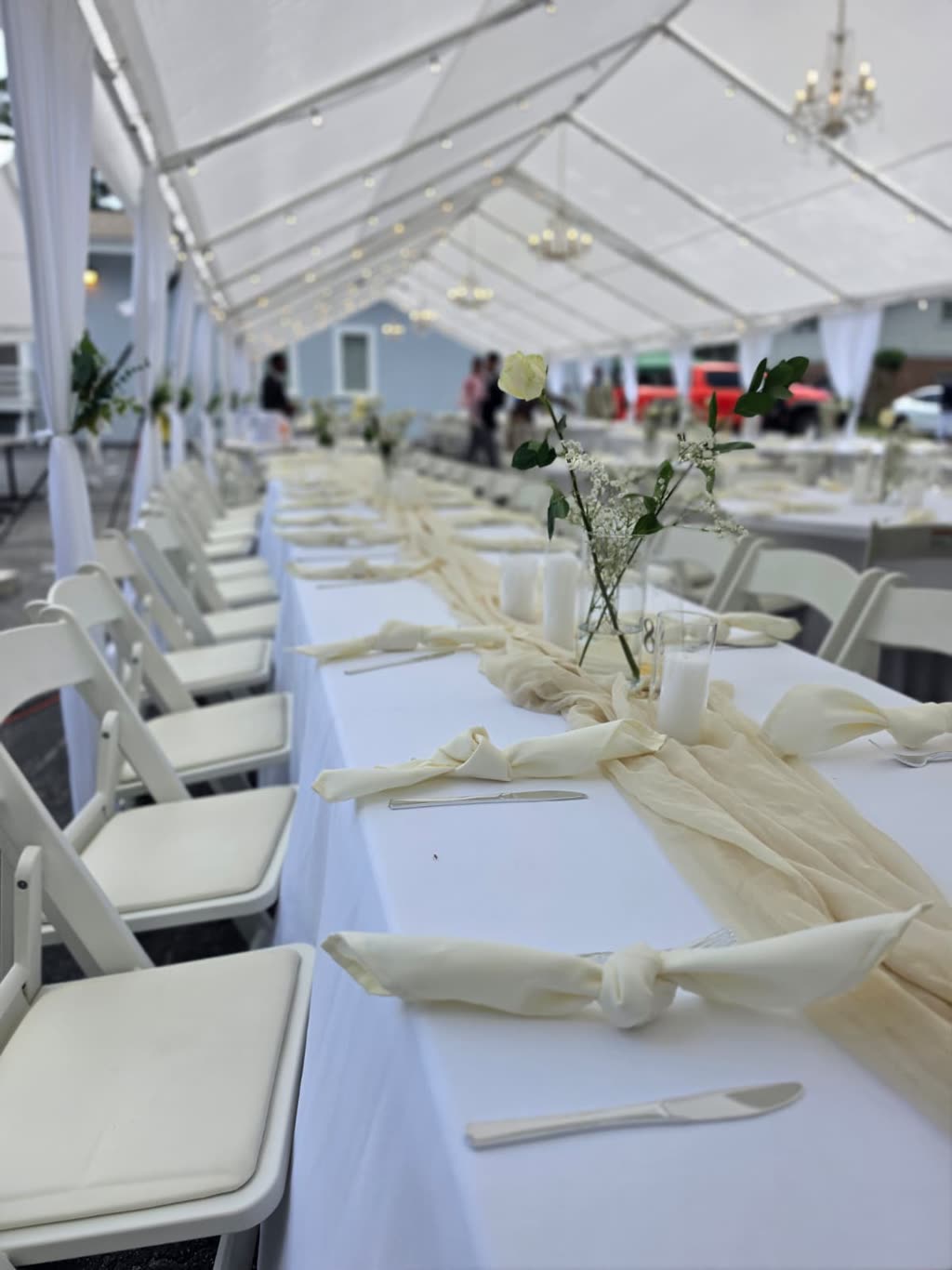
Preparing for Weather: Rain Plan and Sidewall Options
North Georgia weather can shift quickly, especially in the spring and fall months when Winterville hosts many outdoor celebrations. Our tents are built with waterproof covers and UV‑protected fabric, but heavy rain or strong winds may still pose a challenge. To protect your guests, we recommend adding sidewalls to at least two sides of the tent; this creates a barrier against wind‑driven rain while still allowing ventilation through the remaining open sections.
If you anticipate a cooler evening, consider pairing the sidewalls with portable patio heaters that operate on propane and are positioned safely away from the tent walls. For hot summer days, the fabric’s UV coating helps keep the interior temperature more comfortable, and you can enhance airflow by opening the sidewalls or using ceiling fans inside the tent. By discussing your specific concerns with our team during the planning call, we can tailor a rain‑plan that matches the season and the expected guest count.
Logistics: Delivery, Access and Setup from Pendergrass
Our warehouse is located in Pendergrass, Georgia, roughly a thirty‑two‑minute drive to Winterville under normal traffic conditions. When we schedule delivery, we factor in the exact address you provide, the width of your driveway, and any low‑hanging branches or narrow gates that could affect the truck’s arrival. We always confirm the route ahead of time to avoid surprises on the morning of the event.
Upon arrival, the crew positions the truck as close as safely possible to the work zone, then unloads the tent components using dollies and lift‑gate equipment. If your property requires a longer carry from the street to the setup area, we bring additional manpower or a small utility vehicle to move the poles and fabric efficiently. Clear communication about any access restrictions, such as a shared driveway or a homeowners’ association rule, helps us keep the schedule on track and ensures the installation proceeds without delay.
Final Checklist Before Your Party Starts
Before guests arrive, walk through the tent area one last time to verify that all stakes are secure, the fabric is taut, and there are no loose ropes that could pose a tripping hazard. Check that lighting fixtures are firmly attached and that any electrical cords are routed away from walkways and protected with covers if they cross grass. Confirm that tables are level, chairs are stable, and that linens are smoothly draped without excess fabric that could catch on shoes.
Make sure the designated food and beverage stations have easy access to power if you plan to use electric warmers or blenders, and verify that waste bins are placed conveniently for guests to use. If you have arranged a bounce house or other entertainment, double‑check that the blower is connected to a grounded outlet and that the inflatable is positioned on open lawn away from the tent walls, as required for safety. With these items checked, you can relax and enjoy the celebration, knowing the shelter and surrounding setup are ready to accommodate your guests comfortably.
Guest‑Count Math
When calculating how many guests fit inside a tent, start with the seated capacity per table type and then add standing room if you prefer a cocktail layout. For example, a 6‑foot rectangular table seats six to eight people, so eight such tables give you forty‑eight to sixty‑four seated guests. If you want a cocktail style, you can increase the total by roughly twenty‑five percent because guests need less personal space while standing. Always leave a three‑foot aisle between rows of tables for smooth traffic flow.
Yard Prep
Before the tent arrives, clear the chosen area of debris, toys, and any loose stones that could damage the fabric or cause tripping. Mark the corners with spray paint or flags so the crew knows exactly where to place the anchors. If the ground is soft, consider laying down ground protection boards to prevent the poles from sinking. Ensure there is at least a three‑foot buffer around the perimeter for ropes, stakes, and easy guest movement.
Load‑In Timeline
On the scheduled day, the truck arrives early, usually between 7:00 AM and 9:00 AM depending on the season and traffic. The crew first unloads the poles, fabric, and anchoring hardware, which takes about fifteen minutes for a medium‑sized tent. Erection follows, with a 20‑by‑20 foot shelter typically standing in forty‑five minutes to an hour. Larger structures may need up to two hours, after which sidewalls, lighting, and furniture are added. The goal is to have the tent fully ready by mid‑morning, leaving the afternoon free for decorations and final checks.
Rain Plan
If rain is forecast, we recommend installing sidewalls on at least two sides of the tent to block wind‑driven precipitation while keeping the remaining sides open for ventilation. Pair the sidewalls with gutter‑style drainage strips that direct water away from the tent base. For cooler temperatures, add propane patio heaters placed safely outside the sidewall edges. In hot weather, open the sidewalls or use ceiling fans inside the tent to improve airflow and keep guests comfortable.
Local Logistics
Our team knows the Winterville area well, including common road restrictions, low‑hanging limbs on Highway 78, and any homeowners’ association guidelines that may affect delivery times. We contact the local utility‑locate service ahead of the event to confirm there are no underground lines where stakes will be placed. If your street has a narrow driveway or a shared access point, we arrange a smaller utility vehicle or extra manpower to move the equipment from the curb to the setup zone.
Checklist
- Confirm exact event address, date, and start time.
- Verify guest count and choose appropriate tent size.
- Mark anchor points and check for underground utilities.
- Ensure driveway width and overhead clearance for the delivery truck.
- Prepare the yard: clear debris, level ground, add protection boards if needed.
- Review layout: table placement, dance floor, food stations, and aisles.
- Check that all stakes are tight, fabric is taut, and no loose ropes remain.
- Test lighting, electrical cords, and any audio equipment before guests arrive.
- Position bounce house or other inflatables on open lawn with grounded blower.
- Have waste bins, power access, and extra linens ready for quick replenishment.
Frequently asked questions
How do I determine the right tent size for my guest count in Winterville?
Start by estimating how many people will be seated versus standing, then match that number to the capacity ranges of our tents: a 10×10 fits 6‑8 seated or 8‑10 standing, a 10×20 fits 16‑20 seated or up to 25 cocktail, a 20×20 fits 32‑40 seated, a 20×30 fits 48‑60 seated, a 20×40 fits 64‑80 seated or up to 100 cocktail, and a 30×60 fits 120‑150 seated or up to 180 cocktail. Adjust downward if you plan a dance floor or buffet area inside the tent.
What should I check in my Winterville backyard before the tent arrives?
Look for uneven ground, low spots, tree roots, sprinkler heads, and any permanent fixtures like patios or garden beds that could interfere with anchoring. Measure the clear length and width, leaving at least three feet of clearance around the perimeter for stakes and guest walkways. Sketch a simple layout of tables, chairs, and any extra zones such as a dance floor or buffet to see if the space works.
How long does it take to set up a tent for a Winterville party?
A 20×20 foot tent usually takes between forty‑five minutes and an hour to erect, depending on ground conditions and crew size. Larger structures like the 30×60 foot model may require up to two hours. We schedule delivery early in the morning so the tent is ready by mid‑morning, giving you plenty of time to decorate and prepare food before guests arrive.
Can I add sidewalls to protect against rain and wind in Winterville?
Yes, sidewalls are available for all tent sizes and are recommended for at least two sides when rain or strong winds are forecast. They create a barrier while still allowing ventilation through the remaining open sections. You can also pair sidewalls with portable patio heaters for cooler evenings or use the fabric’s UV protection to stay comfortable on hot days.
How does delivery work from our Pendergrass warehouse to Winterville?
Our team drives about thirty‑two minutes from Pendergrass to Winterville, confirming the exact address, driveway width, and any access restrictions before arrival. Upon reaching your property, we unload the equipment using dollies and lift‑gate, then move the components to the setup area. If a longer carry is needed, we bring extra manpower or a small utility vehicle to keep the schedule on track.
What final checks should I make before guests enter the tent?
Verify that all stakes are secure, the fabric is taut, and there are no loose ropes that could cause tripping. Ensure lighting fixtures are firmly attached and cords are safely routed away from walkways. Check that tables are level, chairs are stable, and linens are smooth. Confirm that food stations have power access if needed, waste bins are conveniently placed, and any entertainment like a bounce house is positioned on open lawn away from the tent walls with a grounded blower connection.