
Choosing the Right Tent Size for Your Lively Karaoke Crowd
When you’re hosting a karaoke night, the tent you choose will set the vibe for the whole event. A 10×20 COBIZI tent, which can comfortably seat 16–20 guests or hold up to 25 cocktail‑style diners, is perfect for a cozy group of about 30 people. If you want a bit more room for performers, a 20×20 tent gives you 32–40 seating capacity, while still allowing space for a small dance floor within the backdrop. The 10×20 or 20×20 options fit snugly on most Jefferson backyards, especially those off Old Pendergrass Road, and they can be anchored securely in grass with the proper stakes and guy lines.
Because karaoke involves both seated listeners and a performance area, a clear layout that separates the front stage from the audience is essential. For 30 guests, place a 6’ rectangular table with eight chairs for a snack bar and a 4’ round table for appetizers. That yields about 24 seats, leaving room for moving chairs during the performance. Keep the stage at the far end of the tent, using a narrow 1–2 yard platform that can support microphones and speakers—no more than 10–15 kg of equipment to avoid structural strain.

How to Anchor and Protect Your Tent on Jefferson’s Grassy Backyards
Jefferson’s backyards are mostly treed shade with hammocks of dehydrated grasses, which means the tent must be anchored safely to prevent wind damage. Attach the main poles to the designated screw anchors along the tent’s perimeter, then use the included steel guy wires—about 30 feet each—to secure the frame to the ground. For extra wind strength in spring or early fall, add a secondary set of storm bolts on the interior corners. Remember that the 10-minute drive from Pendergrass warehouse should be straightforward, but you’ll want to arrive at least 45 minutes early to allow for setup.
Ground protection is key: lay down plywood or sunshade mats under the tent floor to keep the grass intact. A double layer of 4×8 plywood boards evenly spaced mitigates damage from pourers or the stage. For a more aesthetic finish, drape a sheer vinyl backdrop that also provides a slight barrier to water runoff. Within Jefferson’s humid climate, water drains quickly but can accumulate around the base—an extra layer of self‑leveling beads on the floor will keep the tent dry.
Establishing a Sound System That Keeps the Crowd Singing
The heart of karaoke is sound, and up to 300 guests can be managed with a semi‑pro audio rig. Use a powered PA with a 30W line‑in mic and a 2–3 channel mixer, place the speakers on the tent’s centerline for even coverage. Elevate the receiver and speakers with 18” tall folding stands, ensuring the audience can hear the singer without crowding the stage. LED ceiling fixtures can be added above the front of the tent, but never rely on bistro strings for speaker vicinity; use dedicated LED lights to create a staged glow.
Run two 120V outlets—one for the audio and one for auxiliary lighting—through the tent’s main frame to keep power near the stage. If your Jefferson venue lacks wall outlets, arrange for a portable 200A generator positioned 10 feet from the tent, connected to a heavy‑duty extension. For safety clearance, keep all cables neatly secured with cable ties. The FDA recommends no higher than a 12.5A draw per extension cord; check before connecting your system.
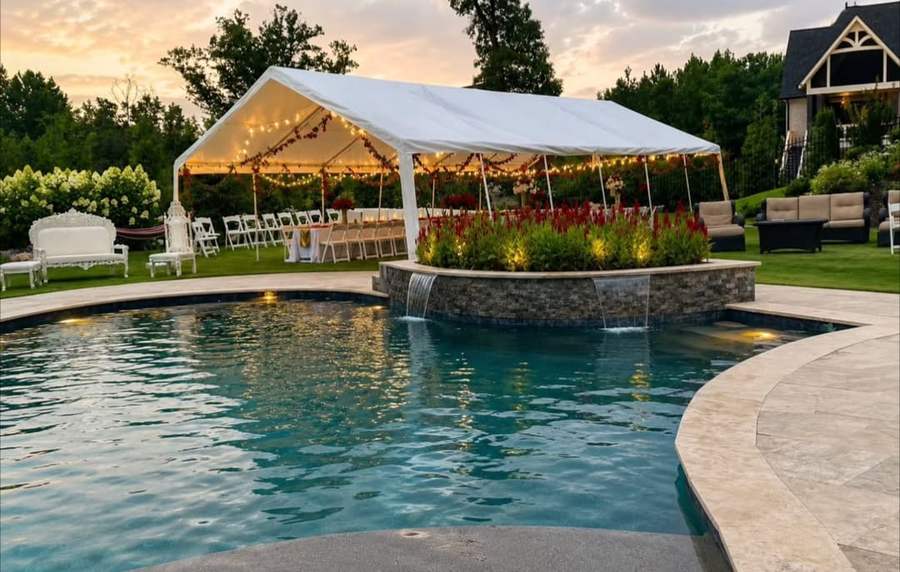
Lighting the Tent: LED Tent Lighting vs. Bistro Strings for Karaoke Atmosphere
If a more dramatic feel is desired, add uplighting behind the tent’s rear sidewall or behind a backdrop that highlights the performer. Place low‑intensity LED panels at least 3 feet above the platform to avoid showing wires on camera. For karaoke, keep the main stage lights between 30–50 watts per fixture to keep the album marquee visible while not overpowering the mic sound. A single golf‑cart lamp can be $um to use externally, yet essential for the acoustics.
Accommodating Weather: Rain Plan and Sidewall Safety
Jackson County’s variable weather calls for a robust rain plan: opt for a 20×20 tent equipped with sidewalls. A sidewall fills the 4–6 foot high gap between the roof and the ground, preventing wind‑driven rain from leaking in. When you secure sidewalls, tie them to the inner tent frame with heavy‑gauge straps; this not only strengthens the structure but also seals the interior.
For events that might drift into late summer or early fall, consider a double‑layered tarp over the tent’s roof in addition to the sidewalls. The tarp is easy to remove after a rainy night but offers full coverage if the forecast changes. Check the local rain gauge two days in advance; if the forecast predicts 0.25 inches or more, allocate an extra hour of setup for tarps. The careful layering also improves interior airflow, so the microphone stays dry and clear.
Guest Count Math: Seating, Tables, and Comfort Zones
To plan for 30 people, the ideal layout involves multiple tablespoon-shaped zones: an 8’ rectangular table takes eight guests, while two 4’ tables handle eight more. That gives 24 seats. Prefill the rest with folding mainstream chairs that fit a 17.5‑inch headrest height, ideal for grass or concrete. Allocate a 10×10 corner of the tent for an informal dance floor, where the 30–40 guests can move freely without steps.
Besides seating, keep a walk‑in corridor of at least 4 feet between the stage and the snack bar so guests can mingle without overcrowding. A foot traffic manual can also help: 6’ round tables allow 4–6 guests, so if you want to move the center table later for a photo moment, the seating drops slightly but the overall capacity stays within 30. Let the guests know you have extra folding chairs adjacent to the back gate for anyone who wants to sit adjacent to the drummer.
Timing Your Setup: From the 72‑Hour Mark to the Show
Start at the 72‑hour mark by calling your fundraiser or vendor to confirm delivery. Verify the exact address and coordinate the Pendergrass delivery time—Fortnight harvest. On the 48‑hour mark, begin assembling the tent frame in the driveway, cleaning the site of any debris, and laying out the plywood floor protection. Arrive at the Jefferson location 45 minutes before the event and begin using the supplied tent reel to put up the poles, secure guy wires, and test the anchor points.
The final 12 hours are for system tuning, soundchecks, and lighting rehearsals. Install the final LED lights, test the microphones, and ensure power distribution is safe. The spotlights should fill the stage, but not interfere with the poster backdrop. Near midnight, let the guests enjoy track invites while a 12‑hour buffet line is rolled out on two 6’ rectangular tables.
Transport and Delivery Logistics: 10‑Minute Pick‑up from Pendergrass
Because Jefferson is only a 10‑minute drive from the Pendergrass warehouse, your delivery can come early enough for you to set up before dusk. Plan to leave by 6:30 a.m. for an event that begins at 7 p.m. A straight I‑85 route through the Braselton corridor keeps you on schedule. In the event of a detour, the 15‑mile free delivery threshold remains, so there’s no risk of extra mileage charges. Anticipate a 30‑min dock during delivery of the tent and accessories, and a 30‑min window for unloading and site inspection.
Entertainment Flow: Creating a Karaoke-Friendly Environment
Begin with an opening stage entrance: a simple 2‑foot platform with a small LED backdrop illuminates the first performer. Use a wireless microphone to let the crowd pick a song and talk to the host. Behind the stage, set up a small stage line—a 1‑foot high curtain or a draped sheet—if you want to keep the area tidy. Keep the rest of the tent clean with cotton napkins on the snack tables; this reduces cleaning after the crowds leave.
Under the tent, the final spotlight should hit the background singers or a small seating area. For those who want a karaoke backup vocalist, set up a small guitar stand at the side of the stage. During performances, a 30–40 foot boom extendable speaker can blow out the signals to the entire tent. Reserve a corner for a photo‑op with a backdrop billboard, perhaps any local logos or a static “Jefferson Shuf” sign; guests love to capture the moment.
Cleanup and Post‑Event Procedures for Jefferson Backyards
After the final chorus, gather all the chairs and fold them quickly—they weight 9 lb each—so no extra labor. Remove all tables, run the tarp out or fold it over the plywood floor to protect the grass. Secure the tent and poles with their dismantling kits, and ensure no electrical cables are left behind. If any part of the tent was damaged by a sudden rain spike, log the issue for quick repair or replacement next time.
The garbage bags go to the close‑by trash heaver on Old Pendergrass Road, and all biodegradable linens or food packaging must be disposed of accordingly. Leave the site with the same backyard feeling you found it. In this way, you reinforce your stand as a reliable backyard rental partner for Jefferson families, and you you’ll be remembered as the host that made karaoke nights unforgettable.
Why Consider a Dedicated Tent for Your Backyard Karaoke?
Using a dedicated tent rather than a makeshift tarp protects the music system from wind and rain, ensures a warm backstage area for performers, and gives your guests a clear front‑stage vibe. It also allows the sound system’s cables to stay out of sight. In the cold months of December to February, a sidewall‑enclosed tent helps keep the sound warmer and prevents icy condensation.
As an extra touch, a LED put on the tent’s front wall can display the karaoke song list, playing in sync with the music. This stirles the fans who love around 200‑20 seed songs. With the entire setup built and draped using local fabrics, the tent remains a piece of functional art that resonates with the unique Jefferson, GA community.
Wrapping Up: Plan Ahead and Have Fun
In set‑up any backyard party, the right size tent, robust anchoring, and sound system inclusion lay the foundation for your karaoke night. Schedule a 72‑hour advance call, have the 10×20 tent ready, pack the LED lighting, and choose a sidewall that protects your guests from sudden showers. When you follow this structure, you’ll create an environment that keeps folks singing late into the event, all while the tent stands proverbially safe, sturdy, and ready for the next act.
Local Jefferson Resources for Outdoor Events
Jefferson’s community parks offer additional lending space, but our tents accommodate any backyard layout—just bring the benches. If your yard has a steep slope or uneven ground, the on‑site crew will lay plywood to level the floor. Riverfront suitable for js but you avoid the back yard. The Jefferson City Association can suggest additional lawn-friendly surfaces if you’re not satisfied.
FAQs for Your Backyard Karaoke Setup
How long does the tent take to assemble?
From the moment the tent frame arrives at the yard, it takes about 30 minutes to set up the poles, secure the anchors, and attach the roof. The LED lighting and audio system are added in another 15 minutes.
What happens if it rains during the party?
All recommended tents include sidewalls and a rain‑cover tarp. These protect the audio equipment and guests, and prevent water from entering the tent. A sidewall is essential for a full DIY. If the weather forecast forecasts precipitation, add an extra tower on the front to keep the sound system in safe.
Can the tent fit a dance floor for more guests?
Yes, a 10×10 roof is sufficient for up to 10 dancing guests. By adding an extra flap that extends the front of the tent you can squeeze in a small dance floor if your crowd is larger than 30. However, do not exceed the tent’s design capacity.
Do I need power outlets in the yard?
For the audio system, two 240‑V outlets are recommended, one for the mixer and another for lights. If no outlets exist, bring a portable generator rated 200‑amp, the same one used by the local club for karaoke nights.
Will the tent work at my hilltop location?
On uneven or sloping surfaces, place plywood under the tent floor to level the base. Anchor the tent into a hard surface with at least 30‑foot guy wires; that keeps the tent stable. The turbine wind in the hills does not too harm the shape.
How to ease cleanup after the party?
Bring a small basket with a folding tool for the walls, and a roll of tape for panels. Keep the fold‑over tape of the center as a sequence to load. The final note: take a picture of the final cleanup to share with future hosts. Happy karaoke nights!
Frequently asked questions
How long does the tent take to assemble?
From delivery to about 30 minutes to set up the poles, anchors, roof, and add lighting. The audio system takes an extra 15 minutes.
What happens if it rains during the party?
With sidewalls and a tarp, the tent shields the sound equipment and guests; we wire this up for you.
Can the tent fit a dance floor for more guests?
A 10×10 roof can host a 10‑guest dance floor; an extra flap can allow a small dance surface.
Do I need power outlets in the yard?
Two 240‑V outlets are ideal; use a generator if necessary.
Will the tent work at my hilltop location?
Use plywood and 30‑foot guy wires for stable mounting on slopes.
How to ease cleanup after the party?
Keep folding tools, tape, and quick-bag kit ready; take photos of your clean‑up process.