
Understanding Winter Outdoor Parties in Chestnut Mountain
Chestnut Mountain sits in Hall County at an elevation that brings cooler evenings even when daytime temperatures stay mild. During the winter months, nighttime lows can dip into the 30s Fahrenheit, which makes guest comfort a top priority for any outdoor gathering. The area’s rolling terrain, especially the sloped yards south of Gainesville, adds a scenic backdrop but also requires careful planning for tent stability and heat distribution. Hosts who recognize these local conditions early can create an enjoyable experience that feels both festive and safe.
When preparing for a winter outdoor party Chestnut Mountain ga, start by reviewing historical weather patterns for your chosen date and checking the forecast a week out. This helps you decide how much heating equipment you’ll need and whether sidewalls or additional draping will be beneficial. Communicating your plans with the rental team ensures they bring the right anchors for grass or sloped ground and that any heating units are placed safely away from flammable decorations. Early coordination reduces last‑minute surprises and lets you focus on the celebration itself.
winter outdoor party Chestnut Mountain ga: Planning Essentials
The first step in planning a winter outdoor party Chestnut Mountain ga is to define the guest count and the type of event you envision, whether it’s a holiday backyard dinner, a quinceañera, or a family reunion. Knowing the approximate number of attendees informs decisions about tent size, seating arrangement, and the quantity of heating devices required. Write down any special activities, such as a toast, a dance floor, or a kids’ play area, so the layout can accommodate flow and clear pathways.
Next, verify the exact event address, including street, city, state, and five‑digit ZIP code, and confirm that the location falls within the 40‑mile service radius from our Pendergrass warehouse. If the city or ZIP is not on the published service‑area list, the policy is to hand the request to WhatsApp for a human distance check rather than guessing. Once the address is confirmed, you can discuss tent anchoring options for the sloped yards common in Chestnut Mountain and confirm the availability of any extra items like patio & event heaters, dance flooring, or welcome mirrors.
Guest Count Math and Seating Layout
Understanding how many guests each table style accommodates helps you avoid overcrowding or excessive empty space. A 6‑foot round table comfortably seats ten guests, while a 5‑foot round table holds eight guests comfortably and can reach ten only with a specially approved layout. Rectangular tables follow similar logic: a 6‑foot rectangle fits six to eight guests, and an 8‑foot rectangle fits eight to ten. Cocktail tables, typically 30‑inch Flash Furniture units, accommodate two to four standing guests, and you should plan roughly one cocktail table for every eight to twelve event attendees.
Apply these figures to your guest list to determine the total number of tables and chairs needed. For example, if you expect eighty guests, you might choose eight 6‑foot round tables (80 seats) or a mix of six‑foot rectangles and cocktail tables to create varied seating zones. Keep aisles at least three feet wide to allow easy movement, especially when guests are wearing coats or boots. A well‑thought‑out layout not only maximizes comfort but also supports efficient service of food and drinks.
Yard Preparation and Anchoring
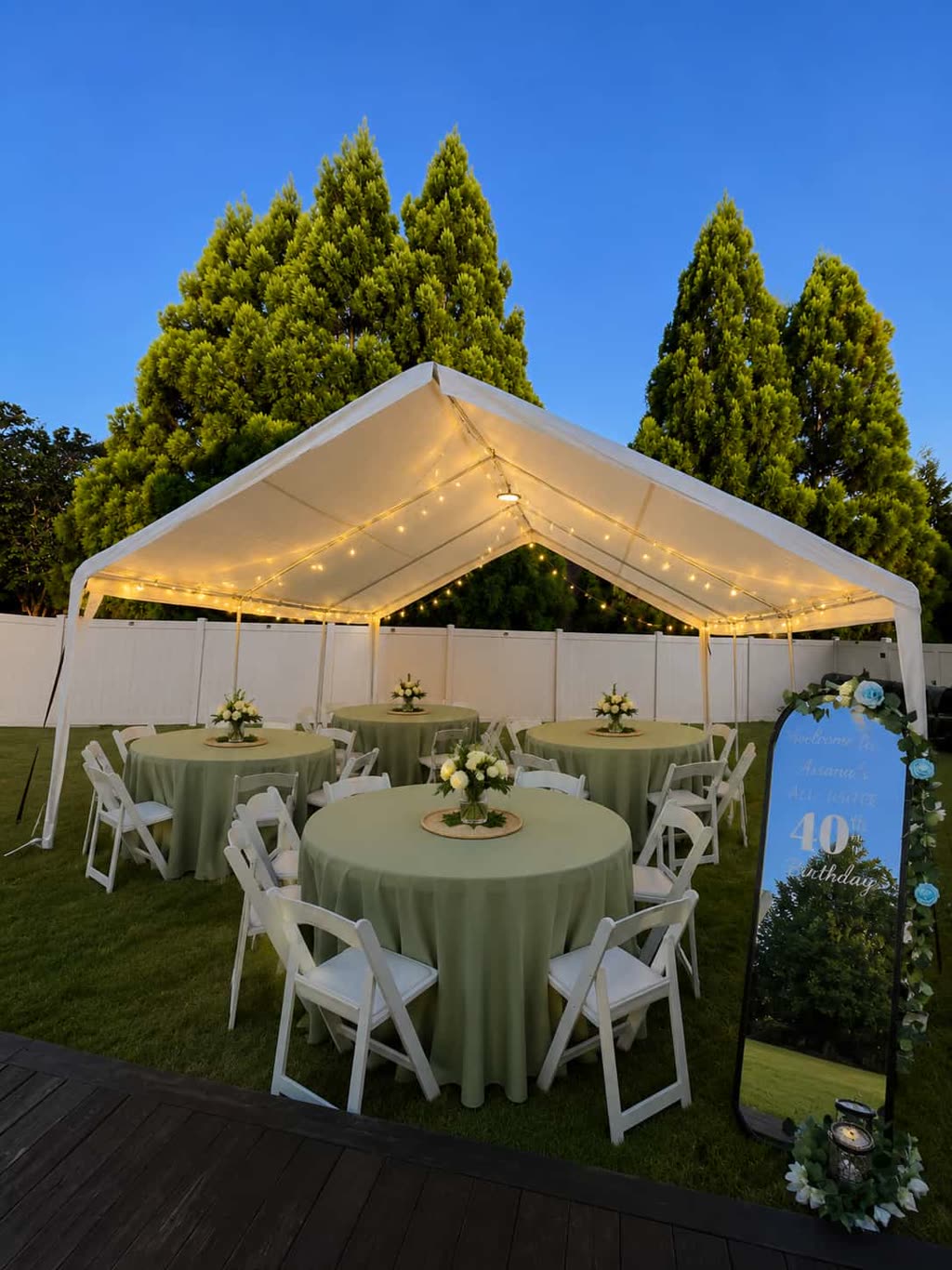
The sloped yards south of Gainesville that characterize many Chestnut Mountain properties require special attention when installing tents. Standard stakes may not hold securely on uneven or grassy ground, so weighted anchoring systems—such as sandbags, water barrels, or ground plates—are often necessary. Our team evaluates the soil type, slope angle, and any existing landscaping before recommending the appropriate anchoring method to keep the structure stable throughout the event.
In addition to anchoring, consider protecting the lawn from heavy foot traffic by laying down protective ground covers or interlocking tiles beneath high‑use areas like the entrance, buffet line, and dance floor. This prevents ruts and makes post‑event cleanup easier. If the yard includes trees or shrubs, verify that tent poles and sidewalls will not interfere with branches, and discuss any trimming needs with the property owner well ahead of the party date.
Heating Solutions for Cold Weather
To keep guests comfortable during a winter outdoor party Chestnut Mountain ga, patio & event heaters are a practical choice. These units provide radiant warmth that can be positioned around seating clusters, near the food service area, or along the perimeter of the tent. The number of heaters required depends on the total square footage you wish to heat and the layout’s openness; a general guideline is one heater for every 200‑square‑foot zone, but the exact count should be confirmed after a site walk‑through.
Safety is paramount when using heating equipment outdoors. Heaters must be placed on stable, non‑flammable surfaces and kept at least three feet away from tents, decorations, and any overhead foliage. Ensure that propane or electric units have proper ventilation and that cords are secured to avoid tripping hazards. Our team can advise on placement, provide operational instructions, and monitor the units during the event to maintain a steady, comfortable temperature for all attendees.
Timeline and Day‑of Schedule
A clear timeline helps the day run smoothly, from delivery to breakdown. Aim to have the rental crew arrive early in the morning—ideally by 8:00 a.m.—to begin anchoring the tent, laying ground protection, and installing sidewalls if needed. This early start accommodates any unexpected challenges, such as adjusting anchor weights on a slope, and leaves ample time for heating units to be tested before guests arrive.
Guest arrival can be scheduled for mid‑morning or early afternoon, depending on the event type. Allow a buffer of 30‑45 minutes between the completion of setup and the start of the ceremony or reception to address any last‑minute tweaks, such as repositioning a heater or straightening table linens. After the celebration, plan for a teardown window of at least two hours to ensure all equipment is packed securely and the yard is returned to its original condition.
Rain Plan and Backup Options
Even with careful forecasting, winter weather in North Georgia can bring unexpected precipitation. Our tents come with optional sidewalls that can be zipped in to create a fully enclosed space, shielding guests from rain or snow while retaining heat from the patio & event heaters. If conditions become unsafe for setup—such as sustained high winds or icy ground—the best course is to reschedule the event to another date, as indoor venue decoration is not part of our service offering.
Communicate the rain plan clearly with your guests ahead of time, noting that the event will proceed under the tent with sidewalls unless safety concerns require a postponement. Keep contact information for the rental team readily available so you can receive real‑time updates on weather‑related decisions. Having a flexible mindset and a clear communication channel reduces stress and ensures that the celebration remains enjoyable regardless of minor weather shifts.
Final Checklist and Local Resources
Before the event, run through a concise checklist: verify the exact address and ZIP code, confirm guest count, review the layout sketch, ensure heating units have fuel or charge, and double‑check that all anchoring equipment is on site. Ask the rental lead to walk the property with you to point out any specific considerations for the sloped yards south of Gainesville, such as where to place weighted anchors for maximum stability.
Leverage local knowledge by noting nearby landmarks that can assist with navigation—such as the Chestnut Mountain Community Center, the intersection of Highway 60 and Old Dahlonega Highway, or the popular Chestnut Mountain Park. Providing these details to the delivery team helps them arrive promptly and reduces the chance of miscommunication. With all elements confirmed, you can focus on hosting a memorable winter outdoor party Chestnut Mountain ga that keeps every guest warm, comfortable, and delighted.
Frequently asked questions
How do I determine the right tent size for my winter outdoor party Chestnut Mountain ga?
Consider your guest count and the type of seating you plan. A 6‑foot round table seats ten guests comfortably, so divide your total guests by ten to estimate the number of round tables needed, then add extra space for a dance floor, buffet, or cocktail tables. Our team can review your layout and recommend a tent dimension that accommodates all zones while allowing easy flow.
What anchoring methods work best on the sloped yards common in Chestnut Mountain?
Weighted anchors such as sandbags, water barrels, or ground plates are effective on uneven or grassy slopes. Our crew evaluates the soil condition and angle of the slope to select the appropriate weight and placement, ensuring the tent remains stable even if winds pick up during the event.
How many patio & event heaters should I use to keep guests warm?
A general rule is one heater for every 200‑square‑foot area you wish to heat, but the exact number depends on the tent’s openness, ceiling height, and layout. We perform a site walk‑through to assess heat loss and position heaters safely away from tents, decorations, and high‑traffic zones.
Can I add sidewalls to my tent if rain is forecasted?
Yes, sidewalls are available as an add‑on and can be zipped in to create a fully enclosed space. They help retain heat from the patio & event heaters and protect guests from precipitation while still allowing you to enjoy the outdoor setting.
What should I do if high winds make tent setup unsafe?
If sustained winds reach levels that jeopardize anchoring safety, we recommend postponing the event to another date. Our team will monitor conditions and communicate any concerns promptly so you can make an informed decision without compromising guest safety.
How far in advance should I confirm my event date and address with DecoEvent ATL?
Please provide the exact street address, city, state, and five‑digit ZIP code as early as possible, ideally at least two weeks before your desired date. This allows us to verify the location falls within our 40‑mile service radius, check anchor requirements, and secure the needed equipment for your winter outdoor party Chestnut Mountain ga.