
Outdoor Fitness Tent Layout Essentials
Designing an effective outdoor fitness tent layout begins with understanding how the space will support movement, safety, and comfort for participants. In Jefferson, Jackson County, many hosts look to transform backyards off Old Pendergrass Road, the neighborhoods around Jefferson High School, or the scenic areas near Traditions of Braselton into functional workout zones. The first step is to measure the available yard and consider how many people will attend, as this drives the size of the tent and the arrangement of mats or equipment. A clear vision of the flow from entry to workout stations helps prevent congestion and ensures that each participant has enough room to stretch, pose, or move through circuits.
When planning an outdoor fitness tent layout, think about the type of activity you will host. Yoga sessions may require a calmer atmosphere with shaded areas, while high‑intensity interval training might benefit from open sides for ventilation. Determine the number of participants early; for example, a group of twenty people doing yoga typically needs at least ten square feet per person for mats and spacing, which translates to a minimum of 200 square feet of usable floor space. This calculation guides the selection of tent dimensions and informs decisions about flooring, lighting, and accessory placement.
Choosing the Right Tent Size for Fitness Activities
Selecting a tent that matches your participant count and activity style is crucial for a successful outdoor fitness tent layout. DecoEvent ATL offers a range of clear‑span structures, from compact 10×10 foot units ideal for small private classes to larger 20×30 or 30×60 foot models that can accommodate bigger groups or multiple activity zones. For a typical yoga class of fifteen to twenty participants, a 10×20 foot tent provides ample room for mats, a small instructor area, and space for props like blocks and straps. If you plan to run circuit training with stations, consider a 20×20 foot tent that allows you to create distinct zones for cardio, strength, and stretching without crowding.
Beyond square footage, think about height and sidewall options. A taller ceiling improves air circulation and prevents the tent from feeling claustrophobic during vigorous workouts. Sidewalls can be added later to block wind or provide privacy, but they may restrict airflow if left closed during hot weather. Evaluate the orientation of your backyard; positioning the tent so that the longest side faces prevailing breezes can enhance natural ventilation. Matching the tent size to both the guest‑count math and the specific fitness routine ensures a comfortable environment from start to finish.
Flooring Solutions for Comfort and Safety
The surface beneath your tent plays a major role in the overall experience of an outdoor fitness tent layout. Grass is a common choice in Jefferson backyards, offering a natural cushion that is gentle on joints during yoga poses or floor‑based exercises. However, uneven or soggy grass can create hazards, especially after rain. To mitigate this, many hosts opt for interlocking foam tiles or rubberized mats that provide a stable, level surface while still offering shock absorption. These portable floors can be laid directly over grass, concrete, or even compacted soil, and they are easy to clean between sessions.
If you prefer a harder surface for activities like boot‑camp drills or martial arts, consider a low‑profile vinyl‑coated flooring that resists moisture and is simple to sweep. Regardless of the material, ensure that the flooring extends a few inches beyond the tent perimeter to prevent tripping at the edges. Proper anchoring of the flooring system is also important; use ground stakes or weighted bags designed for outdoor use to keep the surface from shifting during movement. A well‑chosen floor not only protects participants but also helps maintain the integrity of the tent structure by distributing weight evenly.
Flow and Layout: Arranging Mats, Stations, and Shade
Creating a logical flow within your outdoor fitness tent layout enhances both safety and enjoyment. Begin by marking a clear entry point that allows participants to enter and exit without crossing active workout zones. Place a small registration or check‑in area near the entrance, followed by a space for personal belongings such as water bottles, towels, and shoes. From there, arrange the primary workout area in a grid or circular pattern depending on the activity; yoga classes often benefit from a square or rectangular grid where each mat faces the instructor, while circuit training may use a series of stations arranged around the perimeter.
Incorporate shaded zones to protect participants from direct sun, especially during midday sessions. This can be achieved by positioning the tent so that its roof provides natural shade, or by adding a canopy extension or shade sail on one side. Keep a clear pathway of at least three feet wide between stations to allow easy movement and to accommodate participants who may need to step out briefly for hydration or adjustments. Thoughtful placement of lighting, such as LED tent lights for early morning or evening classes, ensures visibility without glare. By mapping out each zone and traffic route ahead of time, you create a smooth experience that lets participants focus on their practice.
Local Considerations: Jefferson, Jackson County Yard Prep
Hosting an outdoor fitness tent layout in Jefferson requires attention to local specifics that affect setup and logistics. Many suitable backyards are found along Old Pendergrass Road, where properties often feature level lawns and mature trees that offer natural windbreaks. Neighborhoods surrounding Jefferson High School frequently have spacious lots with easy access from main roads, making delivery and installation straightforward. The Traditions of Braselton area also provides larger estates with manicured lawns that are ideal for bigger tents and multiple activity zones.
Before the event day, schedule a brief site visit to confirm ground conditions, locate any underground utilities, and verify proximity to a grounded electrical outlet for lighting or sound equipment. Drive logistics are simple: our team departs from the Pendergrass warehouse, which is roughly a ten‑minute drive to most Jefferson locations, allowing timely arrival for setup. Measure the yard’s dimensions and mark the tent footprint with spray paint or stakes, ensuring there is at least a two‑foot buffer around the perimeter for anchoring ropes and sidewall installation. Proper preparation on the day before the event reduces surprises and helps the installation crew work efficiently.
Weather Readiness: Rain Plan and Wind Management
Even with careful planning, outdoor fitness tent layouts must contend with Georgia’s variable weather. To prepare for rain, consider adding sidewalls to two or more sides of the tent, which helps keep the interior dry while still allowing ventilation through the remaining open sections. Ensure that the sidewalls are securely fastened with appropriate straps or bungee cords, and inspect the tent fabric for any tears or weak points before the event. If heavy rain is forecast, have a backup plan such as relocating the session to a covered patio or rescheduling for a day with clearer skies.
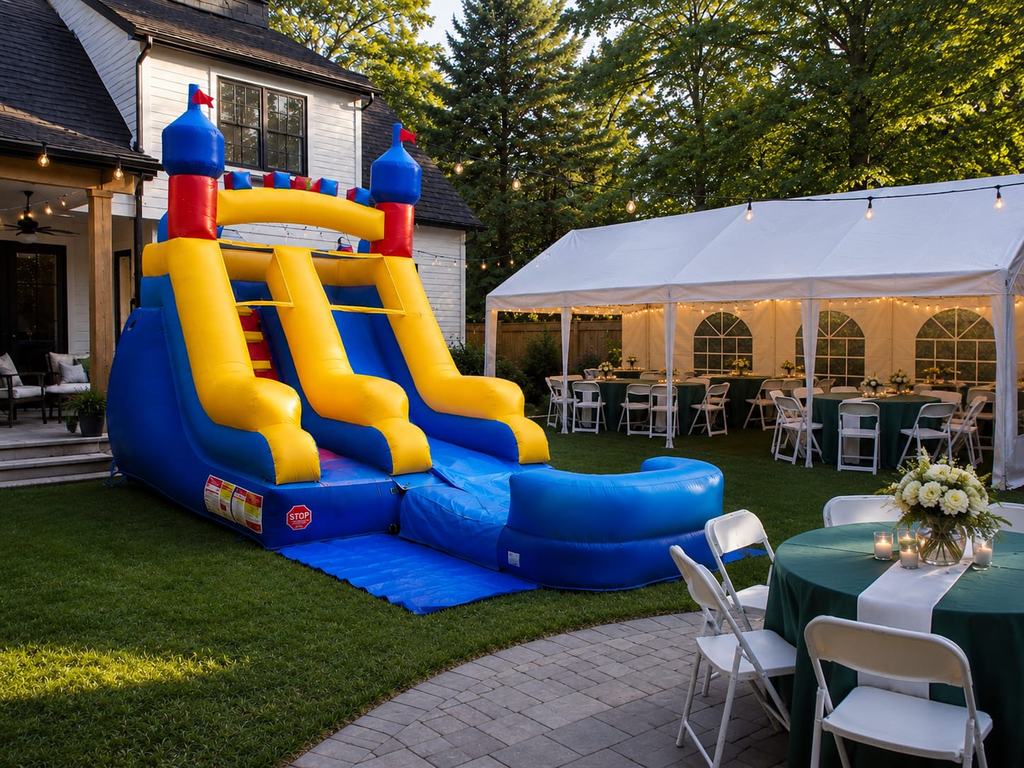
Wind can affect both tent stability and participant comfort. Use heavy‑duty ground stakes or weighted sandbags designed for the specific tent model, and check that all guy lines are tensioned correctly. Orient the tent so that the narrowest side faces the prevailing wind direction, reducing the surface area exposed to gusts. During setup, verify that the blower for any inflatable accessories, such as bounce houses used for warm‑up games, is positioned away from the tent entrance to prevent debris from blowing inside. A proactive weather strategy keeps the session safe and lets participants focus on their fitness goals.
Final Checklist and Day‑Of Timeline
On the morning of your outdoor fitness tent layout, follow a concise checklist to confirm that every element is in place. Start by verifying that the tent is fully anchored, the flooring is secured, and all lighting or sound equipment is plugged into a functional outlet. Check that mats, props, and any signage are arranged according to the pre‑drawn layout plan, and that entry and exit pathways remain unobstructed. Have a stock of water bottles, towels, and a basic first‑aid kit readily accessible near the registration area.
Establish a timeline that allows sufficient buffer for participant arrival, warm‑up, the main workout, and cool‑down phases. For a typical one‑hour yoga class, aim to have participants arrive ten minutes early for check‑in and mat placement, followed by five minutes of gentle stretching, forty minutes of guided practice, and five minutes of closing relaxation. Communicate the schedule clearly to attendees so they know when to expect transitions. After the session, conduct a quick walk‑through to collect any personal items, inspect the tent and flooring for damage, and prepare the equipment for pack‑up. A well‑organized timeline ensures a smooth flow from start to finish and leaves both hosts and participants satisfied with the experience.
Frequently asked questions
What size tent is best for a yoga class of twelve people in Jefferson?
A 10×10 foot tent provides enough floor space for twelve yoga mats with a little extra room for props and instructor movement, while a 10×20 foot option offers additional space for stretching or small groups.
How do I prepare my backyard off Old Pendergrass Road for a fitness tent installation?
Clear the area of debris, locate any underground utilities, mark the tent footprint with a two‑foot buffer, and ensure a level surface; our team can anchor the tent securely on grass or compacted soil.
Can I add sidewalls to my tent for a sunrise fitness session in Jefferson?
Yes, sidewalls can be attached to block early morning wind or provide privacy, and they are easy to install or remove based on the weather conditions you expect on the day of your event.
What flooring option works best for high‑intensity interval training on a lawn?
Interlocking rubber tiles give a stable, shock‑absorbent surface that stays level over grass and protects both participants and the tent frame from uneven ground.
How far in advance should I confirm the guest count for my outdoor fitness tent layout?
Provide the final headcount at least seven days before the event so we can confirm tent size, flooring quantity, and any additional equipment needed for your planned activities.
Is it possible to run a fitness class in the evening with lighting inside the tent?
Absolutely, we can install LED tent lighting that provides even illumination without glare, allowing safe and enjoyable workouts after sunset while preserving the ambiance of your Jefferson backyard.