
Choosing the Right Tent Flooring for Your Backyard Party
When planning a backyard party in Jefferson, Jackson County, the surface beneath your tent can make the difference between a smooth celebration and a frustrating setup. Located just ten minutes from our Pendergrass warehouse, many homes along Old Pendergrass Road, in the Traditions of Braselton subdivision, and around Jefferson High School feature lawns that range from level grass to compacted soil. Knowing the exact condition of your yard helps you decide whether you need a simple ground cover, interlocking tiles, or a more robust flooring system that protects both the tent anchors and your guests’ feet.
The type of activity you envision—whether it’s a seated dinner, a dance floor, or a play area for children—directly influences the flooring choice. A dinner with long tables benefits from a stable, level base that prevents wobbling chairs, while a dance zone requires a surface that can handle repeated steps without shifting. By matching the flooring to the planned guest count and the flow of activities, you create a safer environment and reduce the risk of tripping or tent movement during the event.
Assessing Guest Count and Activity Level
Start by estimating how many guests will attend and how they will be stationed or seated. For a typical backyard party, a 4‑foot round table comfortably holds four to six people, while a 5‑foot round table seats eight guests with the possibility of stretching to ten when the layout is tight. A 6‑foot round table offers seating for ten guests in a standard arrangement and can accommodate up to twelve only if the tent layout has been specially approved for that configuration. Rectangular tables follow a similar pattern: a 6‑foot rectangle fits six to eight guests, and an 8‑foot rectangle holds eight to ten. Cocktail tables, usually thirty inches in diameter, accommodate two to four standing guests, and you should plan for roughly one cocktail table per eight to twelve attendees to keep the flow smooth.
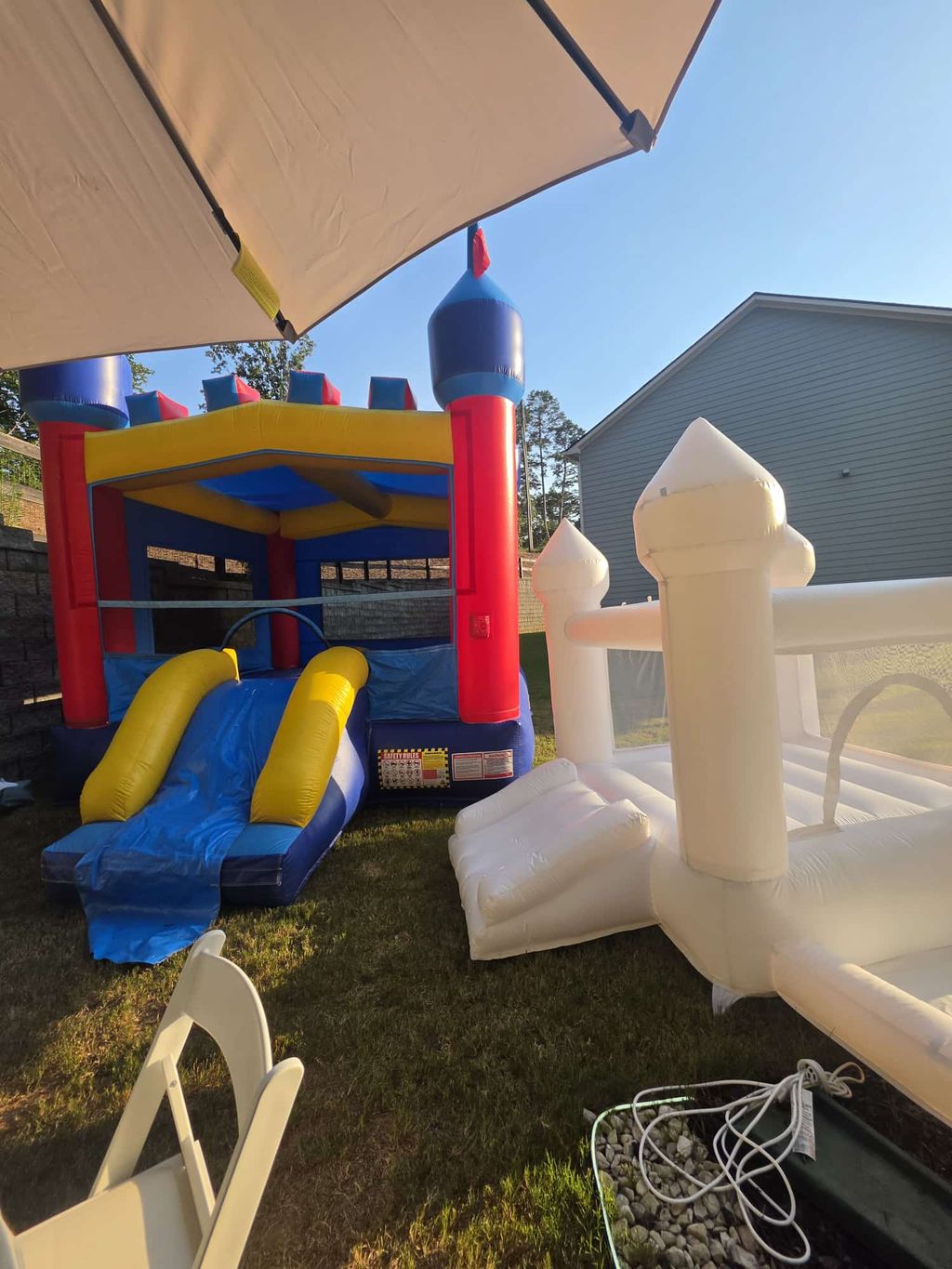
Once you have the seating numbers, think about the activities that will take place on the floor. A dinner service mainly needs a flat surface that keeps plates and glasses steady, so a smooth plywood or interlocking tile works well. If you plan to open a dance floor, choose a material that offers a bit of give to reduce fatigue, such as a foam‑backed vinyl roll that still resists tearing. For areas where children will run or bounce houses will be placed, a thicker, impact‑absorbing mat protects both the grass underneath and the equipment, while also providing a non‑slip surface for little feet.
Flooring Options for Different Surfaces
If your Jefferson backyard consists of natural grass, the primary goal is to protect the turf from compaction and to keep the tent stakes from slipping. A lightweight ground tarp combined with sandbags or water weights can hold the tent in place without penetrating the soil, while a roll‑out polyethylene mat adds a barrier against moisture. For harder surfaces such as concrete driveways or patio slabs, a thin foam underlayment followed by interlocking plastic tiles provides cushioning and prevents the tent frame from scratching the finish.
Before any flooring goes down, clear the area of rocks, sticks, and animal waste, then mow the grass to a uniform height of about two inches. Use a long level or a laser tool to check for slopes; if the ground deviates more than two inches over twenty feet, consider adding a shallow layer of compacted sand or gravel to create a flat plane. Mark the exact perimeter where the tent will sit, leave at least three feet of clearance around the edges for stake ropes and blower hoses, and ensure that any irrigation heads are turned off or covered to avoid accidental damage during setup.
Considering Weather and Rain Plan
Even though Jefferson enjoys mild springs, sudden showers can appear, especially in the late afternoon. Installing sidewalls on your tent not only blocks wind but also helps keep rain from blowing inside, preserving the flooring underneath. If you expect heavy rain, choose a flooring material that drains quickly, such as a perforated plastic grid that allows water to pass through while still offering a stable walking surface. Pair this with a slight slope away from the tent entrance so that puddles do not collect under the structure.
Check the local forecast at least forty‑eight hours before the event and again the morning of the setup. If the probability of precipitation exceeds thirty percent, have a rain‑date ready or be prepared to add sidewall panels and extra ground anchors. Communicate the plan to anyone helping with the setup so they know where to store the extra sidewall rolls and how to secure them quickly. Having a clear timeline—starting the ground prep at eight a.m., laying the flooring by ten a.m., and raising the tent by noon—gives you a buffer to address any weather‑related delays without rushing the final touches.
Drive Logistics and Delivery Timing
Our warehouse in Pendergrass, Georgia, is located just a short drive from Jefferson, making the trip typically under ten minutes under normal traffic conditions. The most common route takes you north on GA‑332, then east on Old Pendergrass Road, passing the landmarks of Traditions of Braselton before you reach the residential pockets near Jefferson High School. Knowing this short distance helps us schedule deliveries early in the morning, so the truck arrives while the air is still cool and the ground is firm.
We ask clients to provide the exact street address, city, state, and ZIP code at least twenty‑four hours before the scheduled delivery window. This information allows us to calculate the precise mileage and confirm whether the fall‑off point is within the free‑delivery zone or incurs a modest mileage charge. Once the address is verified, we send a confirmation text with the estimated arrival time and a contact number for the driver, ensuring that someone is on site to greet the truck and verify the load before it is unloaded.
Setting Up the Flooring Inside the Tent
Begin by unrolling the chosen flooring material across the cleared area, making sure the first piece aligns with the tent’s entrance edge. Interlocking plastic tiles snap together with a firm press, creating a seamless mat that can be walked on immediately. If you opt for plywood sheets, lay them in a staggered pattern, leaving a small gap between boards to allow for expansion, and secure each sheet with corrosion‑resistant screws that do not protrude above the surface. For foam‑backed vinyl rolls, pull the material tight, overlap the seams by a few inches, and tape them with a heavy‑duty adhesive designed for outdoor use.
After the flooring is in place, walk the entire surface to feel for any high spots or loose sections. Use a long straightedge or a laser level to verify that the floor stays within a quarter‑inch tolerance across the tent’s footprint. If you notice any shifting, add extra weight bags or sandbags along the perimeter to keep the edges from lifting when the tent walls are tensioned. Finally, sweep away any debris that may have accumulated during installation so that guests step onto a clean, even surface from the moment they enter.
Coordinating with Other Rentals: Tables, Chairs, Bounce Houses
Position the tables and chairs so that the legs sit flat on the flooring without wobbling. For rectangular tables, center them over the interlocking tiles or plywood to distribute weight evenly, and leave at least eighteen inches between the edge of the table and the nearest tent wall to allow guests to move comfortably. Chairs with padded seats, such as the Mainstays premium white resin folding chair, exert less pressure on the floor than metal‑frame alternatives, making them a good choice for grass‑based setups where you want to minimize indentations.
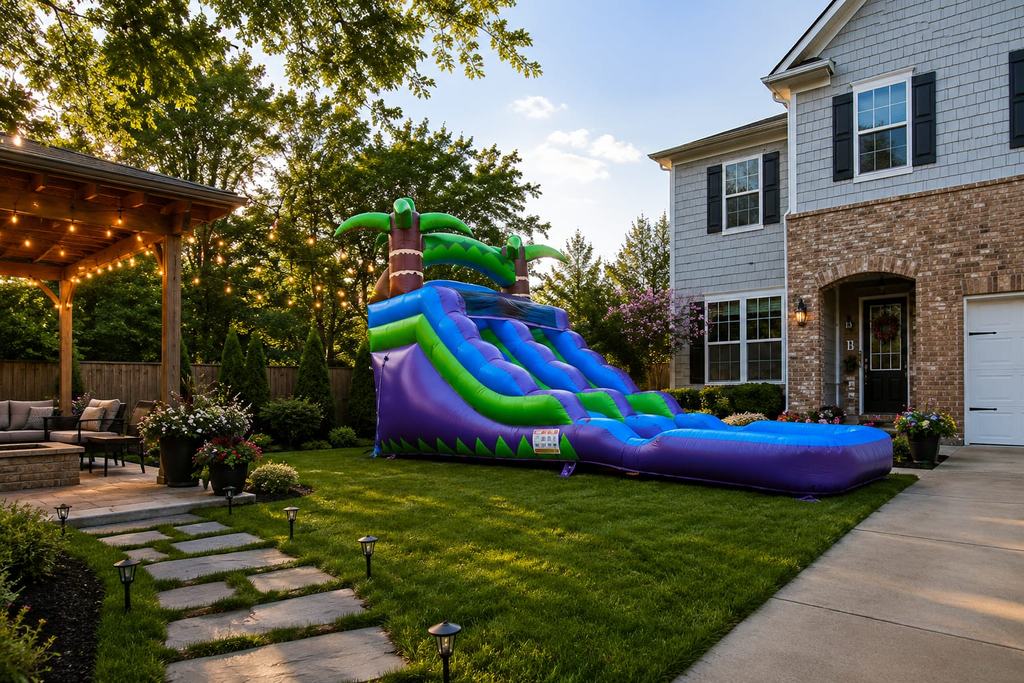
Bounce houses must never be placed underneath the tent canopy; they belong on the open lawn beside the structure where the blower has clear ventilation and the stakes have room to anchor. Measure the distance from the tent sidewall to the bounce house and ensure there is at least five feet of open space for children to exit safely. Verify that a grounded exterior outlet is within reach of the blower’s cord, or arrange for a generator that meets the 110‑volt requirement. After each use, inspect the blower intake for blockages and wipe down the vinyl surface to keep the equipment clean and ready for the next round of fun.
Final Checklist Before the Party Starts
Perform a thorough walk‑through of the tent interior just before guests arrive. Check that all sidewall straps are snug, that the tent poles are vertical, and that the flooring shows no signs of lifting or shifting. Verify that the entrance is unobstructed, that the lighting fixtures are securely fastened, and that any decorative elements such as lanterns or centerpieces sit flat on the surface without creating tripping hazards. Confirm that the electrical cords for sound equipment or lighting are routed along the edges and taped down to prevent accidental pulls.
Walk the perimeter outside the tent to make sure the ground stakes are fully driven, that any sandbags or water weights are in place, and that the drainage paths remain clear. Greet early arrivals with a quick reminder about where the food station, dance floor, and play area are located so they can flow naturally through the space. Keep a small repair kit on hand—extra tape, a few spare tiles, and a screwdriver—in case a section of flooring shifts during the event. With these final steps completed, you can focus on enjoying the celebration knowing the foundation beneath your tent is safe, stable, and suited to the activity you planned.
[[FAQ] What type of flooring works best for a dance floor in a backyard tent? :: A foam‑backed vinyl roll or interlocking plastic tiles with a slight give provide comfort for dancing while staying stable enough to keep the tent secure. Choose a surface that resists tearing and can be cleaned easily after the event. How do I protect my grass when using a tent and flooring setup? :: Lay a lightweight ground tarp or polyethylene mat under the flooring to shield the soil from compaction and moisture. Use sandbags or water weights instead of stakes when possible, and remove the flooring promptly after the party to let the turf recover. Can I use the same flooring for both a dinner area and a play zone? :: Yes, a durable interlocking tile system works well for both settings; simply add thicker impact‑absorbing mats in the play area where children will be active, while keeping the tiles smooth and level for dining tables and chairs. What should I do if the ground in my Jefferson backyard has a slight slope? :: If the slope exceeds two inches over twenty feet, spread a thin layer of compacted sand or gravel to level the area before laying flooring. Re‑check with a laser level to ensure the surface stays within a quarter‑inch tolerance across the tent footprint. How far in advance should I schedule the flooring delivery for a Jefferson event? :: Provide the exact address at least twenty‑four hours before the desired delivery window so we can confirm mileage, schedule the truck, and send you an estimated arrival time with a driver contact for on‑site verification. Is it safe to place a bounce house directly against the tent sidewall? :: No, bounce houses need open lawn space with at least five feet of clearance from the tent sidewall to allow safe exit, proper blower ventilation, and adequate room for stakes or weights. Always position them beside the tent, not underneath it.]]