
Understanding Soil Conditions in Jefferson Backyards
Jefferson, located in Jackson County, features a mix of soil compositions that range from loose sandy loam near the banks of the Mulberry River to denser clay‑rich patches found in older residential neighborhoods. When planning a tent installation, the first step is to evaluate the ground where the structure will sit. A simple probe test using a metal rod can reveal whether the soil penetrates easily or resists pressure. Sandy soils drain quickly but offer limited holding power for stakes, while clay soils retain moisture and can become slick after rain, affecting anchor stability. Knowing the specific type helps you decide which anchoring method will provide the most secure hold for your event.
In neighborhoods such as those off Old Pendergrass Road or around Traditions of Braselton, many homeowners report a top layer of topsoil over a compacted subsoil. This condition often requires a combination approach: using longer stakes for the upper layer and adding weight plates or sandbags for deeper stability. For events hosted near Jefferson High School, where playground fields may have been renovated with engineered fill, the soil tends to be more uniform and can accommodate standard augers. Taking a few minutes to assess the soil before the delivery truck arrives saves time on site and reduces the risk of sudden shifts during the celebration.
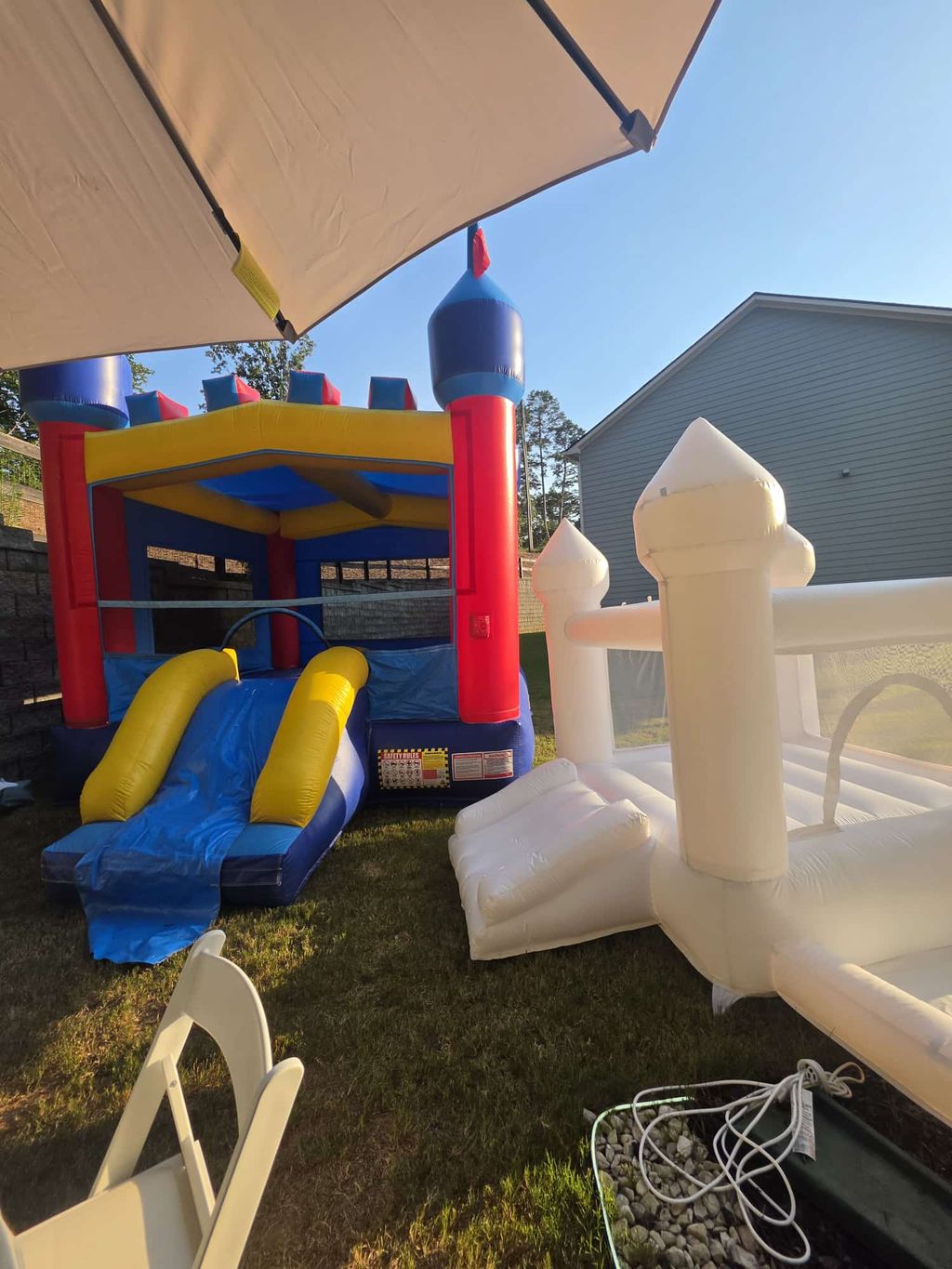
Tent Anchoring System Options for Sandy Soils
Sandy soils, common in the eastern parts of Jefferson near the river floodplain, drain well but lack the cohesion needed for traditional steel stakes to grip effectively. In these conditions, a tent anchoring system that relies on surface area rather than depth works best. Wide‑base plates made of galvanized steel or heavy‑duty plastic distribute the load over a larger area, preventing the anchor from pulling out under wind load. Pairing these plates with ratchet straps that connect to the tent’s frame creates a tensioned network that resists lateral movement.
Another effective method for sandy ground is the use of auger‑style anchors equipped with wide flights. These screws penetrate the loose material and create a helical hold that increases resistance as tension is applied. For a typical 20×20 foot tent accommodating up to 40 seated guests, four auger anchors placed at each corner, supplemented by two side‑plate systems along the longer walls, provide a balanced setup. When the event is scheduled for a daytime celebration, the anchoring system can be inspected quickly before guests arrive, ensuring the tent remains firm even if a sudden gust develops.
Tent Anchoring System Options for Clay‑Rich Soils
Clay‑dense areas, often found in the western sections of Jefferson where older homes sit on red‑tinted earth, present a different challenge. When wet, clay becomes slick and can cause standard stakes to slip outward. Conversely, when dry, it hardens and can make driving stakes difficult without proper equipment. A tent anchoring system designed for clay typically combines deep penetration with mechanical locking. Heavy‑duty steel stakes with a twisted or barbed shaft bite into the compacted soil and resist pull‑out forces.
For added security, many installers embed concrete footings or use ground spikes that are pre‑filled with gravel. This technique creates a solid mass that the tent’s straps can attach to, effectively bypassing the problematic surface layer. In a scenario where a 30×60 foot clear‑span tent is erected for a quinceañera hosting up to 150 guests, placing six deep‑penetrating stakes along the perimeter and adding two ground spikes at each midpoint of the long sides yields a reliable hold. After installation, a quick visual check of the straps for any slack ensures the system remains taut throughout the event.
Combining Anchors for Mixed Soil Profiles
Many Jefferson properties exhibit a transition zone where sandy topsoil gives way to a firmer subsoil at a depth of six to eight inches. In these mixed profiles, a hybrid tent anchoring system offers the best outcome. Start by installing auger anchors that reach past the loose layer into the more stable strata beneath. Then, supplement with surface plates that sit on the topsoil to spread any uplift forces caused by wind. This combination leverages the holding power of depth while addressing the potential for surface shifting.
Consider a backyard near Jefferson High School where the soil test reveals eight inches of sandy loam over a compacted clay base. For a 20×30 foot tent designed to host 48 seated guests, four auger anchors driven to a depth of ten inches secure the frame, while four steel plates positioned at each corner and connected via ratchet straps handle any lateral load. The installation crew typically completes this setup within ninety minutes, allowing ample time for décor placement and a final safety walk‑through before guests arrive.
Drive Logistics and Timeline from the Pendergrass Warehouse
DecoEvent ATL’s warehouse in Pendergrass, Georgia, sits roughly ten minutes from central Jefferson under normal traffic conditions. The route primarily follows GA‑332 north, then turns onto Old Pendergrass Road, which provides direct access to many residential streets in the area. When scheduling a delivery, the logistics team factors in the typical morning commute and school‑zone fluctuations around Jefferson High School to arrive within the agreed window. This proximity allows for a rapid response if any last‑minute adjustments to the tent anchoring system are needed.
On the day of installation, the crew unloads the tent components, anchoring hardware, and any additional equipment such as blowers for bounce houses or lighting rigs. A standard timeline for a mid‑size event begins with a site survey at 8:30 a.m., followed by soil probing and stake placement by 9:15 a.m. The tent frame is erected by 10:00 a.m., and the anchoring system is tensioned and inspected by 10:45 a.m. This schedule leaves a comfortable buffer for décor setup, vendor arrivals, and a final walk‑through with the host before the guest count arrives at the scheduled start time.
Rain Plan and Contingency Measures
Even with a well‑chosen tent anchoring system, weather can shift quickly in North Georgia, particularly during the spring and summer months. DecoEvent ATL always prepares a rain plan that includes sidewalls, gutter extensions, and additional ground straps to prevent water pooling near the anchor points. If the forecast calls for heavy rain, the crew may increase the number of ground plates or add weight bags filled with sand or gravel to counteract any uplift caused by wind‑driven rain.
For events in Jefferson where the ground may become saturated, such as those held in low‑lying yards near the Mulberry River floodplain, the anchoring system is inspected after any significant precipitation. The crew checks for any signs of stake movement or plate shift and re‑tightens straps as necessary. This proactive approach ensures that the tent remains stable and safe, allowing the celebration to continue without interruption, regardless of brief showers or prolonged drizzle.
Guest‑Count Math and Yard Preparation Tips
Understanding how many guests your space can accommodate helps determine the appropriate tent size and, consequently, the anchoring requirements. A 10×10 foot tent typically supports six to eight seated guests or eight to ten standing guests. A 10×20 foot tent fits sixteen to twenty seated guests or up to twenty‑five cocktail‑style attendees. For a 20×20 foot tent, expect thirty‑two to forty seated guests. Using these figures, a host planning a birthday party for fifty guests might select a 20×30 foot tent, which seats forty‑eight to sixty individuals comfortably.
Before the anchoring system is installed, clear the selected area of debris, rocks, and any loose branches that could interfere with stake penetration. Mark the perimeter with spray paint or chalk to visualize the tent footprint. If the yard includes a slope, note the direction of grade and consider placing additional anchors on the higher side to counteract any tendency for the tent to slide downward. These preparation steps, combined with a suitable tent anchoring system, create a solid foundation for a successful event in Jefferson, Jackson County.
Frequently asked questions
What is the best tent anchoring system for sandy soil in Jefferson?
For sandy soil, use wide‑base plates combined with auger‑style anchors that penetrate past the loose layer, creating a helical hold that resists pull‑out forces under wind load.
How do I know if my yard has clay‑rich soil before the tent install?
Perform a simple probe test: push a metal rod into the ground; if it meets firm resistance and the soil feels sticky when moist, you likely have clay‑rich substrate needing deeper stakes.
Can I use the same anchoring system for both a bounce house and a tent?
Yes, the same ground stakes or plates can secure both, but ensure the bounce house blower has a separate grounded outlet and that anchors are placed outside the tent perimeter to avoid interference.
How long does it take to set up the tent anchoring system for a 20×20 foot tent?
Typically, the crew completes probing, stake placement, and tensioning within forty‑five to sixty minutes, depending on soil condition and site accessibility.
What should I do if rain is forecast after the tent is anchored?
Add sidewalls, increase ground strap tension, and consider placing sandbags or weight plates on the anchor points to counteract uplift from wind‑driven rain.