
Understanding Tent Sidewall Options
When planning an outdoor event in Jefferson, Jackson County, the first step is to familiarize yourself with the different tent sidewall options available. Sidewalls come in solid fabric, mesh, clear vinyl, and combinations that allow you to balance privacy, airflow, and visibility. Solid fabric sidewalls provide the highest level of wind protection and seclusion, making them ideal for events where you want to shield guests from prying eyes or strong breezes. Mesh sidewalls, on the other hand, offer breathability while still defining the perimeter, which can be useful for daytime gatherings under the sun. Clear vinyl sidewalls let natural light flow through while still blocking wind and rain, creating a bright yet sheltered atmosphere. Knowing these basic categories helps you match the sidewall choice to the specific needs of your celebration, whether it is a quinceañera, a birthday party, or a community gathering.
In Jefferson, many residents host events in backyards off Old Pendergrass Road or in the neighborhoods surrounding Jefferson High School. These locations often have mature trees, open lawns, and varying elevations that affect how wind moves through the space. By examining the typical weather patterns for the season—such as occasional afternoon showers in spring or cooler evenings in fall—you can anticipate whether you need solid protection, a breathable mesh, or a transparent barrier. Additionally, consider the guest count; a larger crowd may benefit from higher sidewalls that prevent wind from lifting the tent edges, while a smaller, intimate event might prioritize clear sidewalls to maintain an open feel. This foundational understanding sets the stage for a more detailed selection process tailored to your Jefferson venue.
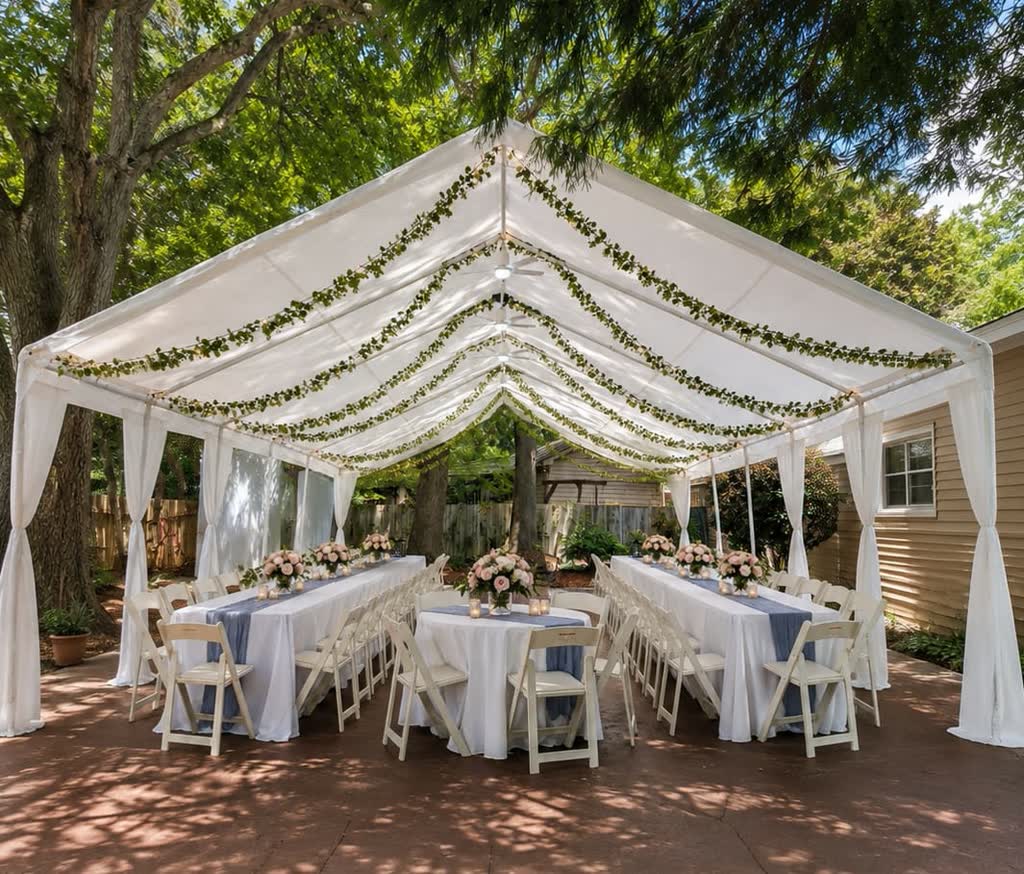
Assessing Your Event Needs in Jefferson
Before deciding on a sidewall type, take a moment to outline the core requirements of your event. Start with the expected guest count; for example, a gathering of 80 guests will need different spatial considerations than a party of 150. In Jefferson, typical backyard sizes range from 20 by 30 feet to larger lots exceeding 40 by 60 feet, especially in areas like the Traditions of Braselton subdivision. Measure your available space and note any permanent fixtures such as patios, garden beds, or swing sets that could interfere with sidewall placement. This measurement will inform not only the tent size but also the height and length of sidewalls you can comfortably install without obstructing walkways or seating areas.
Next, think about the event’s timeline and activities. If you plan a ceremony followed by a reception, you might want sidewalls that can be opened or closed easily to transition between phases. For a kids’ birthday party with a bounce house nearby, solid sidewalls can help keep the play area contained and reduce wind interference with the inflatable. For a more formal affair such as an anniversary dinner, clear vinyl sidewalls can preserve the view of twinkling lights or a sunset while still providing a barrier against cooler night air. By aligning sidewall properties with the flow of your event, you ensure that the tent enhances rather than hinders the guest experience.
Matching Sidewall Materials to Weather Conditions
Weather protection is a primary reason to add sidewalls to a tent, and the material you choose directly influences performance. Solid polyester or nylon sidewalls coated with a waterproof layer resist rain and wind effectively, making them suitable for Jefferson’s unpredictable spring storms or occasional summer thunderstorms. These materials also provide UV protection, which helps keep the interior cooler during bright daytime events. When selecting solid sidewalls, look for reinforced seams and sturdy grommets that can withstand tension from wind loads, especially if your site is exposed to open fields near Jefferson High School.
If your event occurs during mild evenings in early fall, mesh sidewalls may be preferable because they allow air circulation while still marking the boundary. Mesh reduces the risk of the tent acting like a sail in gusty conditions, which can be a concern in the gently rolling terrain around Old Pendergrass Road. Clear vinyl sidewalls offer a middle ground: they block wind and rain while letting light in, which can be valuable for events that run into the evening and rely on ambient lighting. Always verify that the sidewall material is compatible with your tent frame’s attachment system; most commercial tents from DecoEvent ATL use a track or knot system that accommodates each of these materials securely.
Privacy vs. Visibility: Choosing the Right Height and Style
The height of your sidewalls influences both privacy and the visual impact of your event space. Standard sidewall heights range from 6 to 8 feet, with taller options providing greater seclusion from neighboring properties or passing traffic. In Jefferson’s residential neighborhoods, a 6‑foot sidewall often suffices to block views from adjacent yards while still allowing an open feel inside the tent. If your event is near a busy street or you desire a more exclusive atmosphere, opting for 7‑ or 8‑foot sidewalls creates a stronger visual barrier. Keep in mind that taller sidewalls increase wind load, so ensure your tent frame is rated for the added pressure, especially if you anticipate gusty conditions.
Style choices also affect how the sidewalls interact with your decor. Plain white or ivory sidewalls serve as a neutral backdrop for balloon arches, floral draping, or custom lighting. Some clients prefer sidewalls with a subtle texture or a muted pattern that complements a theme without overwhelming it. For events that feature a photo booth or a backdrop, clear vinyl sidewalls can be paired with indoor draping to create a layered look that maintains visibility of the décor while still protecting against the elements. Discussing these aesthetic options with your provider early ensures that the sidewall selection enhances the overall design rather than clashing with it.
Installation Tips for Backyards Off Old Pendergrass Road
Installing sidewalls correctly begins with proper tent anchoring. In Jefferson’s clay‑loam soils, stakes or sandbags work well to secure the frame, but you should verify the ground condition on the day of setup. If the backyard has recent rain, the soil may be softer, requiring longer stakes or additional weight to prevent shifting. Before raising the tent, lay out a ground tarp to protect the fabric from debris and to provide a clean surface for the sidewalls to attach. Once the frame is upright and level, attach the sidewall panels using the supplied track or rope system, making sure each panel is evenly tensioned to avoid sagging or gaps that could let wind in.
For sidewalls that include windows or clear panels, take care to align them so that sightlines remain unobstructed for guests who wish to see outside. If you are using mesh sidewalls, check that the mesh is taut but not overstretched, as excessive tension can cause tearing. After installation, walk the perimeter and give each sidewall a gentle tug to confirm it is securely fastened. In areas with mature trees, such as those found near the Traditions of Braselton community, be aware of low‑hanging branches that could rub against the fabric; trimming or tying back branches ahead of time prevents damage. These practical steps help ensure that the sidewalls stay in place throughout the event, providing consistent privacy and weather protection.
Coordinating with Local Vendors and Drive Logistics from Pendergrass
DecoEvent ATL’s warehouse is located in Pendergrass, Georgia, roughly a ten‑minute drive to Jefferson via GA‑332 and Old Pendergrass Road. When planning your event, share the exact address—including street number, city, state, and ZIP code—so the delivery team can calculate the precise mileage and confirm any applicable delivery fees. Because the service radius extends up to 40 miles, Jefferson falls comfortably within the free‑delivery zone for distances under 15 miles, which simplifies logistics and keeps the schedule predictable. Confirm the delivery window well in advance, especially if you need the tent and sidewalls set up before a specific start time, such as a 4 pm ceremony.
If you are arranging additional services like a taquiza catering station, bounce house, or sound system, inform the provider of the sidewall choice early so they can plan equipment placement accordingly. For example, a solid sidewall may limit where a speaker can be positioned for optimal sound coverage, while a clear vinyl sidewall allows more flexibility. Providing a simple site sketch that marks the tent location, sidewall orientation, power outlets, and any obstacles such as garden beds or swing sets helps the crew execute the setup efficiently. Clear communication about drive logistics and site readiness reduces the chance of delays on the day of the event.
Rain Plan and Emergency Procedures for Jefferson Events
Even with the best sidewall selection, it is wise to have a rain plan in place for outdoor events in Jefferson. The region experiences occasional afternoon thunderstorms, particularly in late spring and summer, which can bring heavy rain and gusty winds. If the forecast calls for precipitation, consider adding sidewalls to all sides of the tent, or at least the windward side, to create a fully enclosed space. Solid sidewalls combined with a well‑anchored frame provide the most reliable barrier against water ingress. Keep extra sandbags or weights on hand to reinforce the anchoring if wind picks up unexpectedly.
In the event that conditions become unsafe—such as sustained winds exceeding 20 mph or lightning observed within a 10‑mile radius—have a plan to either delay the start, move activities under a permanent shelter if available, or reschedule to another day. DecoEvent ATL recommends monitoring local weather updates through reliable apps or the National Weather Service and staying in touch with the delivery team via phone or WhatsApp at (678) 815‑8774. Having a clear rain plan communicated to guests ahead of time, perhaps through a note on the invitation, ensures everyone knows what to expect and can act quickly if the weather changes.
Final Checklist and Timeline for a Successful Setup
To bring everything together, create a concise checklist that walks you through each step from planning to takedown. Begin two to three weeks before the event by confirming the guest count, finalizing the tent size, and selecting the sidewall material based on weather forecasts and privacy needs. One week out, verify the delivery address, confirm the exact set‑up time, and ensure that any required power outlets or water sources are accessible for additional equipment like bounce blowers or catering warmers. On the day before the event, do a quick walk‑through of the yard to clear any debris, trim low branches, and mark the tent footprint with spray paint or chalk.
On the event day, aim to have the delivery crew arrive at least 90 minutes before the scheduled start time. This allows for frame erection, sidewall attachment, and a final inspection of tension and alignment. After the sidewalls are secured, add any décor such as draping, lighting, or centerpieces, and run a quick sound check if audio equipment is being used. Once the event concludes, reverse the process: remove décor, detach sidewalls, collapse the frame, and load everything back onto the truck. Following this timeline helps ensure that the tent and sidewall options perform as intended, giving you peace of mind and a enjoyable experience for your guests in Jefferson, Jackson County.
Frequently asked questions
What are the main types of tent sidewall options available for events in Jefferson?
The primary sidewall types are solid fabric, mesh, clear vinyl, and hybrid combinations. Solid fabric offers maximum wind blockage and privacy, mesh provides airflow while defining the perimeter, clear vinyl lets light through while shielding from rain and wind, and hybrids combine features such as a solid lower panel with a clear upper section for balanced performance.
How do I decide whether to use solid or mesh sidewalls for my Jefferson backyard party?
Choose solid sidewalls when you need strong wind protection, privacy from neighbors, or a fully enclosed space for cooler evenings. Opt for mesh sidewalls when you want breathability, reduced wind sail effect, and a lighter feel for daytime events under the sun, especially in areas with gentle breezes around Old Pendergrass Road.
Can clear vinyl sidewalls be used with decorative draping or lighting inside the tent?
Yes, clear vinyl sidewalls work well with interior draping, string lights, or chandeliers because they allow daylight to enter while still blocking wind and rain. You can pair them with fabric draping along the frame or hang lighting from the ceiling to create an atmospheric look without sacrificing visibility of the décor.
What height of sidewall is best for a property near Jefferson High School where wind can be a concern?
A sidewall height of 6 to 7 feet usually provides sufficient privacy and wind protection for lots near Jefferson High School while keeping the wind load manageable. If your site is especially exposed, consider 7‑foot sidewalls with extra anchoring, but always verify that the tent frame is rated for the increased load.
How far in advance should I confirm the delivery address and sidewall choice for a Jefferson event?
Provide the exact street address, city, state, and ZIP code at least one week before the event so the delivery team can calculate mileage, confirm any fees, and schedule the arrival. Finalizing the sidewall choice two weeks ahead allows time to order the correct materials and prepare the site.
Is there a rain plan that involves adjusting sidewall options during an event?
If rain develops, you can add solid sidewalls to any open sides or close mesh panels with additional zip‑on covers if available. Having extra solid sidewall panels on hand lets you quickly seal the tent, increasing protection while maintaining the frame’s integrity until the weather improves or the event concludes.