
Understanding the Photo Booth Concept for Your Outdoor Event
When planning a celebration in Jefferson, Jackson County, a photo booth offers a fun way for guests to capture memories while adding a focal point to your outdoor setup. Positioning the booth inside a tent protects equipment from sun, wind, or unexpected drizzle, while still keeping the atmosphere open and festive. By integrating the booth into a larger tent layout, you create a seamless flow between dining, dancing, and picture‑taking areas, ensuring guests move naturally from one activity to the next without crowding.
A well‑designed photo booth also serves as a memory station where guests can leave signed notes, place props in a scrapbook, or view a slideshow of images taken during the event. Because DecoEvent ATL specializes in outdoor and at‑home events only, the tent, tables, chairs, and décor you choose will all be suited for grass or concrete surfaces common in Jefferson backyards. Thinking about the booth early in the planning process lets you allocate the right amount of space, select appropriate lighting, and coordinate delivery times with the warehouse located just ten minutes away in Pendergrass.
Measuring Your Jefferson Backyard for Tent Placement
Start by walking the area where you envision the tent and booth, noting any trees, garden beds, or slopes that could affect placement. In Jefferson, many homes off Old Pendergrass Road feature level lawns that are ideal for a 20×20 or 20×30 foot tent, while properties near Traditions of Braselton may have slight gradients that require staking or weighted anchors. Use a measuring tape or a laser distance tool to capture the length and width of the usable yard, then subtract at least three feet on each side for clearance around the tent walls and for guest traffic.
Next, consider the proximity to utilities: a grounded exterior outlet is essential for the blower that powers bounce houses or for any LED tent lighting you might add. If the nearest outlet is farther than 25 feet, a generator may be required, which DecoEvent ATL can coordinate during the site check. Remember that the warehouse in Pendergrass is within a ten‑minute drive, so delivery will be free for locations within the 0‑15 mile radius, which covers most of Jefferson and its surrounding neighborhoods. Record the exact street address, city, state, and ZIP code to confirm the delivery zone and to allow the team to plan the most efficient route.
Selecting the Ideal Tent Size for a Photo Booth and Memory Station
The tent size you choose must accommodate both the photo booth station and the surrounding guest flow. For a booth that includes a backdrop, a small table for props, and a chair for the attendant, a 10×10 foot area is usually sufficient. However, to avoid a cramped feel, many hosts in Jefferson opt for a 10×20 foot section dedicated to the booth and memory station, leaving the remainder of the tent for dining or dancing. This layout also provides space for a welcome mirror or a guest‑sign‑in album without interfering with the booth’s operation.
If your guest count is between 50 and 80 people, a 20×20 foot tent offers roughly 32‑40 seated guests or up to 50 cocktail‑style guests, leaving plenty of room for a dedicated booth zone. For larger gatherings of 100‑150 guests, a 20×30 foot tent provides 48‑60 seated guests, and you can still carve out a 10×20 booth area within it. Always verify the exact dimensions with the DecoEvent ATL team during the consultation, as they will confirm that the chosen tent frame can support the intended layout without compromising stability on grass or concrete.
Organizing Tables, Chairs, and Flow Around the Booth
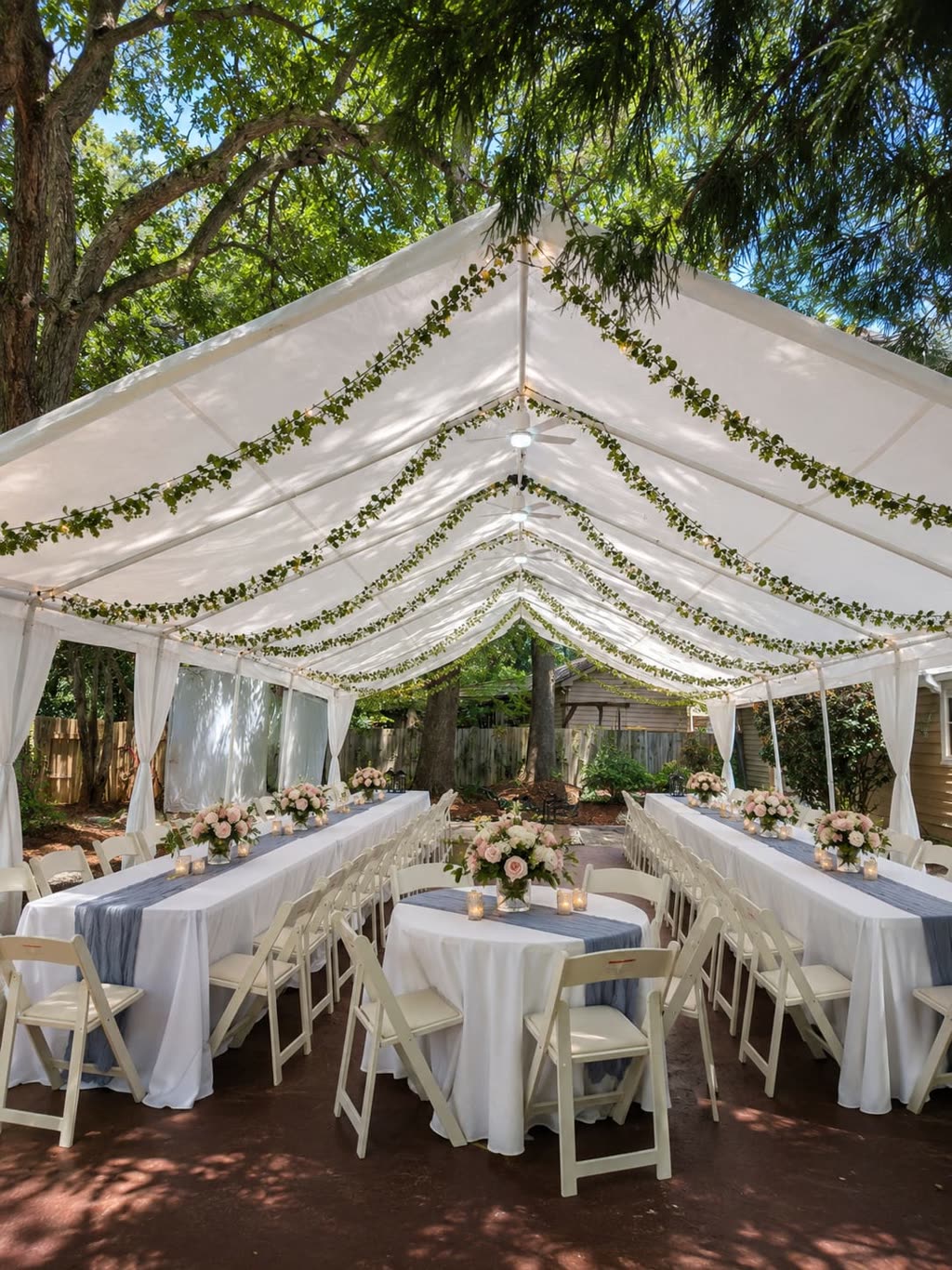
Arrange seating so that guests can easily approach the photo booth without crossing paths with those heading to the food area or dance floor. A common pattern in Jefferson backyards is to place rectangular tables along the perimeter of the tent, leaving a central aisle that leads directly to the booth. For example, using 6‑foot rectangular tables (seating 6‑8 guests each) along two opposite sides creates a clear corridor down the middle, which can be widened to five feet for smooth traffic.
Consider adding a few cocktail tables (30‑inch Flash Furniture) near the booth entrance; these provide a spot for guests to place drinks while they wait for their turn. Because cocktail tables accommodate 2‑4 standing guests, they help keep the line moving and reduce congestion. Keep the walkway between the booth and the nearest seating area at least four feet wide to allow elderly guests or those with mobility aids to pass comfortably. This thoughtful flow enhances the overall guest experience and prevents bottlenecks during peak photo‑taking moments.
Designing the Photo Booth Station with Props and Backdrops
The photo booth itself should feel inviting and reflect the theme of your event. Start with a backdrop that complements your color scheme—options include solid‑color draping, patterned fabric, or a custom‑printed banner that features the event’s title or date. In Jefferson, many hosts choose a rustic wood‑grain backdrop for backyard barbecues or a shimmering sequin curtain for quinceañeras, both of which work well under tent lighting.
Place a small table or a sturdy easel beside the backdrop to hold props such as hats, glasses, signs, and boas. Ensure the table is stable on the tent floor; if the ground is soft grass, use weighted bases or sandbags to prevent tipping. Provide a chair for the attendant who can assist guests with props and encourage participation. Remember to keep the booth’s interior height at least seven feet so that guests of all sizes can pose comfortably without hitting the frame.
Adding Lighting, Draping, and Decorative Touches
Lighting transforms a simple booth into a memorable focal point. LED tent lighting, which illuminates the full tent structure, provides even, soft light that reduces harsh shadows on faces. Bistro strings, on the other hand, create a warm, decorative glow above tables and can be draped around the booth entrance for a cozy ambiance. DecoEvent ATL advises using LED lighting as an ambience enhancer rather than a fix for low light, especially for daytime events where natural sunlight already provides ample illumination.
Consider adding sidewalls to the tent if your event runs into the evening or if there is a chance of wind. Sidewalls not only protect the booth from gusts but also help retain any heating elements you might use for cooler months. Draping the sidewalls with fabric that matches your backdrop adds a cohesive look. Finally, place a welcome mirror with custom wording near the booth entrance—this complimentary detail encourages guests to check their appearance before stepping into the photo area and serves as a charming keepsake.
Preparing for Weather, Timing, and Day‑of Logistics
Jefferson’s climate can shift quickly, so having a rain plan is essential. DecoEvent ATL recommends reserving sidewalls for the tent and keeping the blower for any bounce houses under a covered area to protect it from moisture. If the forecast shows a high chance of rain, discuss moving the event to an alternative date; the company allows date changes when weather makes setup unsafe, and the deposit secures the new date once confirmed.
On the day of the event, aim for the tent delivery to arrive at least two hours before the scheduled start time. This window allows the team to anchor the tent securely, set up the booth, arrange tables and chairs, and run a quick sound check if you have booked audio equipment. Provide the exact address, including any landmarks such as “backyard off Old Pendergrass Road” or “near Jefferson High School,” so the driver can navigate the most efficient route from the Pendergrass warehouse. Confirm the delivery window with the team the day before, and ensure a responsible adult is on site to oversee the setup and to answer any questions about power sources or site access.
Final Walk‑Through and Coordination with DecoEvent ATL
Before guests arrive, walk through the tent layout with the event coordinator or a trusted friend. Verify that the photo booth is easily visible, that the line to the booth does not cross any high‑traffic areas like the food buffet or dance floor, and that all cords for lighting or blowers are safely taped down or covered. Check that the guest‑sign‑in album, welcome mirror, and any printed props are in place and that the attendant knows how to assist guests with the equipment.
After the event, the breakdown process follows the reverse of the setup: tables and chairs are folded, the tent is carefully removed, and all equipment is loaded back onto the truck for return to the Pendergrass warehouse. DecoEvent ATL will handle the takedown, leaving your Jefferson backyard clean and ready for its next use. By following these steps, you ensure that the photo booth and memory station become a highlight of your celebration, providing lasting memories for you and your guests.
Frequently asked questions
How far in advance should I book the tent and photo booth setup for a Jefferson event?
It is best to reach out at least four to six weeks before your desired date, especially for weekend events from spring through fall, as inventory tends to fill quickly. Early contact allows DecoEvent ATL to confirm availability, schedule a site visit, and secure your date with a deposit.
What information do I need to provide for a precise quote?
You will need to share your full name, exact event address (street, city, state, ZIP), event date and start time, phone or WhatsApp number, email address, and the exact guest count. Providing the city and ZIP lets the team confirm delivery fees and ensure the location is within the 40‑mile service radius.
Can the photo booth be placed under a different tent than the main dining area?
Yes, you can opt for a second, smaller tent dedicated solely to the booth and memory station, such as a 10×20 foot unit, which keeps the booth separate while still benefiting from delivery and setup services. This arrangement works well for larger events where flow and space planning are critical.
Is a generator required for the photo booth lighting or bounce house blower?
A generator is only needed if there is no grounded exterior outlet within reach of the setup area. DecoEvent ATL will check the distance to the nearest outlet during the site consultation and advise whether a generator is necessary, handling the logistics if so.
How do sidewalls affect the photo booth experience during cooler evenings?
Sidewalls help block wind and retain any ambient heat, making the booth more comfortable for guests and protecting equipment from gusts. They can be added as an upgrade and are especially useful for events that run into the evening when temperatures may drop.
What happens if the weather turns bad on the day of my event?
If rain or strong winds make the setup unsafe, DecoEvent ATL can assist with rescheduling the event to a later date. The deposit secures the new date once both parties agree, and the team will work with you to move the tent, booth, and other rentals accordingly.