
Understanding the Silent Disco Concept
A silent disco replaces traditional speakers with wireless headphones, allowing guests to enjoy music at their preferred volume while keeping noise levels low for neighbors. This format is especially valuable in residential areas of Jefferson, Jackson County, where backyards off Old Pendergrass Road and the Traditions of Braselton subdivision often have close proximity to other homes. By containing sound within the headphone signal, you can host a lively dance party without violating local noise ordinances or disturbing early‑morning routines. The key to success lies in designing a tent layout that supports clear audio transmission, efficient headphone distribution, and smooth movement across the dance floor.
When planning a silent disco tent layout, start by visualizing the guest experience from arrival to departure. Consider how attendees will check in, receive headphones, move to the dancing area, and exit after the event. In Jefferson’s suburban neighborhoods, many properties feature mature trees, sloped lawns, or limited driveway width, all of which affect tent placement and traffic flow. Mapping these elements early helps you avoid last‑minute adjustments and ensures the event feels seamless for hosts and guests alike.

Planning Guest Count and Space Requirements in Jefferson
Begin by determining the exact number of attendees you expect. For a silent disco, each guest needs roughly 6 square feet of personal space on the dance floor to move comfortably without collisions. If you anticipate 80 guests, multiply 80 by 6 to get 480 square feet required for dancing alone. Add additional area for headphone distribution tables, a small lounge for guests who want to sit, and clearance around the tent walls for safe entry and exit. In Jefferson’s typical lot sizes—often ranging from 0.2 to 0.5 acres—this calculation helps you decide whether a 20×20 tent (400 sq ft) or a larger 20×30 tent (600 sq ft) is more appropriate.
Local geography also influences spacing. Properties near Jefferson High School may have narrower side yards due to fencing or utility easements, while homes along Old Pendergrass Road often enjoy wider, flat lawns suitable for bigger tents. Measure the usable yard area, subtract any permanent structures like sheds or pools, and verify that the chosen tent footprint leaves at least three feet of clearance on all sides for staking and guy lines. This precaution protects both the tent integrity and the surrounding landscaping during setup and takedown.
Selecting the Right Tent Size and Configuration
Choose a tent that matches your calculated space needs while allowing flexibility for layout adjustments. For guest counts between 50 and 100, a 20×30 tent provides ample room for a central dance floor, headphone stations, and a peripheral seating zone. If you expect fewer than 50 guests, a 20×20 tent can still work, especially when you allocate a smaller dance area and use sidewalls to create defined zones. Remember that the tent’s interior height matters for comfort; most standard pole tents offer at least 8 feet of clearance, sufficient for guests to move freely while wearing headphones.
Configuration options include clear‑span frames or traditional pole tents. Clear‑span designs eliminate interior poles, giving you an unobstructed floor plan ideal for a silent disco where you want open sightlines for DJ equipment and headphone dispensers. In Jefferson’s residential settings, clear‑span tents are also easier to anchor on grass or compacted soil without damaging underground utilities. Discuss the ground conditions with your rental provider—many homes in the Traditions of Braselton subdivision have compacted clay that supports stakes well, whereas sandy patches near riverbeds may require weighted sandbags.
Arranging Sound Isolation and Headphone Distribution Zones
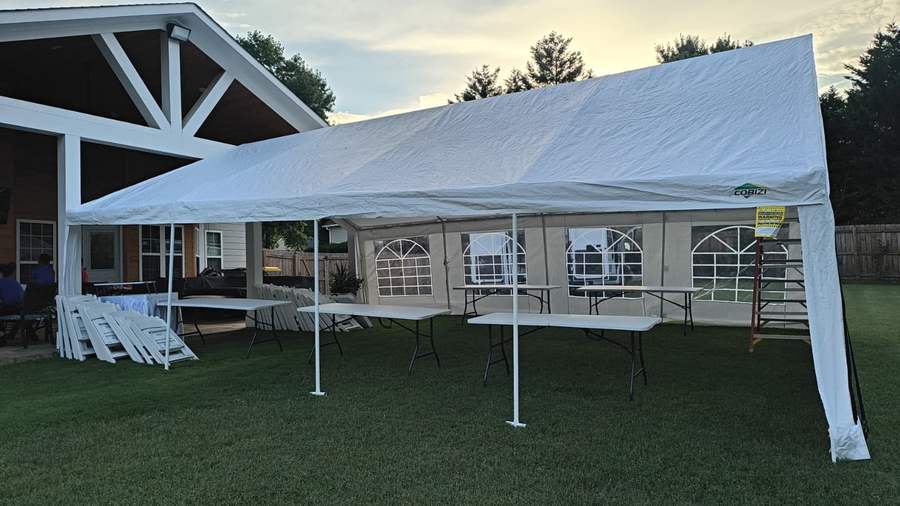
Although the music is wireless, you still need to manage the flow of headphones to prevent bottlenecks. Place the headphone distribution table near the tent entrance but slightly offset from the main walkway so guests can pick up their devices without crossing the dance path. A 6‑foot rectangular table works well for stacking headphones, attaching chargers, and providing a small sign‑in sheet. Ensure the table is on a stable surface—use a piece of plywood or a portable floor panel if the grass is soft after rain.
Sound isolation in a silent disco context refers to containing any ambient noise from the DJ equipment or crowd chatter. Position the DJ booth at least two feet away from the tent walls to reduce vibration transfer through the fabric. Use acoustic foam panels or heavy drapes on the interior walls behind the booth to absorb any stray sound that might leak out. In Jefferson’s neighborhoods, where homes may be as close as 15 feet from the property line, these measures help keep the overall decibel level low enough to respect quiet‑hour policies while still delivering an immersive experience through the headphones.
Designing Dance Floor Flow and Traffic Patterns
Lay out the dance floor as a central rectangle or oval, leaving at least three feet of clearance between the edge of the floor and the tent walls. This buffer prevents guests from accidentally bumping into the fabric while dancing and allows space for decorative elements like uplighting or paper lanterns. For a 20×30 tent, a 12×20 dance floor leaves room on either side for headphone tables, a small lounge with cocktail tables, and a side‑wall area for coats or shoes. Sketch the layout on graph paper or a digital tool before marking the ground with spray chalk or flour.
Consider the direction of foot traffic. Guests typically enter, collect headphones, move to the dance floor, possibly visit a refreshment station, and then exit. Create a one‑way loop if space permits: entrance → headphone table → dance floor → refreshment → exit. This reduces cross‑traffic and makes the event feel more organized. In Jefferson’s suburban backyards, where mature oak trees may create natural barriers, use those features to your advantage by aligning the flow around them rather than cutting through root zones.
Preparing the Yard: Ground, Power, and Access Considerations
Before the tent arrives, inspect the yard for level ground, drainage, and any hidden obstacles. Use a long board or laser level to check for slopes greater than two degrees; if present, consider adding ground pads or adjustable foot plates to the tent anchors to maintain stability. In areas around Jefferson High School, where irrigation systems may run just beneath the surface, mark any sprinkler heads or valve boxes to avoid damaging them during staking.
Power requirements for a silent disco are modest but essential. You’ll need electricity for the DJ mixer, headphone chargers, and any lighting such as LED tent lights or bistro strings. A single 20‑amp circuit is usually sufficient; however, verify that the home’s exterior outlet is grounded and capable of handling the load. If the property lacks an accessible outlet, discuss a quiet generator option with your provider—choose an inverter model that runs under 60 decibels to maintain the low‑noise atmosphere. Keep the generator at least 10 feet from the tent and direct exhaust away from guest areas.
Weather Contingency and Rain Plan for Outdoor Events
Even with a tent, rain can affect guest comfort and equipment safety. Sidewalls are the most effective upgrade for wind protection and moisture deflection; installing two closed sides (windward and leeward) creates a barrier while still allowing ventilation through the open ends. In Jefferson’s climate, sudden afternoon showers are common in spring and early fall, so having sidewalls ready to deploy within 15 minutes can save the event. Ensure the sidewall fabric matches the tent material to avoid leaks at the seams.
Have a clear rain‑delay protocol communicated to guests in advance. If precipitation begins, announce a brief pause, close the sidewalls, and invite guests to continue dancing under the covered area while you adjust any lighting. Keep extra towels and a wet‑dry vacuum on hand to manage any water that tracks inside. For events scheduled during hurricane season, monitor forecasts 48 hours ahead and be prepared to reschedule if winds exceed safe limits for tent anchoring—consult the Beaufort scale and aim to keep sustained winds below 15 mph for a secure setup.
Final Timeline and Day‑of Coordination Tips
Create a detailed timeline that starts with the tent delivery window. For a Jefferson location roughly 10 minutes from the Pendergrass warehouse, aim for delivery between 8:00 am and 9:00 am on the event day to allow ample setup time. Allocate two hours for tent raising, sidewall installation, and anchoring, followed by one hour for laying flooring, placing tables, and arranging the headphone station. The DJ and technical crew should arrive 90 minutes before guest arrival to test equipment, adjust lighting, and run a quick sound‑check with a few sample headphones.
On the day of the event, assign a point person to greet guests, manage the headphone queue, and monitor the tent perimeter for any safety concerns. Keep a spare set of headphones and a portable charger nearby in case of technical issues. After the event, begin takedown promptly: collect headphones, disconnect power, remove sidewalls, and carefully lower the tent to avoid damaging the fabric. Fold and store the tent components in the provided bags, and conduct a final walk‑through to ensure no stakes or equipment are left in the yard. This thorough approach leaves the property in good condition and builds trust for future bookings.
Frequently asked questions
What is the ideal guest count for a 20×30 tent at a silent disco in Jefferson?
For a silent disco, each guest needs about six square feet of dance space. A 20×30 tent offers 600 square feet, comfortably accommodating up to 100 guests when you include areas for headphone distribution, light seating, and circulation paths around the perimeter.
How far in advance should I reserve a tent for a silent disco event in Jefferson?
Weekend tents in the 40‑mile radius from Pendergrass book quickly, especially from spring through fall. To secure your preferred date and tent size, it is best to reach out at least four to six weeks ahead of your event date, then confirm details such as guest count and layout two weeks prior.
Do I need a generator for the DJ equipment at a silent disco in Jefferson?
Most residential properties in Jefferson have an accessible grounded exterior outlet that can handle the modest power draw of a DJ mixer, headphone chargers, and LED lighting. If the outlet is unavailable or insufficient, a quiet inverter generator under 60 decibels can be used, placed at least ten feet from the tent with exhaust directed away from guests.
Can sidewalls be added after the tent is already installed?
Sidewalls are designed to be attached quickly using the same locking system as the tent roof. If rain develops unexpectedly, you can deploy two closed sides within ten to fifteen minutes, securing them with the supplied straps and anchors to maintain stability and water resistance.
What ground preparations are needed if my yard has a slight slope?
For slopes greater than two degrees, use adjustable foot plates or ground pads under the tent stakes to keep the structure level. This prevents uneven tension on the fabric and ensures safe anchoring. Always verify the slope with a long board or laser level before the tent arrives.
Is it possible to have a silent disco event after dark without additional lighting?
While the headphones provide the audio experience, low ambient light can affect safety and mood. Adding LED tent lighting or bistro strings improves visibility for walking, headphone distribution, and any refreshment areas, creating a welcoming atmosphere without compromising the silent disco’s low‑noise benefit.