
Planning a tent layout outdoor wedding in Jefferson, Jackson County starts with a clear vision of how the ceremony, photo area and reception will flow together. Situated just ten minutes from our Pendergrass warehouse, Jefferson offers charming backyards off Old Pendergrass Road, the upscale Traditions of Braselton community and quiet streets near Jefferson High School. By mapping each activity to a distinct zone, you keep guests comfortable, maintain a smooth schedule and preserve the natural beauty of the venue. This guide walks you through every step, from measuring the space to anchoring the tent, ensuring your outdoor celebration feels both organized and personal.
Assessing Your Jefferson Backyard Space
Begin by walking the property with a tape measure or a laser device to capture the length and width of the usable lawn. Note any trees, slopes, utility boxes or existing structures that could affect tent placement. In Jefferson, many yards feature mature oaks that provide shade but may limit the footprint for a large canopy; measuring the drip line helps you decide whether to work around the trunk or relocate the tent a few feet away. Record the exact dimensions in feet or meters and sketch a simple bird’s‑eye view on graph paper or a digital app.
Next, calculate guest density based on the type of seating you plan to use. For a standard cocktail‑style reception, allocate roughly ten square feet per person; for a seated dinner, allow twelve to fifteen square feet per guest. If you expect one hundred twenty attendees, a seated layout would need about fourteen hundred to eighteen hundred square feet of clear area. Subtract the space taken by the tent walls, any dance floor and pathways to determine the net usable area. This math ensures you choose a tent size that fits comfortably without crowding the yard.
Defining the Three Core Zones
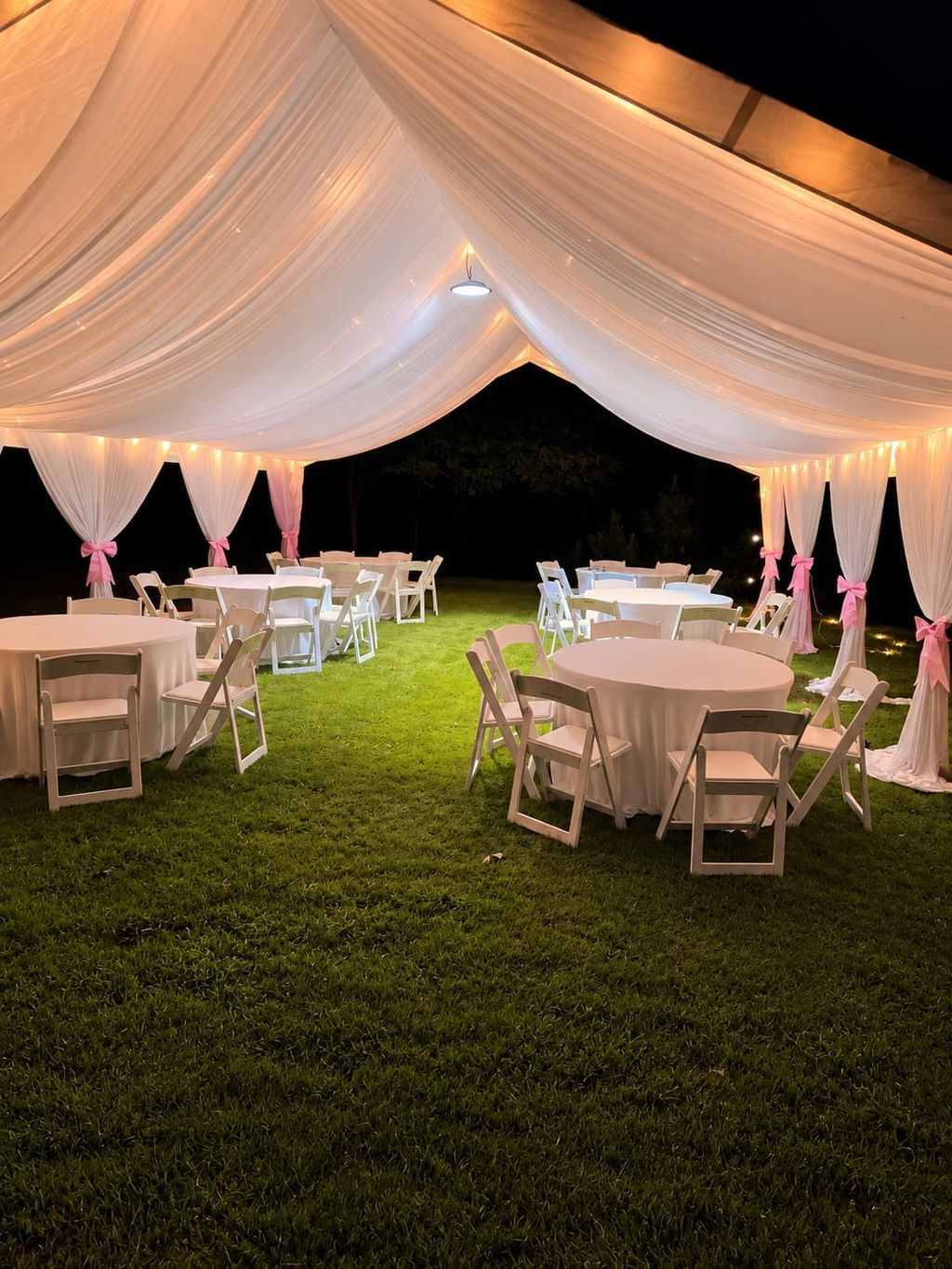
A successful tent layout outdoor wedding separates the ceremony, photo backdrop and reception into clearly defined areas. The ceremony zone should face a pleasant view, perhaps toward the garden or a decorative arch, and leave at least five feet of clearance behind the altar for the officiant and any processional. Positioning the ceremony at one end of the tent creates a natural flow toward the reception space later in the day.
The photo zone benefits from good lighting and a neutral backdrop; many Jefferson hosts use a blank wall of the tent side or a freestanding drape panel to create a timeless setting. Place this zone adjacent to the ceremony but offset enough to avoid interrupting the ceremony flow. Finally, the reception zone occupies the remaining interior, housing tables, chairs, the buffet or plated service area and the dance floor. Keeping these zones distinct helps guests know where to go and reduces congestion during transitions.
Choosing Tent Size and Placement for a Tent Layout Outdoor Wedding
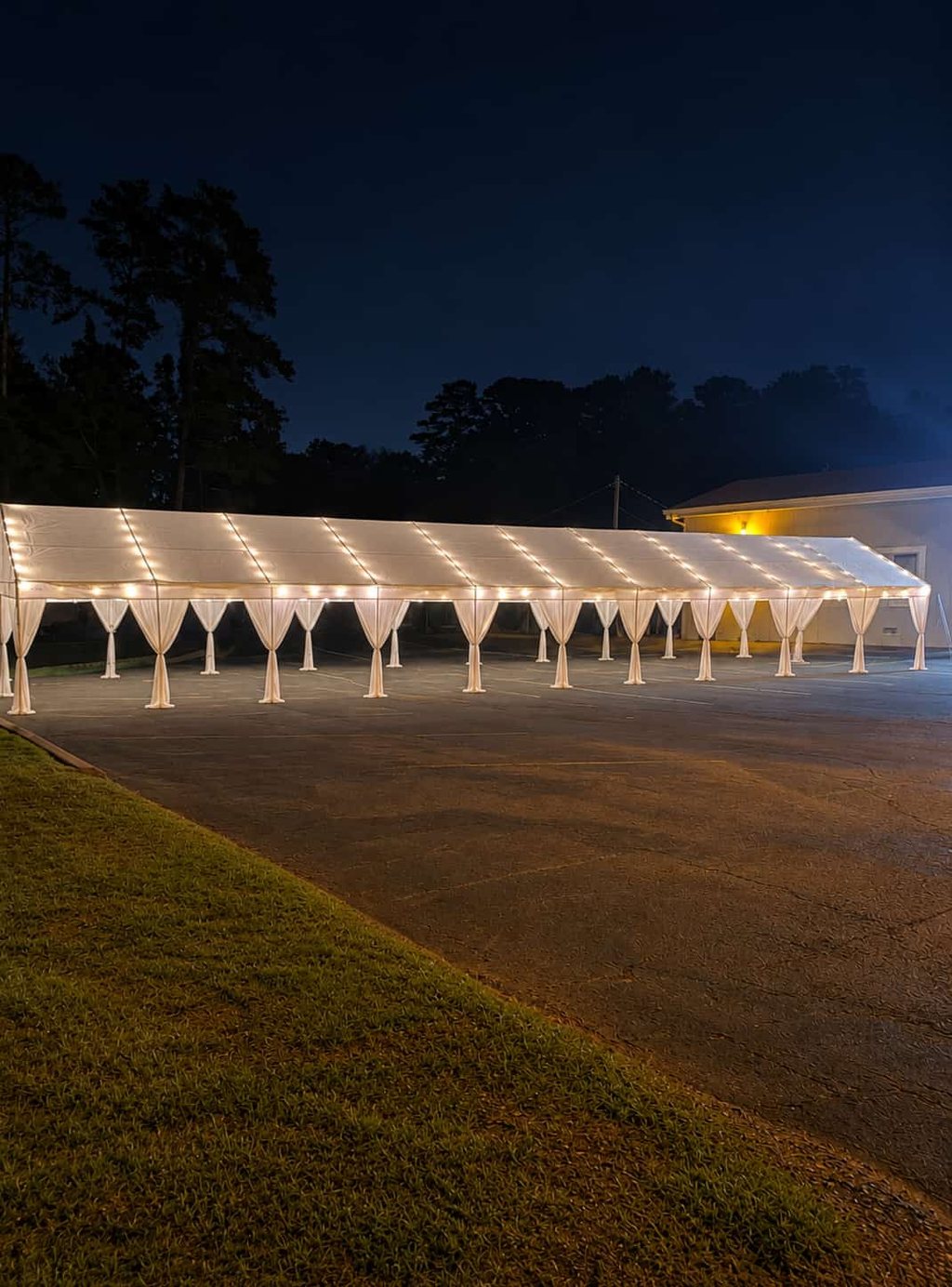
Selecting the right tent dimensions starts with the guest count and the layout of the three zones. For a wedding with one hundred fifty guests, a twenty‑by‑forty‑foot frame offers roughly eight hundred square feet, which can accommodate a seated dinner for up to eighty people plus a lounge area or can be configured cocktail‑style for up to one hundred twenty. If you prefer a larger dance floor, consider pairing a twenty‑by‑twenty with a twenty‑by‑forty to create a twenty‑by‑sixty run, remembering that a twenty‑by‑fifty does not exist in our inventory.
Once the size is chosen, place the tent so that the longest side runs parallel to the primary sight line from the ceremony to the reception. This orientation maximizes visibility and minimizes the need for guests to turn their heads during the ceremony. Leave at least three feet of clearance around the perimeter for staking, guy lines and any sidewalls you may add later. In Jefferson’s residential lots, this often means setting the tent a few feet back from the property line to avoid encroaching on neighboring yards or driveway access.
Yard Preparation and Anchoring Details
Grass surfaces are common in Jefferson backyards, and our anchoring system works well on natural turf when the proper equipment is used. We employ heavy‑duty steel stakes and weight plates that distribute load evenly, preventing the tent from shifting even if the soil is slightly damp after a light rain. Before installation, we inspect the ground for soft spots, hidden irrigation lines or large rocks that could compromise stake integrity.
If the yard features a concrete patio or a paved walkway, we switch to anchor plates that bolt securely to the surface without damaging the finish. For any area with a slope greater than five percent, we recommend leveling the ground with compacted sand or gravel under the tent floorboards to create a stable base. Proper preparation not only ensures safety but also preserves the appearance of the lawn after the event.
Timeline: From Setup to Teardown
On the day of the wedding, our crew arrives early to begin the staging process. First, we unload the tent components, tables, chairs and any decorative items at the designated staging zone, usually a driveway or side yard that offers easy access to the work area. The frame is erected first, followed by the canopy drape, sidewalls (if selected) and interior lighting. This sequence typically takes two to three hours for a twenty‑by‑forty foot setup, depending on the crew size and site conditions.
Once the structure is secure, we lay the flooring, position the tables and chairs according to the pre‑approved plan and install the chosen decor elements such as centerpieces, draped fabric and lighting fixtures. The ceremony chairs are arranged last to avoid interfering with earlier work. After the celebration concludes, the teardown mirrors the setup in reverse: we remove decor, fold furniture, collapse the frame and load everything onto the truck. The entire process, from arrival to departure, usually fits within an eight‑hour window for a mid‑size wedding.
Rain Plan and Weather Considerations
Even in North Georgia, afternoon showers can appear unexpectedly, especially during the spring and summer months. Our tents are made from galvanized anti‑corrosion steel frames with waterproof covers that resist rain penetration when sidewalls are installed. We recommend adding sidewalls on at least two sides of the tent to shield the ceremony and reception areas from wind‑driven rain while still allowing airflow.
In addition to the physical barrier, we monitor the forecast through reliable local sources and maintain open communication with the client via phone or WhatsApp. If wind speeds exceed safe limits for staking, we advise postponing the setup or moving the event to an indoor backup location that the client has previously identified. Having a clear rain plan reduces stress and keeps the celebration on schedule regardless of the weather.
Local Logistics and Drive Details from Pendergrass
Because Jefferson lies roughly ten minutes from our Pendergrass warehouse, the delivery truck can arrive quickly, usually within fifteen minutes of leaving the depot, assuming normal traffic on GA‑332 and GA‑11. We confirm the exact address with the client ahead of time, noting the street, city, state and ZIP code, and we verify that the location falls inside our forty‑mile service radius. This verification step prevents surprises on the day of the event.
Upon arrival, we position the truck as close as practical to the work zone to minimize the distance that heavy components must be carried. If the backyard access is narrow, we may use a smaller utility vehicle to shuttle items from the street to the site. After the event, we follow the same route back to Pendergrass, ensuring that all equipment is accounted for and loaded securely. This efficient turnaround helps us keep scheduling tight and reduces the environmental impact of unnecessary mileage.
Frequently asked questions
How far in advance should I book a tent for my outdoor wedding in Jefferson?
We recommend securing your tent and related services at least six to eight weeks before the event date, especially for Saturday dates from spring through fall, as popular weekends tend to fill quickly. Early booking gives you ample time to discuss layout options, choose tent size and confirm any add‑ons like sidewalls or lighting.
Can I place a bounce house or other entertainment inside the tent?
For safety reasons, we advise keeping bounce houses, slides or similar inflatables on open lawn beside the tent, not underneath it. This setup provides the necessary clearance for the blower, stakes and a safe exit path for children, reducing risk of injury or damage to the tent structure.
What information do you need to provide a detailed quote?
To prepare a custom quote we require your full name, the exact event address including street, city, state and ZIP, the event date and start time, your phone or WhatsApp number, an email address for the written quote, and the exact guest count. These details allow us to confirm service area eligibility and calculate delivery logistics.
Do you offer any complimentary touches for wedding tents?
Yes, we include a welcome mirror with custom wording at no additional charge. We ask you for the exact phrasing you would like displayed—such as the couple’s names and wedding date—to personalize the mirror and place it at the entrance of the tent for guests to enjoy.
How are sidewalls useful for an October wedding in Jefferson?
Sidewalls add protection from cooler evening breezes and light rain, making the tent more comfortable for guests during autumn celebrations. We typically recommend enclosing two sides of the tent to balance wind shielding with adequate airflow while still preserving an open feel for the reception space.
What happens if the weather makes setup unsafe on the wedding day?
If wind speeds or severe weather pose a risk to safe installation, we will work with you to reschedule the setup to a later time or move the event to an indoor backup location you have identified. Our priority is the safety of the crew, your guests and the equipment while striving to keep your celebration on schedule.