
Understanding the Basics of a Tent Layout for Live Music
When planning a live music performance outdoors, the tent layout for live music serves as the foundation for both sound quality and guest experience. In Jefferson, Jackson County, many hosts choose backyards off Old Pendergrass Road or the quiet streets near Traditions of Braselton to host intimate concerts. The first step is to assess the available space, taking note of any trees, slopes or existing structures that could affect tent placement. A clear, level area of at least 30 feet by 40 feet provides enough room for a medium‑sized tent, a small stage, and audience seating while leaving pathways for vendors and emergency access.
The acoustics of an open‑air setting differ from indoor venues, so the tent must be positioned to minimize wind noise and maximize sound projection toward the audience. Orient the tent’s longest side so that the stage faces the prevailing wind direction, allowing the sound to travel with the breeze rather than against it. In Jefferson’s typical late‑spring and summer evenings, a light breeze from the southwest often helps carry music across the yard. By aligning the tent accordingly, you reduce the need for excessive volume levels, which helps keep the event comfortable for neighbors and protects hearing.
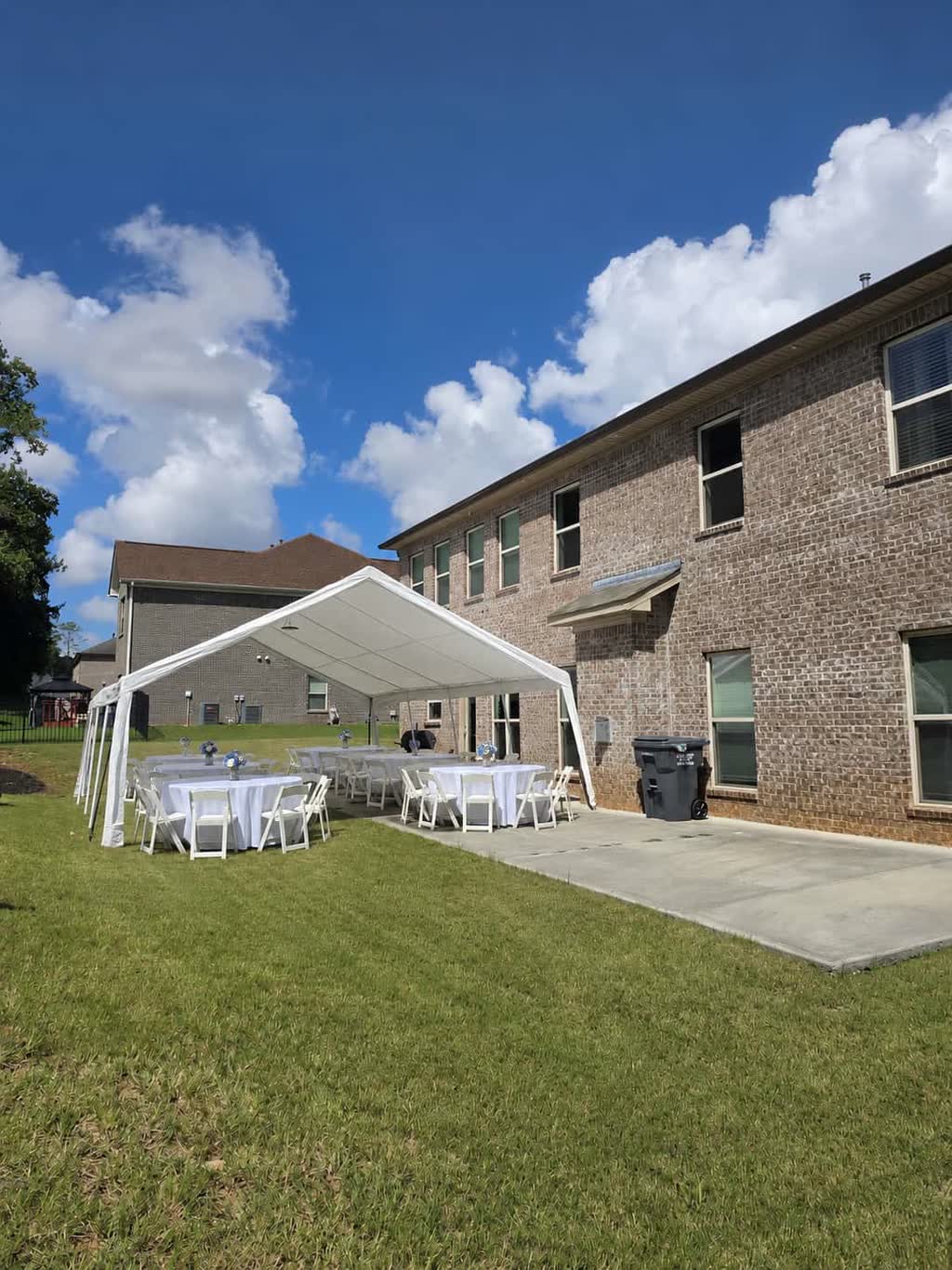
Choosing the Right Tent Size for Your Band and Audience
Selecting a tent that matches both the band’s equipment and the expected guest count is crucial for a successful layout. For a typical four‑piece band with amplifiers, a drum kit and a small PA system, a 20 × 30 foot clear‑span tent offers adequate headroom for gear and space for a modest stage. Using the verified capacities from DecoEvent ATL, a 20 × 30 tent comfortably seats 48 to 60 guests in a banquet style, or up to 80 guests in a cocktail‑style arrangement with standing room. If you anticipate a larger crowd, consider pairing a 20 × 40 tent (64‑80 seated) with a 10 × 20 auxiliary tent for a food or merch area, keeping the main performance space uncluttered.
Guest‑count math helps determine the number of tables and chairs needed. A 6 × 6 foot round table seats 10 guests comfortably, so a 60‑guest event would require six such tables plus a few extra for the band’s equipment. Rectangular tables work well for buffet lines: an 8‑foot rectangular table accommodates 8‑10 guests, making it efficient for serving food while keeping aisles clear. Remember to leave at least a 3‑foot walkway between rows of seating and the stage to allow guests to move safely during performances and intermissions.
Positioning the Stage, Sound System and Audience Seating
The stage should be placed on the side of the tent opposite the main entrance, creating a natural flow from the entry point to the performance area. In Jefferson yards, a raised platform of 4 × 8 feet built from sturdy plywood and supported by adjustable legs works well on grass or compacted soil. Position the stage at least 6 feet from the tent walls to prevent sound reflections that could cause echo or feedback. Place the main PA speakers on either side of the stage, angled slightly inward to cover the audience evenly while keeping the microphones behind the speakers to avoid feedback loops.
Audience seating can be arranged in a semi‑circle or rows facing the stage, depending on the formality of the event. For a relaxed backyard concert, consider mixing 6‑foot round tables with a few cocktail tables for guests who prefer to stand and mingle. Ensure that the central aisle remains at least 4 feet wide to accommodate wheelchair access and quick exits if needed. In Jefferson’s historic districts, many homes have mature oak trees; if a tree trunk falls within the tent footprint, plan the stage offset to avoid compromising the tent’s anchoring system while still preserving shade for guest comfort.
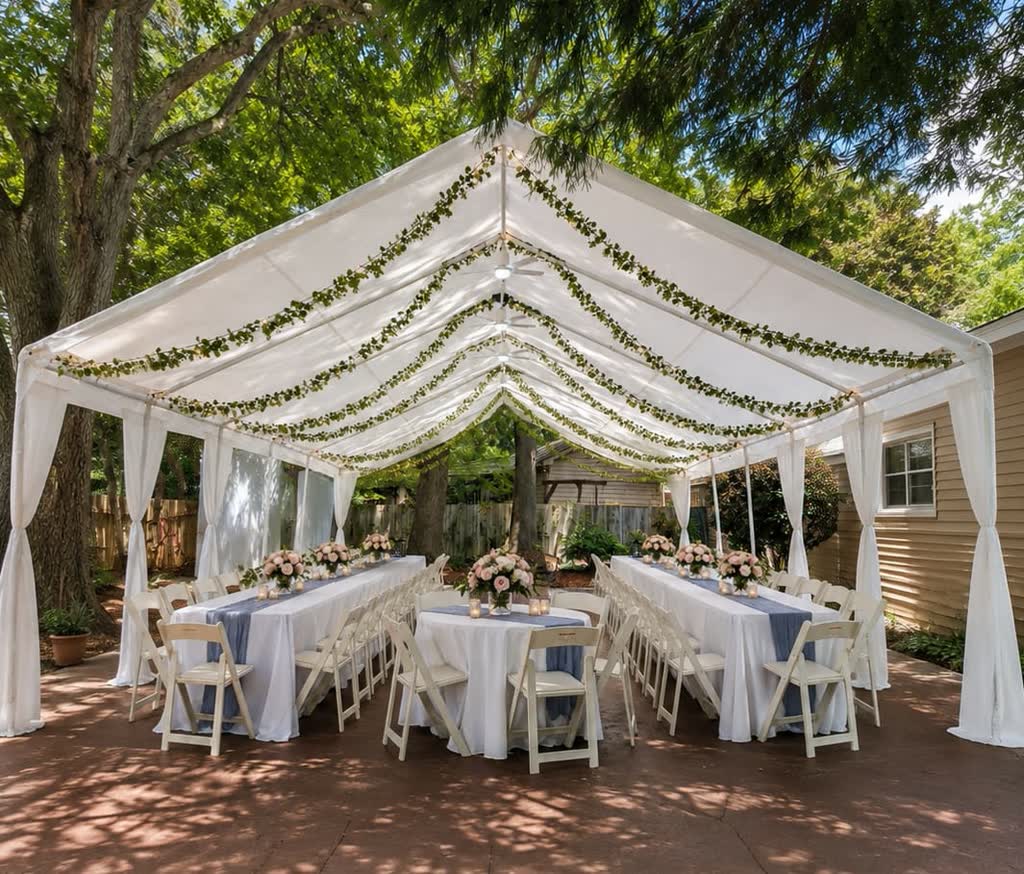
Managing Power, Cables and Lighting for Live Music
Live music requires reliable electricity for amplifiers, mixers, lighting and possibly a small fog machine. Before the event, verify that the property has at least two grounded exterior outlets within 50 feet of the tent site; if not, a quiet generator rated for 5 kW can be placed downwind, with exhaust directed away from the audience. Run all power cables through protective covers or tape them down to prevent tripping hazards, and keep cable lengths under 100 feet to minimize voltage drop. Label each cable at both ends for quick troubleshooting during soundcheck.
Lighting enhances the ambiance without overwhelming the performance. For daytime events, rely on natural light and supplement with soft, diffused LED tent lighting that provides even illumination without glare. For evening shows, consider adding low‑intensity bistro strings above the dining area to create a warm glow while keeping the stage lit with focused LED pars that can be dimmed as needed. Avoid placing any lighting fixtures directly on the tent fabric; instead, mount them on the frame or on separate stands to preserve the tent’s waterproof coating and maintain safety standards.
Ensuring Guest Comfort, Flow and Safety Around the Tent
Comfort extends beyond seating to include temperature control, restroom access and hydration stations. In Jefferson’s summer heat, place industrial fans at the rear corners of the tent, blowing air across the audience to improve circulation without creating direct drafts on the performers. Provide a shaded water station near the entrance, using a clean cooler with disposable cups, and position portable restrooms at least 20 feet downwind from the tent to keep odors away from the dining and performance zones.
Safety pathways are essential for both guests and vendors. Mark a clear 5‑foot wide service lane along one side of the tent for catering deliveries, equipment load‑in and waste removal. Use reflective tape or low‑profile cones to delineate this lane after dark. Keep the blower for any bounce houses or water slides at least 10 feet from the tent walls and ensure the exhaust vent points outward. If children will be present, assign a designated adult to supervise the play area and confirm that all inflatables are anchored according to manufacturer specifications.
Yard Preparation and Drive Logistics for Jefferson Locations
Preparing the yard begins at least two days before the event. Walk the proposed site with a tape measure to confirm dimensions, then mow the grass to a height of no more than two inches to provide a stable surface for tent stakes. Remove any loose stones, sticks or animal waste that could puncture the tent floor or cause tripping. If the soil is particularly soft after rain, consider laying down interlocking ground protection panels under the tent’s perimeter to distribute weight and prevent sinking.
From DecoEvent ATL’s warehouse in Pendergrass, the drive to Jefferson takes roughly 10 minutes via GA‑332 and Old Pendergrass Road, covering about eight miles. This short distance qualifies for free delivery under the 0‑15‑mile band, meaning no delivery fee applies for most Jefferson jobs. Load the tent, tables, chairs and audio equipment the morning of the event, aiming to arrive at the property by 8:00 AM to allow ample time for staging, anchoring and soundcheck before guests arrive around 4:00 PM for an evening concert.
Rain Plan and Weather Contingencies for Outdoor Performances
Even with a clear forecast, having a rain plan protects both the equipment and the guest experience. Sidewalls are the most effective upgrade for wind and temperature control; attaching two or three walls to the tent creates a semi‑enclosed space that keeps rain off the stage and audience while still allowing ventilation. In Jefferson’s occasional afternoon showers, a quick‑deploy sidewall system can be installed in under 15 minutes using the supplied ratchet straps and pole adapters.
If wind speeds exceed 15 mph or lightning is detected, the safest course is to delay the start or move the event to a covered backup location, such as a carport or large garage, after confirming with the homeowner that the space meets safety standards. Keep a set of waterproof covers for the mixers, amplifiers and speaker stands readily accessible, and designate a crew member to monitor weather updates via a reliable app. Communicate any schedule changes to guests via a pre‑written text message or a posted sign at the entrance to maintain transparency.
Final Checklist Before the Live Music Event Begins
Run through a concise checklist 30 minutes before doors open to catch any overlooked items. Verify that all tent stakes are fully driven and the frame is taut, that the sidewalls are securely fastened if used, and that the blower for any inflatables is operating with proper ventilation. Confirm that the PA system is powered, that all microphones have fresh batteries, and that the monitor wedges are positioned for the performers. Test the lighting levels, ensuring that stage lights are at 70 percent intensity and that any ambient lighting does not create glare on the performers’ faces.
Lastly, do a walk‑through of the guest flow: check that the entrance is clear, that the path to the restroom and water station is unobstructed, and that the emergency exit signs are visible. Greet the band with a brief soundcheck, allowing them to hear the mix from the audience perspective, and make any final EQ adjustments. Once everything is in place, invite guests to enjoy the performance, knowing that the tent layout for live music has been optimized for sound, comfort and safety in Jefferson, Jackson County.
Frequently asked questions
How far is Jefferson, GA from the Pendergrass warehouse?
Jefferson is approximately eight miles from the Pendergrass warehouse, which translates to a ten‑minute drive via GA‑332 and Old Pendergrass Road, qualifying for free delivery under the 0‑15‑mile band.
What tent size works best for a four‑piece band with a modest guest list?
A 20 × 30 foot clear‑span tent provides enough headroom for amplifiers, drums and a small PA while comfortably seating 48‑60 guests in banquet style or up to 80 in cocktail arrangement.
Do I need sidewalls for an evening concert in Jefferson?
Sidewalls are highly recommended for evening events; they block wind, retain heat and protect equipment from unexpected showers, with two closed sides being the usual choice for optimal balance.
How should I position the stage relative to the tent entrance?
Place the stage on the side opposite the main entrance, at least six feet from the tent walls, to create a clear audience flow and reduce sound reflections that can cause echo or feedback.
What power options are available if my backyard lacks exterior outlets?
Use at least two grounded exterior outlets within fifty feet of the site; if unavailable, operate a quiet 5 kW generator downwind with exhaust directed away from the audience and protect all cables with covers or tape.
How do I keep guests comfortable during a hot summer concert in Jefferson?
Position industrial fans at the rear corners to circulate air, provide a shaded water station near the entrance, and locate portable restrooms at least twenty feet downwind from the tent to keep odors away from dining and performance areas.