
Corporate event tent rental Jefferson GA: Why a tailored approach matters
When a company decides to host an outdoor gathering in Jefferson, GA 30546, Jackson County, the first step is more than just selecting a canopy. The phrase “corporate event tent rental Jefferson GA” signals a need for a solution that aligns with the specific number of attendees, the dimensions and gradient of the backyard, the type of ground—whether it's grass, concrete, or a mix—and the duration of the program from welcome reception through closing remarks. Our team at DecoEvent ATL evaluates each of these variables to recommend the ideal tent size, lighting, and ancillary equipment, ensuring the corporate brand is reflected in a safe, comfortable, and visually impressive setting.
Because corporate gatherings often involve branding displays, sound systems for presentations, and catered meals, the tent must accommodate not only guests but also staging, audiovisual gear, and service stations. By starting with a clear understanding of the event’s goals—team building, product launch, client appreciation, or award ceremony—we can pair the correct tent model, such as a 20×30 or a 30×60 COBIZI commercial unit, with the appropriate draping and lighting packages. This precision prevents over‑ or under‑building and lays the foundation for a rain‑resilient plan that respects the venue’s layout and the client’s timeline.
Assessing guest count and seating calculations for a flawless flow
Accurately determining the guest count is the cornerstone of a successful corporate event tent rental. For a typical corporate gathering of 80 to 120 participants, we calculate seating using our verified table capacities: a 6‑foot round table comfortably seats 10 guests, while a 5‑foot round table fits 8 guests. By dividing the total number of attendees by the chosen table size, we establish the exact number of tables required, then add a buffer of 10‑15% to accommodate last‑minute RSVPs or staff members. This method also guides the placement of cocktail‑height tables, which we plan at a ratio of one per 10‑12 guests to provide standing space for networking and beverage service.
Beyond seating, the guest count influences the amount of lighting, sound amplification, and floor space needed for registration and breakout areas. A larger audience may require a tiered sound system to guarantee intelligible speech in every corner of the tent, while a higher concentration of attendees around a central stage calls for strategic draping to focus visual attention. All these decisions are made with the specific headcount in mind, ensuring an efficient layout that supports seamless movement and a professional atmosphere.
Evaluating yard size, slope, and ground surface for safe tent placement
The physical characteristics of the host’s property in Jefferson dictate how our commercial tents are anchored and how much space remains for ancillary stations. A typical suburban backyard offers 5,000 to 8,000 square feet, which comfortably fits a 20×30 tent with room for tables, a stage, and catering stations. However, if the lot includes a noticeable slope, we may need to level the area with temporary decking or select a tent model equipped with adjustable steel poles to maintain structural integrity. Grading the ground beforehand prevents water pooling, a critical factor when rain is in the forecast.
Ground surface type also impacts the anchoring strategy. Grass allows for sandbag anchoring, while concrete requires specialized weighted bases or anchor plates. Our crew inspects the site ahead of installation to confirm the surface can support the tent’s load, especially when sidewalls are added for rain protection. If the space is limited, we can recommend a rectangular layout that maximizes usable area without compromising safety, and we always double‑check that the chosen configuration aligns with local fire codes and the client’s branding vision.
Planning the timeline: setup, event length, and teardown considerations
A corporate event timeline typically spans from early morning setup to late‑evening teardown, and each phase must be meticulously scheduled. Installation begins as early as 7:00 AM, allowing sufficient time to erect the tent, secure sidewalls, connect lighting, and test the sound system before the first guests arrive. For an event lasting 6 hours, we plan a 30‑minute buffer before the start for final walkthroughs and a 60‑minute window after the program concludes to safely dismantle the structure, store equipment, and clean the site. This schedule is communicated to the client so that any presentation or catering timeline can be precisely aligned.
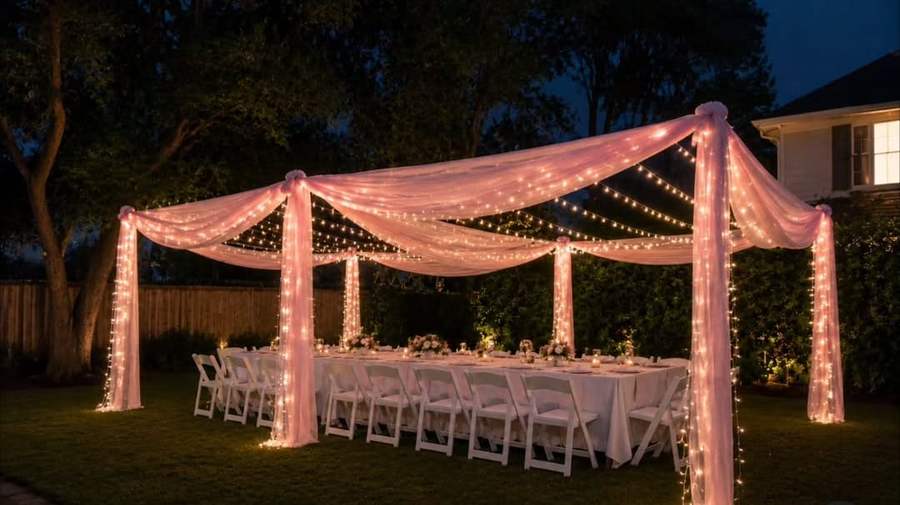
When the event is expected to run into the evening, we also consider lighting transitions—from bright LED tent lighting for presentations to softer bistro strings for networking. Our crew coordinates with the client’s event planner to ensure that lighting changes occur seamlessly, without interrupting the flow. In case of a weather delay, the same timeline is adjusted to include the deployment of sidewalls and rain‑proofing measures, which we can add within the same set‑up window, preserving the original start time whenever possible.
Managing the drive from Pendergrass to Jefferson: logistics and timing
Our warehouse sits just ten minutes from Jefferson, GA, making transportation of tents, chairs, and décor items both swift and cost‑effective. The short distance allows us to load the truck early in the morning, travel the 9‑mile route, and arrive on site well before the agreed‑upon setup window. This proximity also provides flexibility to respond to unexpected changes, such as a sudden storm warning, because the crew can be dispatched quickly to reinforce the tent with sidewalls or adjust the layout to accommodate a backup indoor plan if the client has arranged one.
Because we operate within a 40‑mile service radius, the drive time remains consistent for most corporate events in surrounding cities, but we still factor in local traffic patterns, especially during peak commuting hours. By scheduling delivery after the morning rush, we minimize delays and ensure that the installation team has the full daylight window they need to safely anchor the tent, level the site, and verify that all electrical connections meet safety standards before the event begins.
Seasonal considerations and proactive weather forecasting
North Georgia’s climate varies throughout the year, and each season presents distinct challenges for outdoor corporate events. In spring, thunderstorms are common, requiring robust sidewall panels and a rain‑ready timeline. Summer brings high temperatures, prompting us to add shade‑enhancing fabrics and fans to maintain guest comfort. Autumn offers milder weather but can produce sudden wind gusts, so we secure the tent with additional tie‑downs and monitor wind advisories. Winter, though less frequent, may bring low temperatures that necessitate supplemental heaters inside the canopy.
Our planning process incorporates real‑time weather forecasting tools that track rain probability, wind speed, and temperature trends in the days leading up to the event. If the forecast indicates a 30% or higher chance of rain on the scheduled date, we proactively discuss sidewall options and contingency dates with the client. This forward‑looking approach helps corporate hosts feel confident that their investment is protected, and it allows us to coordinate any extra equipment without causing last‑minute surprises.
Comprehensive rain plan: sidewalls, backup dates, and safety protocols
Rain is the most common risk factor for outdoor corporate events, and a solid rain plan is essential for protecting equipment, presenters, and guests. Our default strategy involves equipping the chosen tent with modular sidewall panels that can be installed within 30 minutes, creating a barrier against wind‑driven rain while still allowing natural light. For larger tents, we can add a rain‑proof canopy over the stage area, ensuring that audiovisual gear stays dry and functional. All sidewalls are anchored to the same steel framework as the main tent, preserving the overall structural stability.
In addition to physical barriers, we outline a clear backup date policy in the contract, offering the client the option to shift the event to a nearby Saturday or Sunday within a two‑week window if severe weather makes the original date unsafe. We also establish a safety protocol that includes on‑site monitoring of wind speed during the event; should wind exceed the manufacturer’s safe limit, the crew is prepared to pause the program and, if necessary, secure or dismantle the tent. By communicating these measures in advance, corporate organizers can proceed with confidence, knowing that every precaution has been taken to safeguard their guests and brand reputation.
Frequently asked questions
What size tent is best for 100 corporate guests in Jefferson?
A 20×30 tent typically accommodates 100 guests with tables, a stage, and catering stations while allowing space for sidewalls and circulation.
How far is Jefferson from your warehouse and does it affect delivery?
Jefferson is about 9 miles (10 minutes) from our Pendergrass warehouse, so delivery and setup are fast, allowing us to respond quickly to any last‑minute changes.
Can sidewalls be added on short notice if rain is forecast?
Yes, sidewalls can be installed within 30 minutes before the event starts, providing instant rain protection without delaying the program.
Do you provide lighting options for evening corporate events?
We offer LED tent lighting for overall illumination and bistro strings for a softer ambiance, both of which can be adjusted to match the event’s flow and branding.
What steps do you take to ensure the tent is safe on a sloped backyard?
Our crew inspects the site, levels the area with temporary decking if needed, and uses adjustable steel poles and extra anchoring to keep the tent secure on any slope.
How do you handle a severe weather warning on the day of the event?
We monitor forecasts closely, can deploy sidewalls immediately, and have a predefined backup date option to move the event safely if conditions become unsafe.