
Setting up an outdoor tent compost recycling station for a family reunion in Jefferson, Jackson County adds both practicality and eco‑friendly charm to your celebration. Located just ten minutes from our Pendergrass warehouse, the area offers convenient access via Old Pendergrass Road, with many backyards tucked behind Traditions of Braselton and the neighborhoods surrounding Jefferson High School. By integrating clearly marked bins for food scraps, recyclables, and waste inside the event tent, you keep the site tidy while teaching guests of all ages about responsible disposal. This approach works especially well for multi‑generational gatherings where grandparents, parents, and children share meals, games, and storytelling under a shared canopy. Planning the station early ensures smooth flow, reduces post‑event cleanup, and aligns with the values of many families who want to minimize their environmental footprint while enjoying quality time together.

Planning Your Family Reunion Layout in Jefferson
Begin by sketching a simple map of the available yard space, noting any existing trees, slopes, or utility lines that could affect tent placement. For a typical family reunion hosting between 80 and 120 guests, you’ll want a central gathering area that accommodates dining tables, a dance floor, and the compost recycling station without creating bottlenecks. Measure the distance from the proposed tent site to the nearest electrical outlet or generator location, as this will power any lighting, sound equipment, or blower for bounce houses if you decide to add them. In Jefferson, many residential lots off Old Pendergrass Road provide at least 30 feet of clear depth from the house to the property line, giving ample room for a 20×30‑foot tent plus a 10×20‑foot side area dedicated to waste management. Mark these zones with temporary flags or spray paint so the installation team can visualize the layout before arriving.
Consider the flow of foot traffic: guests will likely move from the parking area to a welcome table, then to the dining zone, and finally to activity spaces such as lawn games or a photo booth. Position the outdoor tent compost recycling station near the food serving line but slightly offset to avoid congestion during peak serving times. This placement encourages guests to scrape plates into the compost bin as they finish eating, while still keeping the station accessible for those who wish to recycle bottles or cans after drinks. By aligning the station with natural pathways, you reduce the chance of stray litter and make the eco‑stations feel like a seamless part of the event rather than an afterthought.
Benefits of an Outdoor Tent Compost Recycling Station
An outdoor tent compost recycling station offers tangible advantages that go beyond waste reduction. First, it cuts down on the volume of trash that needs to be hauled away, which can lower disposal fees and reduce the number of trips required by waste management services. Second, separating food scraps for compost creates nutrient‑rich material that can be used later in community gardens or personal landscaping, turning event waste into a resource. Third, clearly labeled recycling bins capture plastics, aluminum, and glass, keeping these materials out of landfills and supporting local recycling streams. For a family reunion, these benefits translate into a cleaner site, a positive example for younger relatives, and a conversation starter about sustainability that can continue long after the event ends.
Additionally, the presence of a well‑organized station can enhance the overall guest experience. When attendees see that the hosts have thoughtfully planned for waste management, they often feel more respected and are more likely to follow the guidelines. This sense of shared responsibility fosters a cooperative atmosphere, especially during large gatherings where multiple families converge. In Jefferson’s warm climate, the station also helps control odors by promptly containing food scraps, preventing them from attracting pests or creating unpleasant smells under the tent. By integrating the station into the event design, you demonstrate care for both the environment and the comfort of everyone present.
Choosing the Right Tent Size and Placement
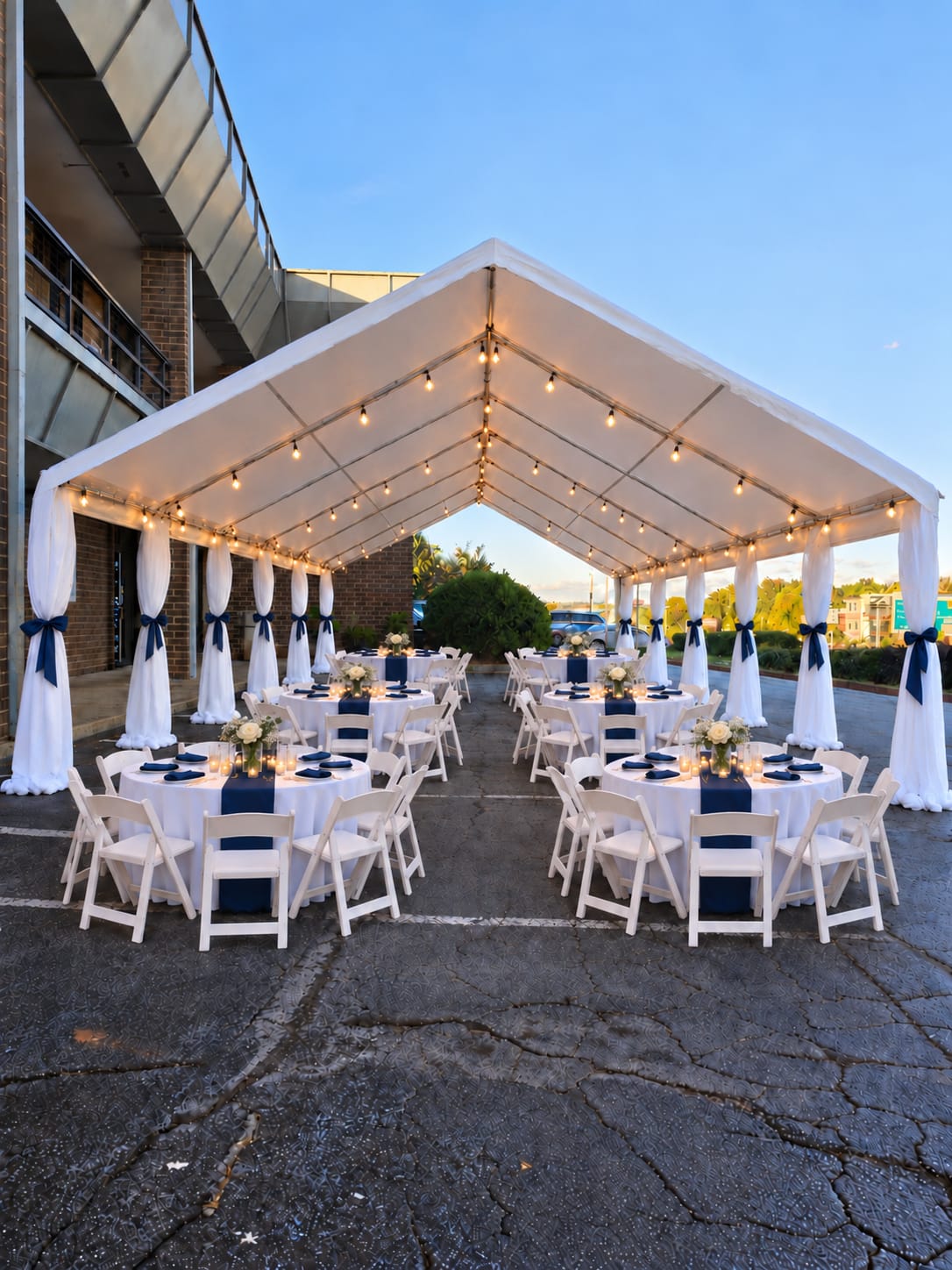
Selecting a tent that fits both your guest count and the compost recycling station requires a bit of math. For a seated dinner, a 6‑foot round table comfortably accommodates ten guests, so ten such tables would host about 100 people. If you prefer a mix of round and rectangular tables, calculate accordingly: a 6‑foot rectangular table seats six to eight, while an 8‑foot rectangular table seats eight to ten. Once you have the table layout, add at least five feet of clearance around the perimeter for walkways and the station. In Jefferson, many backyards provide a flat, grassy surface that is ideal for tent anchoring; however, verify that the ground is firm enough to hold stakes or that you have appropriate weights for concrete or patio surfaces.
Placement of the tent should consider sun exposure and wind direction. Position the tent so that the opening faces away from prevailing afternoon winds, which helps keep the interior comfortable and reduces the chance of debris blowing into the compost bins. If the event runs into the evening, think about where supplemental lighting will be placed; LED tent lighting can be installed along the ridge poles without interfering with the station below. Finally, ensure that the station itself sits on a stable, level surface—perhaps a small wooden pallet or a set of interlocking plastic tiles—to prevent tipping when guests lift lids or deposit heavy items.
Building the Compost and Recycling Stations
Constructing the station does not require elaborate materials; a few sturdy containers and clear signage are sufficient. Use three separate bins: one for compostable food scraps (lined with a biodegradable bag), one for recyclables (plastics, metals, glass), and one for general waste. Choose containers with lids that can be secured but are easy to open, preferably with foot pedals or swing tops to minimize touch points. Label each bin with large, weather‑proof signs that display both icons and simple words—such as “Compost – Food Scraps Only,” “Recycle – Bottles & Cans,” and “Trash – Non‑Recyclable.” Including a brief reminder about what belongs where helps guests sort correctly without confusion.
Place the bins on a flat surface directly beneath the tent’s eave or along a side wall, depending on the layout you established earlier. If you anticipate high usage, consider adding a small table nearby with extra bags, a roll of paper towels, and a hand sanitizer station for guests who wish to clean their hands after handling waste. For events that include food stations like a taco bar or paella pan, position the compost bin just behind the serving line so guests can scrape plates as they move away. This proximity encourages proper disposal while keeping the dining flow smooth. Remember to check the bins periodically during the event and replace liners as needed to maintain hygiene and prevent overflow.
Yard Preparation and Drive Logistics from Pendergrass Warehouse
Before the installation crew arrives, clear the designated area of any obstacles such as lawn furniture, toys, or garden tools. Mow the grass to a uniform height of about two inches to ensure even weight distribution for the tent stakes and to provide a clean surface for the compost station. If the yard has any low spots that collect water, fill them with sand or gravel to avoid pooling under the tent during rain. In Jefferson, many properties along Old Pendergrass Road have mature trees; identify any overhanging branches that could interfere with tent height and either trim them or adjust the tent placement accordingly.
The drive from our Pendergrass warehouse to Jefferson typically takes around ten minutes under normal conditions, covering roughly seven miles via GA‑332 and local roads. Load the tent, tables, chairs, linens, and the compost recycling supplies onto the vehicle the morning of the event, securing everything with straps to prevent shifting. Upon arrival, conduct a quick site walk‑through with the crew to confirm that the measured layout matches the actual space, verify stake placement, and ensure that the station bins are positioned as planned. This coordination helps the installation proceed smoothly and allows any last‑minute adjustments to be made before guests begin to arrive.
Timeline and Rain Plan for the Event Day
A clear timeline keeps the setup, guest arrival, and breakdown phases orderly. Aim to have the tent erected and the compost recycling station in place at least two hours before the scheduled start time. This window allows the team to tension the canopy, attach sidewalls if desired, place tables and chairs, and run a final check on the bin liners and signage. Use the first hour for structural work and the second hour for dressing the space with linens, centerpieces, and any decorative elements such as lanterns or welcome mirrors. Thirty minutes before guests arrive, do a quick walk‑through to verify that the station is stocked, the lids operate smoothly, and the area around the tent is free of tools or debris.
For weather contingencies, sidewalls are a valuable add‑on that can be deployed quickly if wind or rain develops. In Jefferson, late‑spring and early‑summer afternoons occasionally bring brief showers; having sidewalls on hand lets you close the tent within minutes, protecting both guests and the compost bins from moisture. If the forecast predicts prolonged rain, consider moving the event to a nearby covered pavilion or rescheduling for a day with clearer skies. Keep the compost bags sealed and stored in a dry location until the weather improves, and have extra liners on hand so that the station can resume operation as soon as conditions allow. Communicating the rain plan to guests in advance via a brief note or a group message helps manage expectations and maintains a positive atmosphere.
Engaging Guests and Maintaining the Station Throughout the Reunion
Active engagement encourages proper use of the compost recycling station throughout the reunion. Assign a friendly family member or a teen volunteer as a “station ambassador” for the first hour of the event; their role is to greet guests, explain what goes where, and answer any questions about composting or recycling. Place a small chalkboard or printed card near the station with a fun fact—for example, “One banana peel can generate enough compost to grow a single tomato plant”—to spark curiosity. When children see the ambassador actively participating, they are more likely to mimic the behavior, turning waste sorting into a shared activity rather than a chore.
Maintenance during the event is straightforward but essential. Schedule brief checks every 30 to 45 minutes to replace full compost bags, tidy any stray items, and ensure that recycling bins are not overflowing with liquids that could contaminate the load. Keep a spare set of bags and a roll of tape nearby for quick fixes. As the reunion winds down, assign a couple of helpers to collapse the station, fold any reusable liners, and load the filled bags into the vehicle for transport to a composting facility or recycling center. By closing the loop responsibly, you leave the Jefferson yard in the same or better condition than you found it, reinforcing the eco‑friendly values that made the station a meaningful part of the celebration.
Frequently asked questions
How much space is needed for the compost recycling station alongside the tent?
Plan for at least a 10‑foot by 10‑foot clear area beside the tent to accommodate three bins, a small table for supplies, and comfortable guest flow without crowding the dining or activity zones.
What types of materials should go into the compost bin at a family reunion?
Only food scraps such as fruit and vegetable peels, coffee grounds, eggshells, and biodegradable napkins belong in the compost bin; avoid meats, dairy, oils, and non‑biodegradable items to prevent contamination and odors.
How can I ensure guests understand which bin to use?
Use large, pictorial signs on each bin, place a volunteer ambassador near the station during peak times, and include a brief reminder in any pre‑event communication or welcome packet to reinforce sorting guidelines.
What if it rains during the event; will the compost station still work?
Sidewalls can be quickly deployed to shield the station from moisture, and keeping compost bags sealed and stored dry prevents sogginess; if prolonged rain is expected, you may need to reschedule or move to a covered area.
Do I need any special power sources for the compost recycling station?
The station itself requires no electricity; only the tent lighting, sound system, or any added equipment like a blower for bounce houses needs power, which can be sourced from a nearby outlet or a generator.
How far in advance should I confirm the layout and station placement with the crew?
Share your site sketch and measurements at least three days before the event, then do a brief on‑site walk‑through the morning of the setup to verify dimensions, stake locations, and station positioning.